Fifty men sit in concentric circles on a clifftop stage, chanting the same syllable, cak, in overlapping waves for twenty straight minutes, with no instrument in sight. Somehow it becomes one of the most electrifying live performances in Southeast Asia. Balinese dance covers dozens of forms like this, most older than tourism itself, and still performed as prayer as much as art. Here is what actually separates a temple ritual from an evening show built for visitors, and where to see it done properly.
What Makes Balinese Dance Different From Any Other Performance Art
Balinese dance was never designed as pure entertainment. Every gesture, from a dancer’s shifting eyes to the exact angle of a raised finger, carries meaning rooted in Hindu cosmology and the island’s concept of Tri Hita Karana, the balance between people, nature, and the divine. UNESCO recognized this depth in 2015, inscribing Balinese dance on its Intangible Cultural Heritage list under the name Three Genres of Traditional Dance in Bali.
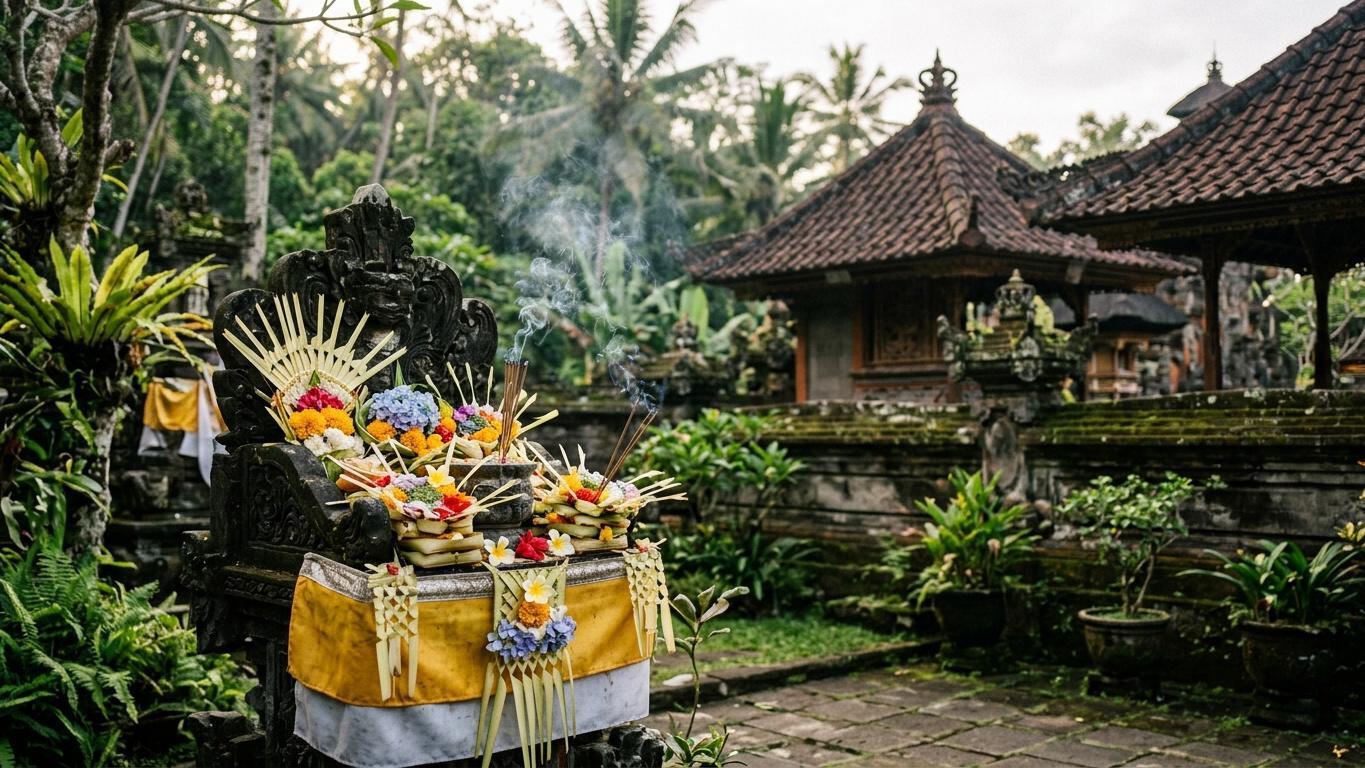
Those three genres split by function, not by story. Wali dances are sacred offerings performed inside a temple’s inner sanctum, closed to tourists and reserved for the gods themselves. Bebali dances sit one step outside the sanctum, combining ritual purpose with storytelling during temple ceremonies. Balih-balihan dances are the entertainment genre, staged for a public audience, which is where nearly every visitor’s first Balinese dance experience actually happens.
Knowing this distinction changes how a performance reads. A balih-balihan show at a hotel or cultural venue is genuinely Balinese dance, performed by trained dancers who often also dance for temple ceremonies, just staged for a paying audience rather than the gods. It is not a lesser version, simply a different one of the three genres.
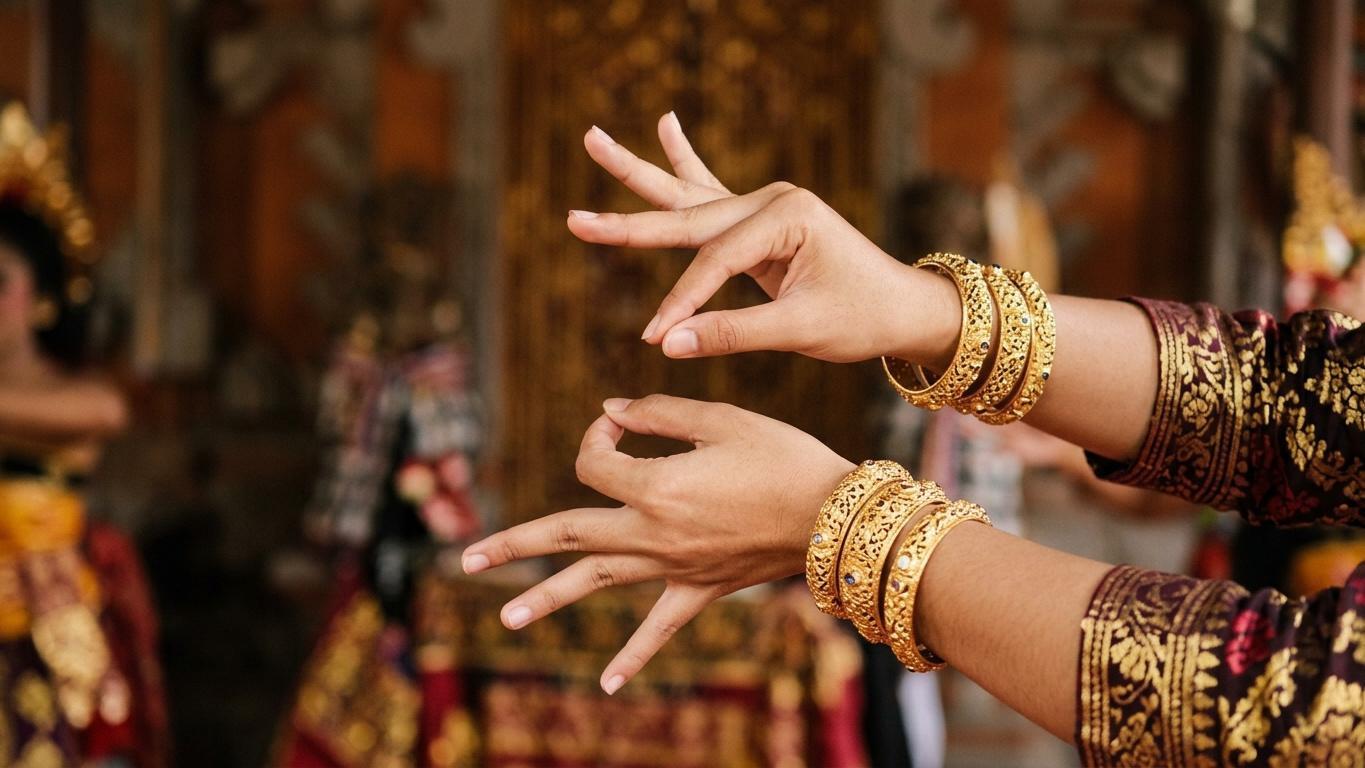
Training for any of these forms usually starts in early childhood, often as young as five or six, through a Balinese banjar (community group) or a dedicated dance school.
Dancers learn through direct physical correction, with a teacher shaping their hands and posture rather than having them watch a video or a diagram. When these trained dancers later perform for a temple ceremony as an unpaid, devotional offering to the gods and their community, that act of service is known as ngayah.
That apprenticeship model is part of why Balinese dance has stayed remarkably consistent in technique across generations, even as the venues and audiences have changed.
The Gamelan Orchestra Behind the Movement
Most Balinese dance, Kecak being the deliberate exception, is accompanied by a gamelan orchestra: an ensemble of bronze metallophones, gongs, drums, and cymbals that plays in tight, interlocking patterns rather than a single melodic line. The specific ensemble used for court dances like Legong is called gamelan gong kebyar, known for sudden dynamic shifts between near-silence and full-volume bursts that mirror the dancer’s own movement.
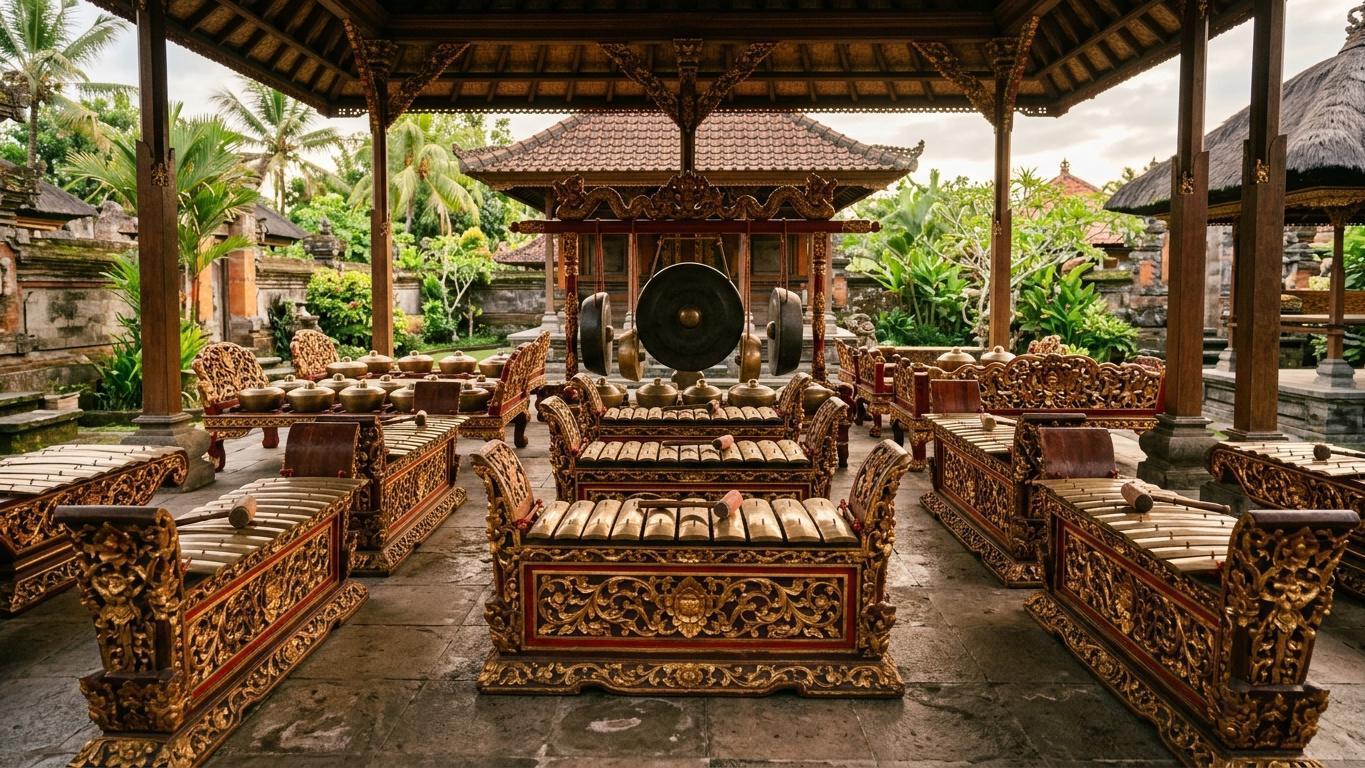
Watching the musicians is worth as much attention as watching the dancers. In a well-rehearsed gamelan gong kebyar ensemble, the entire group changes tempo and volume together with no visible cue, reading the lead drummer’s tiny gestures instead. That same interlocking, no-single-leader structure shows up in Kecak’s vocal chant, which suggests the underlying musical logic runs deeper than any one dance style.
The Three Dances Every Visitor Should Know
Most first-time visitors encounter one of three specific dances. Each tells a different kind of story and rewards a different kind of attention.
Kecak: The Fire and Trance Dance
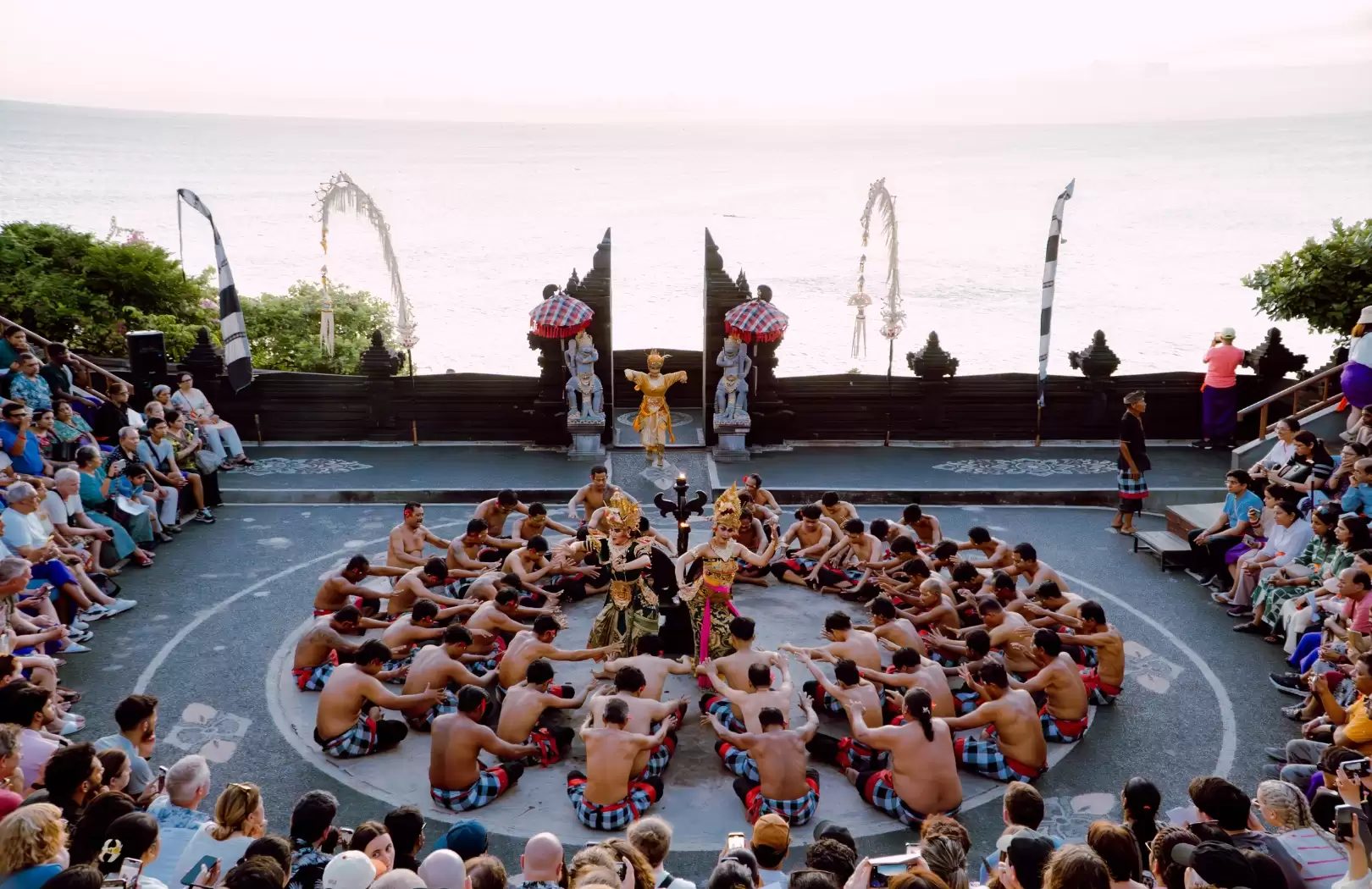
Kecak strips away every instrument. Fifty to a hundred bare-chested men sit in concentric rings, chanting cak-cak-cak in interlocking rhythms that build and collapse like waves, their arms raised and trembling in unison. The chant alone carries the entire soundtrack for a retelling of the Ramayana, centered on Prince Rama’s rescue of Sita from the demon king Rahwana.
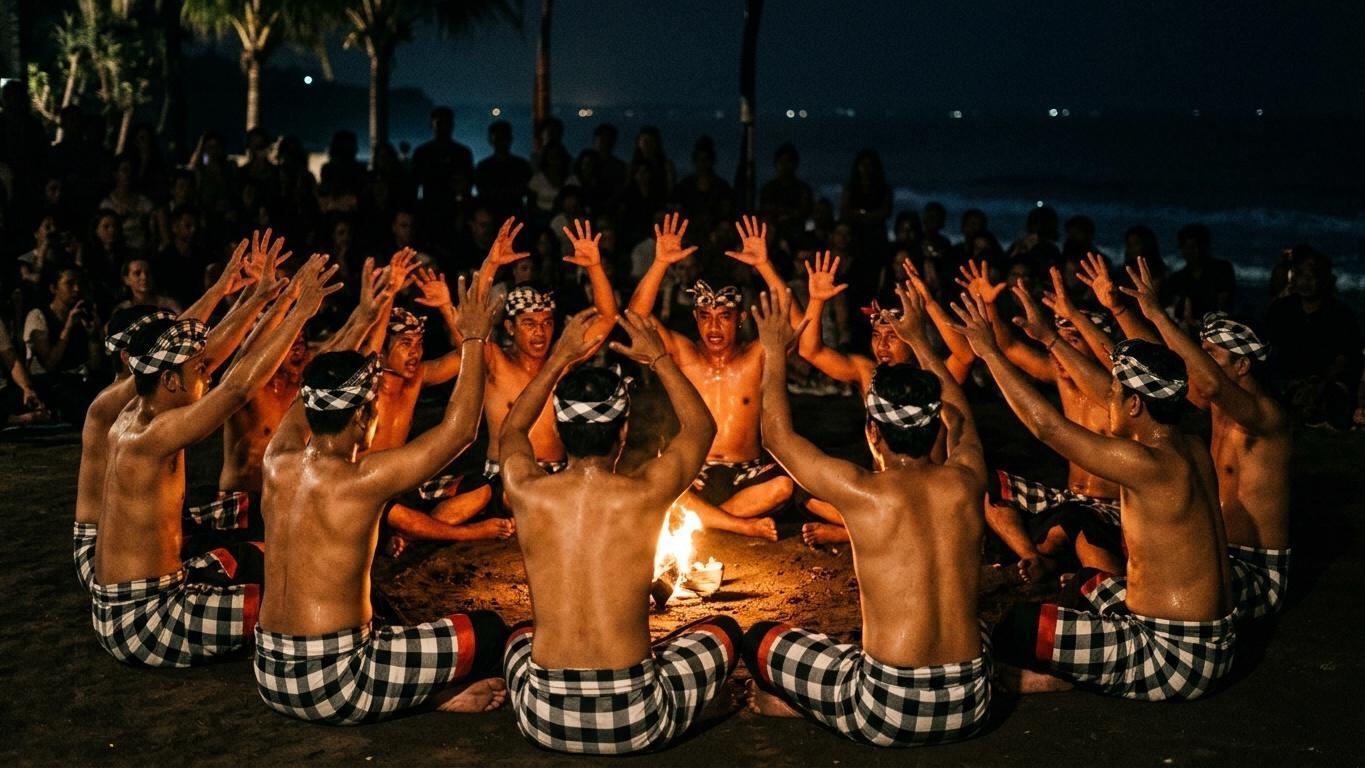
The dance was created in the 1930s by Balinese artist Wayan Limbak working with German painter Walter Spies, who adapted it from an older trance ritual called Sanghyang for a stage audience. That origin makes Kecak the clearest example of balih-balihan done well: newer than the ancient wali rituals, but built from genuinely old material and performed with total commitment.
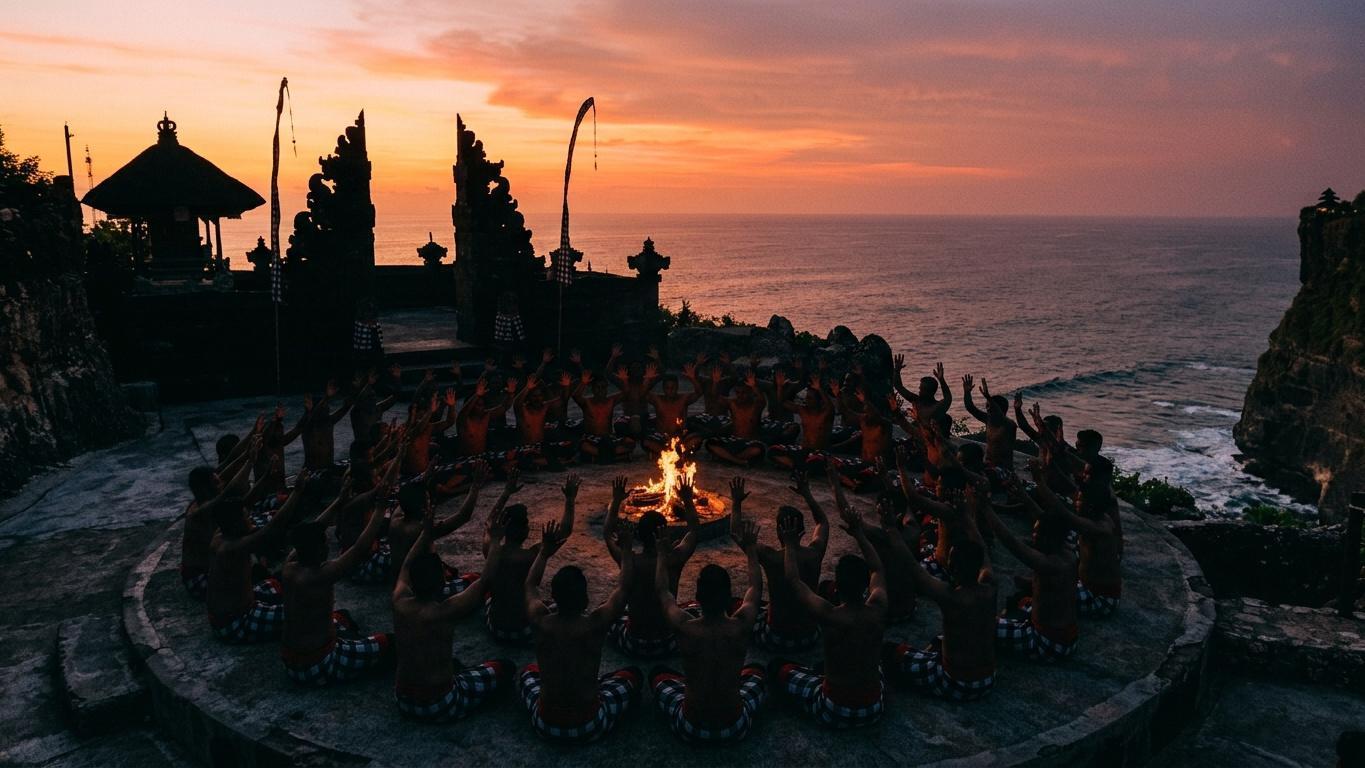
The performers themselves rotate through several roles across a single show: the main chanting chorus, a smaller group playing Rama, Sita, and Rahwana with full costume and mask, and often a Barong-style creature woven into the same performance for visual variety. Watching from a raised seat rather than ground level makes the concentric-circle choreography read much more clearly, since the pattern is designed to be seen from above almost as much as from the side.
Legong: The Dance of Divine Nymphs
Legong is widely considered the most technically demanding Balinese dance. Two or three young female dancers, trained from childhood, perform intricate finger movements, darting eye expressions, and precise footwork in tight synchronization, accompanied by a full gamelan orchestra rather than a chant.
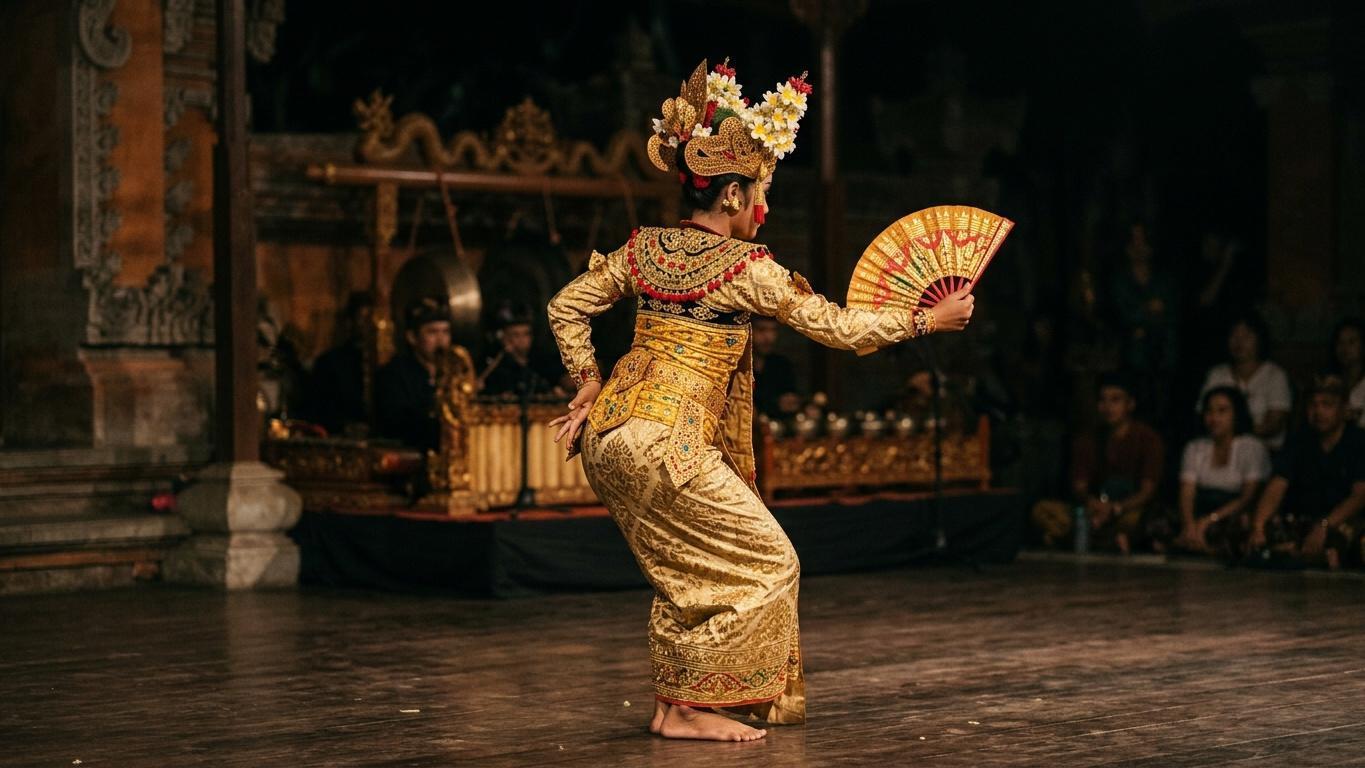
A full Legong performance lasts 30 to 45 minutes and draws on a wide range of Hindu epics, local legends, and Javanese romances. Because the narratives vary so much from village to village, no two shows are exactly alike.
While the stories shift, the most common version staged for visitors is Legong Kraton, the Palace Legong. This specific variation tells the tale of King Lasem, a ruler who kidnaps a princess and is warned of his own impending death by a mythical bird before going to war.
The two lead dancers move in a near-perfect mirror image of each other for most of the performance, a technical detail that becomes obvious only once a viewer knows to watch for it.
Barong: Good Versus Evil
Barong is Bali’s protective lion-like spirit, and the Barong dance stages his eternal battle against Rangda, the widow-witch who represents chaos and destruction. The Barong costume alone takes real craftsmanship, an elaborate mane and mask often considered sacred in its own right, and the performance includes genuine acrobatics rather than purely symbolic movement.
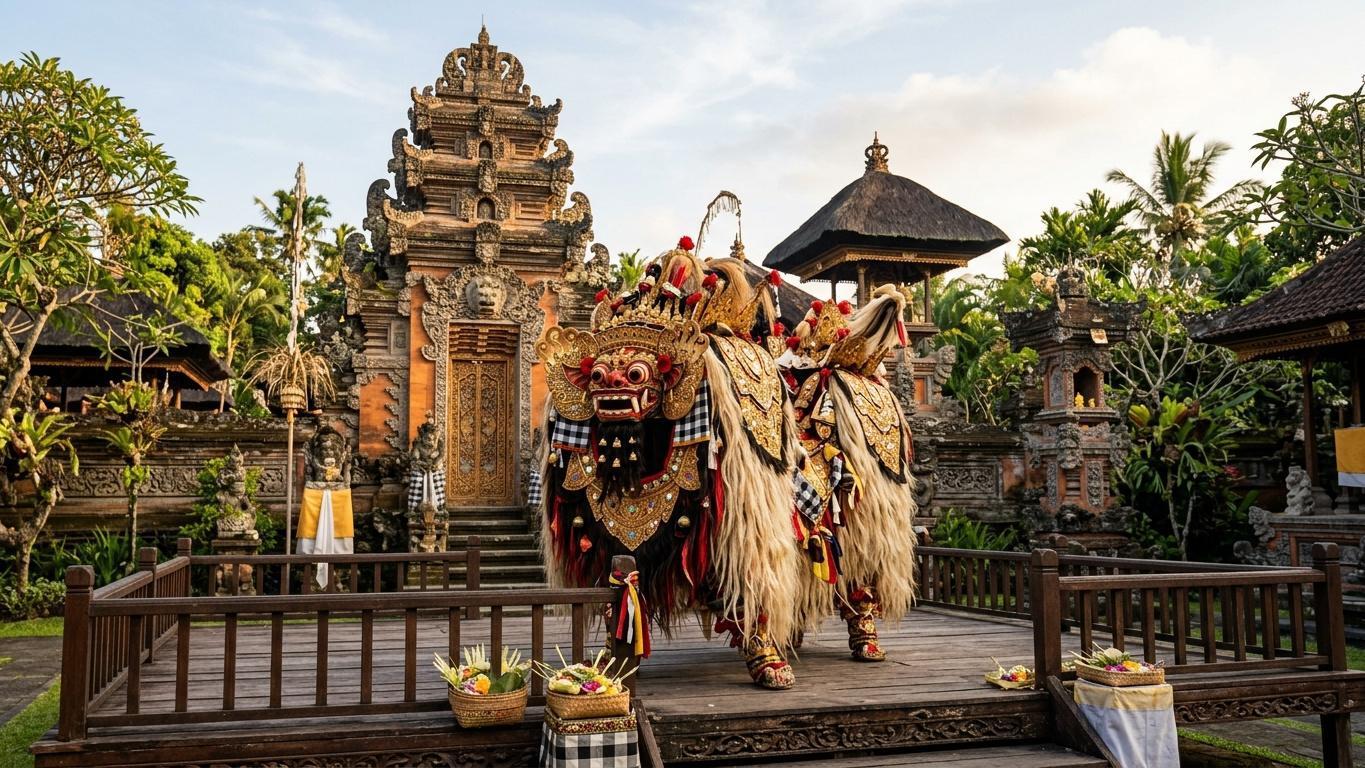
Unlike Legong’s court refinement, Barong leans toward the theatrical and occasionally comic, with masked clown characters breaking the tension between the dance’s darker beats. It is usually the easiest of the three for a first-time viewer to follow, since good and evil are visibly, physically in conflict on stage rather than implied through subtle gesture.
A full Barong story never resolves cleanly. Barong and Rangda fight to a standstill rather than a decisive win, reflecting a Balinese Hindu worldview in which good and evil exist in a permanent, necessary balance rather than one ultimately defeating the other. Some performances add a Kris dance sequence at the end, in which entranced performers turn their own daggers inward against their chests without harm, considered a sign that the Barong’s protection is actually taking effect.
A quick side-by-side helps before choosing which show to prioritize on a short trip.
| Dance | Music | Typical Length | Best For |
|---|---|---|---|
| Kecak | Vocal chant only, no instruments | 45-60 minutes | First-time visitors, dramatic sunset setting |
| Legong | Full gamelan gong kebyar orchestra | 30-45 minutes | Viewers wanting technical precision and court refinement |
| Barong | Full gamelan orchestra | 60-90 minutes | Families, viewers who prefer a clear plot with humor |
Where to Watch Balinese Dance in and Around Sanur
Venue matters as much as the dance itself. A few options sit close enough to Sanur to fold into a single evening without a long transfer.
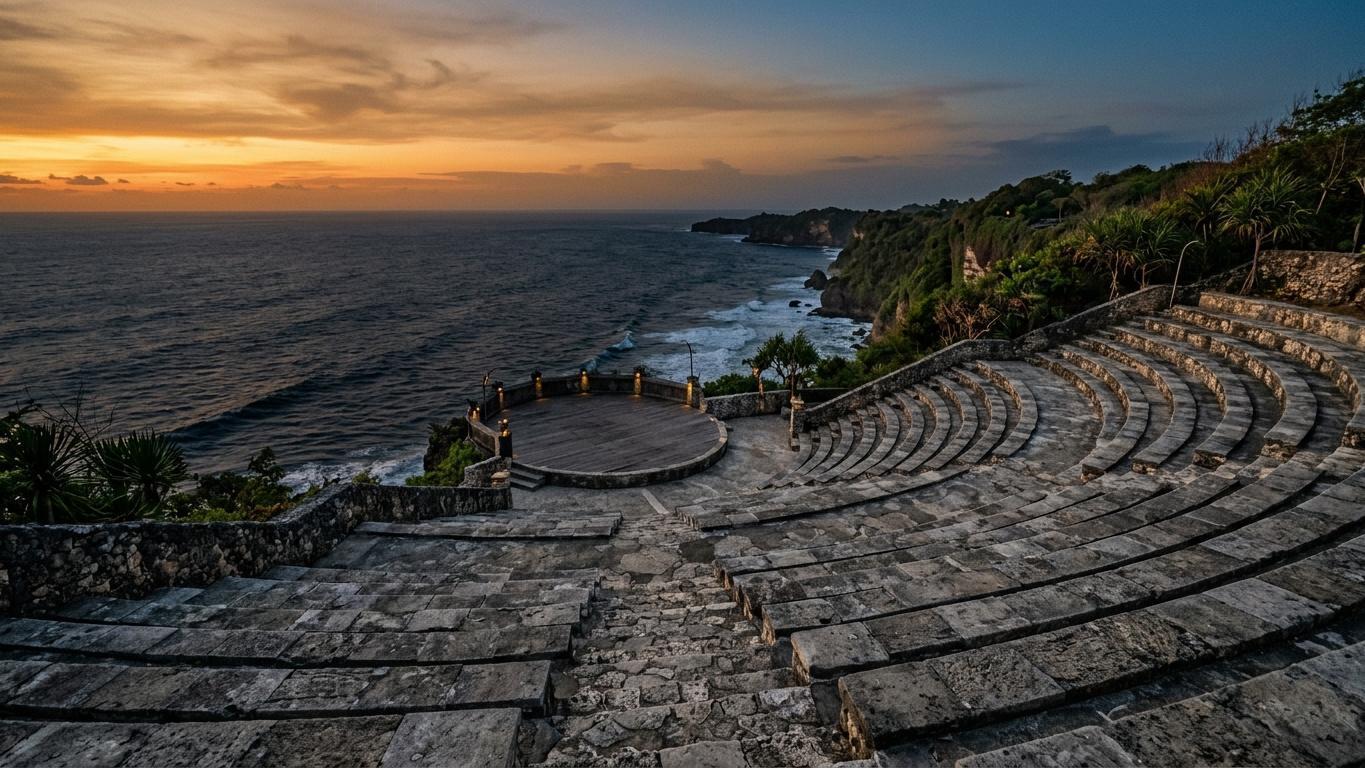
- Uluwatu Temple: nightly Kecak at sunset on a clifftop stage above the Indian Ocean, roughly 45 minutes to an hour from Sanur by car; arrive early since seating fills up well before the 18:00 start.
- Ubud Palace (Puri Saren Agung): nightly Legong performances around 19:30 with a full gamelan orchestra, about 45 minutes to an hour from Sanur.
- Batubulan village: daily Barong dance performances in the late morning, around 09:30 to 10:30, in an open-air stage roughly 30 to 40 minutes from Sanur.
- Kertalangu Cultural Village: the closest cultural venue to Sanur itself, inside an 80-hectare rice-farming village just off the bypass road, with dance performances scheduled around festivals and group bookings rather than a fixed nightly slot.
Ticket prices for these public shows typically run from around IDR 100,000 to IDR 150,000 per person (roughly $6 to $10 USD) for a standard seat, with reserved front-row seating usually priced higher. Confirm the current schedule and price directly with the venue before finalizing plans, since performance days and times shift more often than the venues advertise.
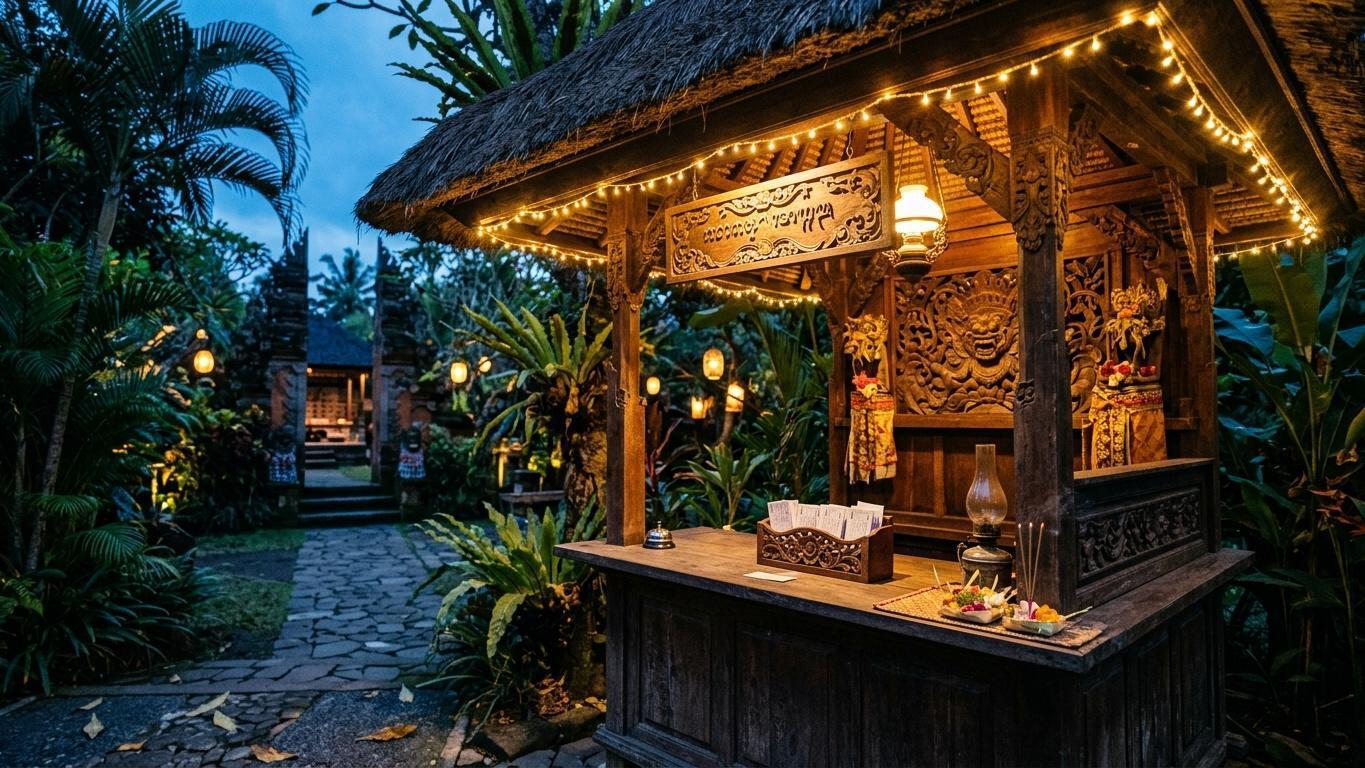
A number of venues, particularly around Ubud, bundle a rijsttafel-style Indonesian dinner with a Legong or Barong show as a single evening package. It costs more than buying a dance ticket alone, but it removes the logistics of timing a separate meal around a fixed showtime, which matters more for Kecak specifically, since a late-sunset start leaves a narrow window to eat beforehand without rushing.
The Masks and Costumes Behind the Characters
A Barong mask is traditionally carved from pule wood, a tree Balinese carvers consider sacred in its own right, and a finished mask is blessed by a priest before it’s ever used in performance. Many troupes treat their Barong mask as a living object rather than a prop, storing it in its own small shrine between shows rather than in ordinary costume storage.
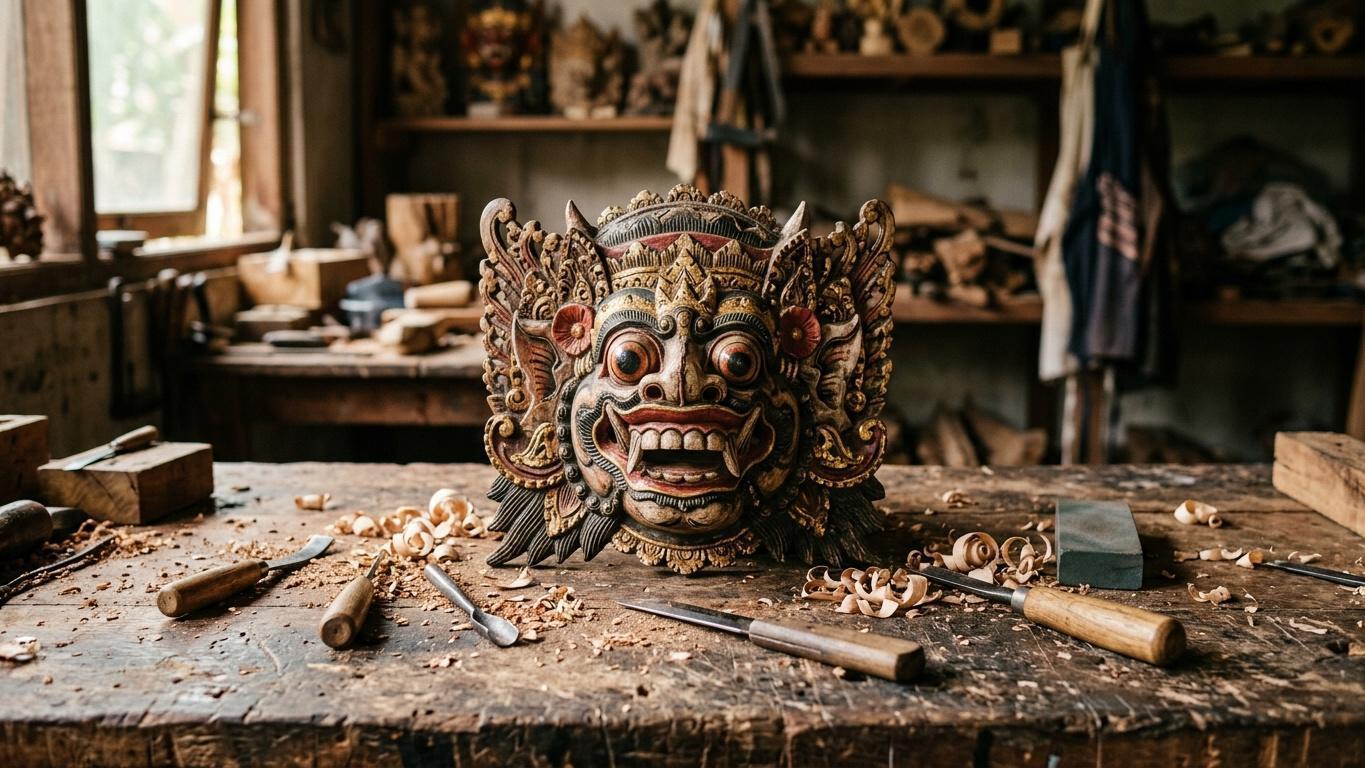
Legong costumes lean in the opposite direction: tightly wrapped gold-brocade fabric (songket) that deliberately restricts the dancer’s stride, forcing the small, precise steps the dance is known for, topped with a gilded headdress often finished with fresh frangipani flowers. Kecak needs the least costuming of the three, black-and-white checkered cloth (poleng, symbolizing the balance of good and evil) wrapped around the waist of every chanting performer, which keeps visual focus entirely on the chant and movement rather than spectacle.
Sanur’s Own Connection to Balinese Dance
Sanur’s link to Balinese dance runs deeper than its venues. Belgian painter Adrien-Jean Le Mayeur, who settled on Sanur Beach in the 1930s, fell in love with Ni Pollok, a Legong dancer barely out of her teens at the time. She retired from performing, married him in a traditional Balinese ceremony in 1935, and spent the next 25 years as his primary model, appearing in painting after painting of Sanur’s beach and daily life.
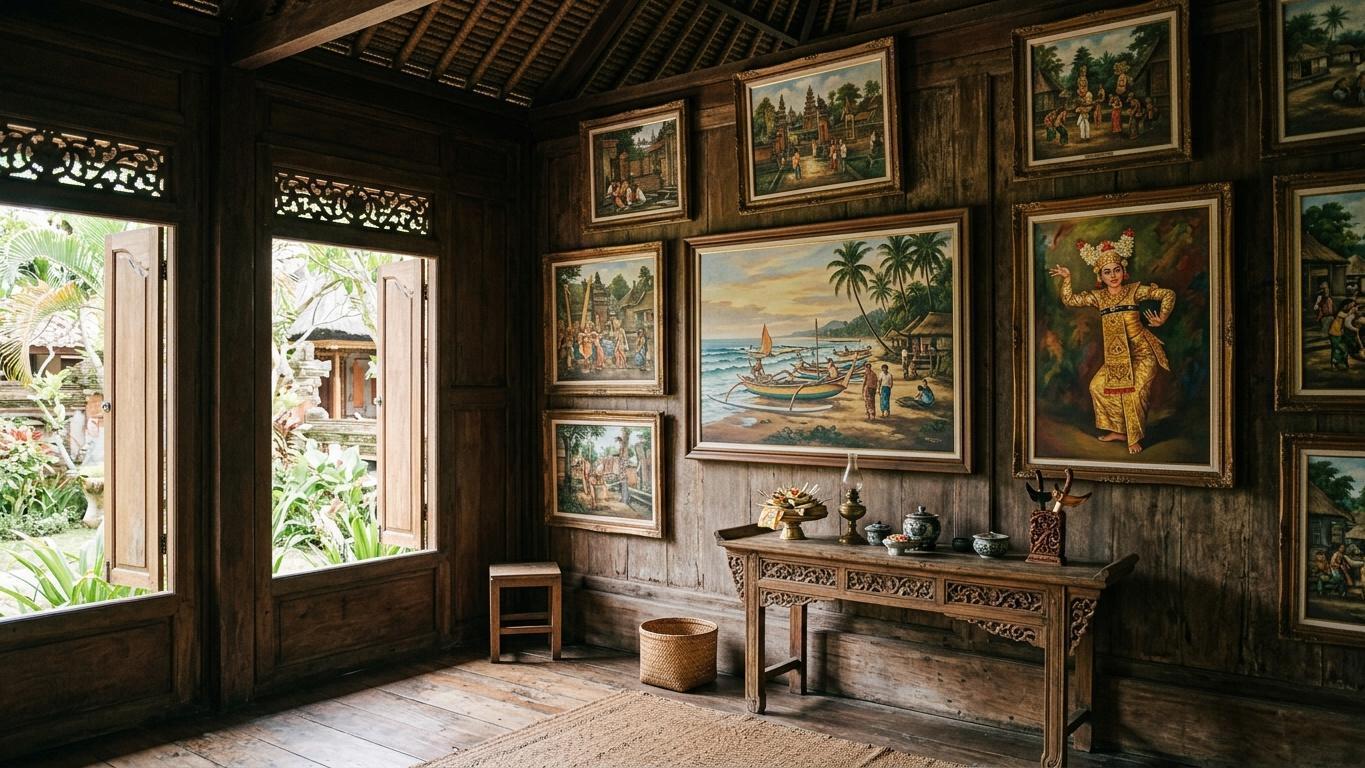
That body of work is part of what drew President Soekarno’s attention to Sanur as a tourism destination in the first place, a direct line from a Legong dancer’s own story to the beachfront hotels standing here today. Le Mayeur’s house and studio are preserved as the Le Mayeur Museum on Sanur Beach, and Ni Pollok lived there until her death in 1985.
The museum still holds around 88 of Le Mayeur’s paintings, many of them showing Ni Pollok mid-dance or in traditional Legong dress against Sanur’s own coastline, decades before that same coastline filled in with hotels. Seeing the paintings before or after watching a live performance elsewhere on the island gives a clearer sense of how continuous the tradition actually is, the same gestures and costumes captured on canvas in the 1930s are still being danced today.
What to Wear and How to Behave at a Performance
Most balih-balihan shows built for visitors don’t require temple dress, but a few habits make for a better, more respectful night.
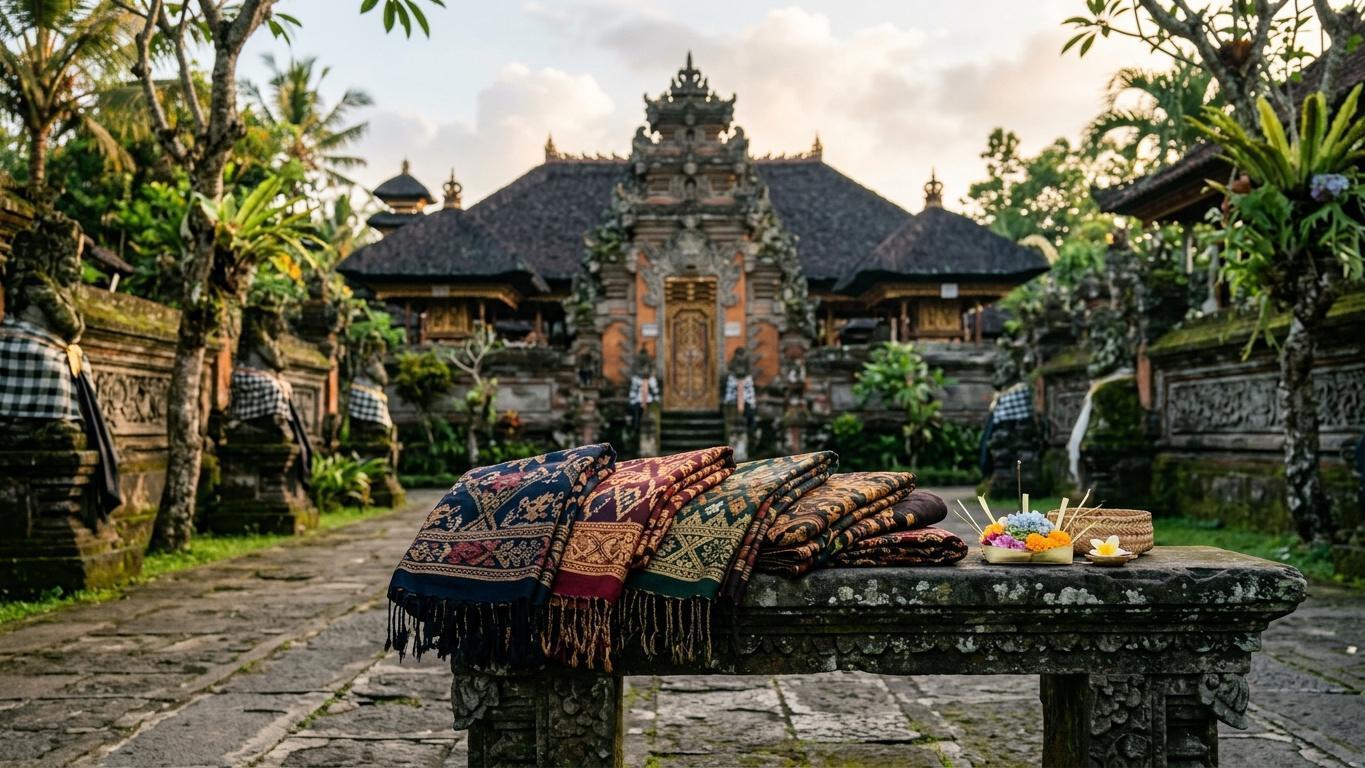
- Dress modestly and comfortably; shoulders and knees don’t need to be covered at a standard tourist performance, but swimwear or beachwear reads as out of place. A light layer helps too, since open-air venues like Uluwatu cool down fast once the sun drops.
- If a performance takes place on or near active temple grounds, a sarong is often provided or required at the entrance; wear it as instructed rather than draping it loosely.
- Keep flash photography to a minimum during trance sequences, particularly in Kecak, where sudden light can genuinely startle performers.
- Arrive 20 to 30 minutes early for outdoor venues like Uluwatu, where seating is unassigned and fills up quickly before sunset.
- Applause is welcome at the end, but the audience generally stays quiet during the performance itself rather than cheering mid-scene.
Best Time to See Balinese Dance
Balinese dance runs year-round regardless of the season, since most performances take place indoors or under a covered stage. The dry season from April to October brings more reliable weather for the open-air Kecak sunset shows at Uluwatu specifically, where a clear sky makes a genuine difference to the experience.
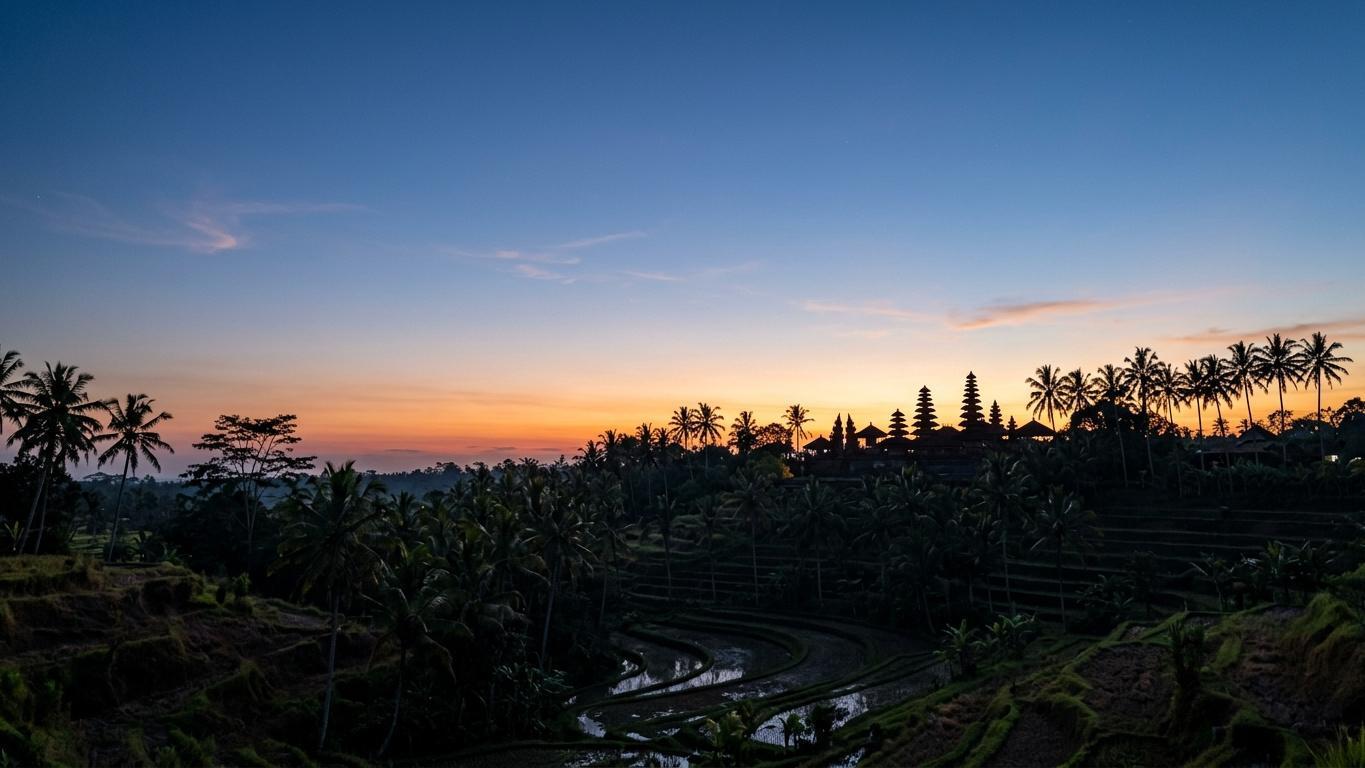
Odalan, the anniversary festival held at each individual temple roughly every 210 days on the Balinese Pawukon calendar, is the one occasion when visitors might catch a genuine wali or bebali performance rather than a balih-balihan show, though these remain ceremony-first and spectacle-second. Ask a hotel concierge or local guide whether a nearby temple has an odalan coming up during your stay; it isn’t printed on a fixed public calendar the way tourist shows are.
Weeknight shows tend to run smaller crowds than weekend performances, particularly at Ubud Palace and Uluwatu, both popular day-trip stops for visitors based across the island. Booking a seat a day or two ahead through a hotel concierge rather than walking up removes most of the risk of a sold-out evening, especially during the July to August and December peak travel windows.
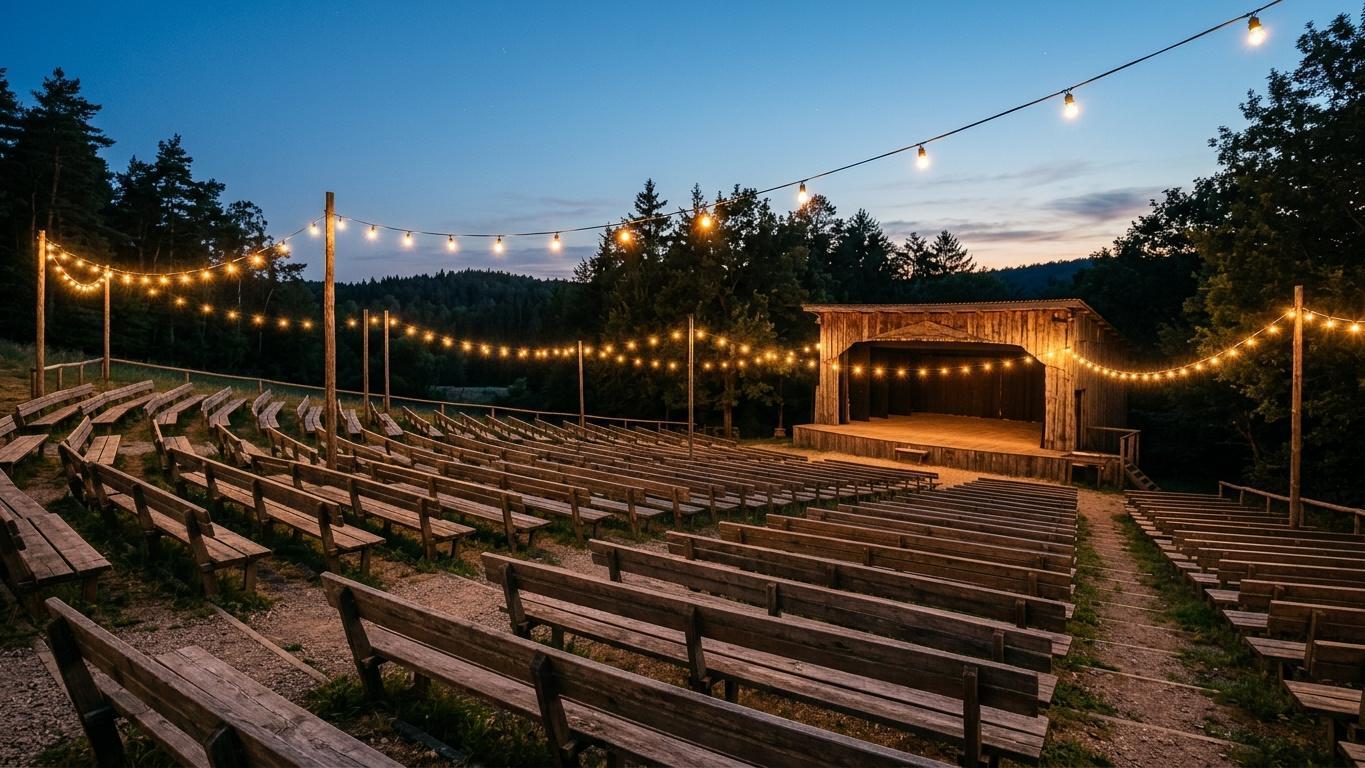
Rainy-season afternoons, common from December through March, rarely cancel a show outright, since most venues either sit under a covered stage or can shift indoors on short notice; Uluwatu’s clifftop stage is the one real exception where a heavy downpour can force a cancellation. Checking the forecast on the day of an outdoor Kecak show is worth the extra step for anyone traveling during the wetter months.
Where to Stay for Bali’s Best Cultural Experiences
Basing a trip in Sanur puts several of Bali’s cultural touchpoints within easy reach, and one hotel here carries a cultural story of its own worth knowing before booking.
Bali Beach Hotel
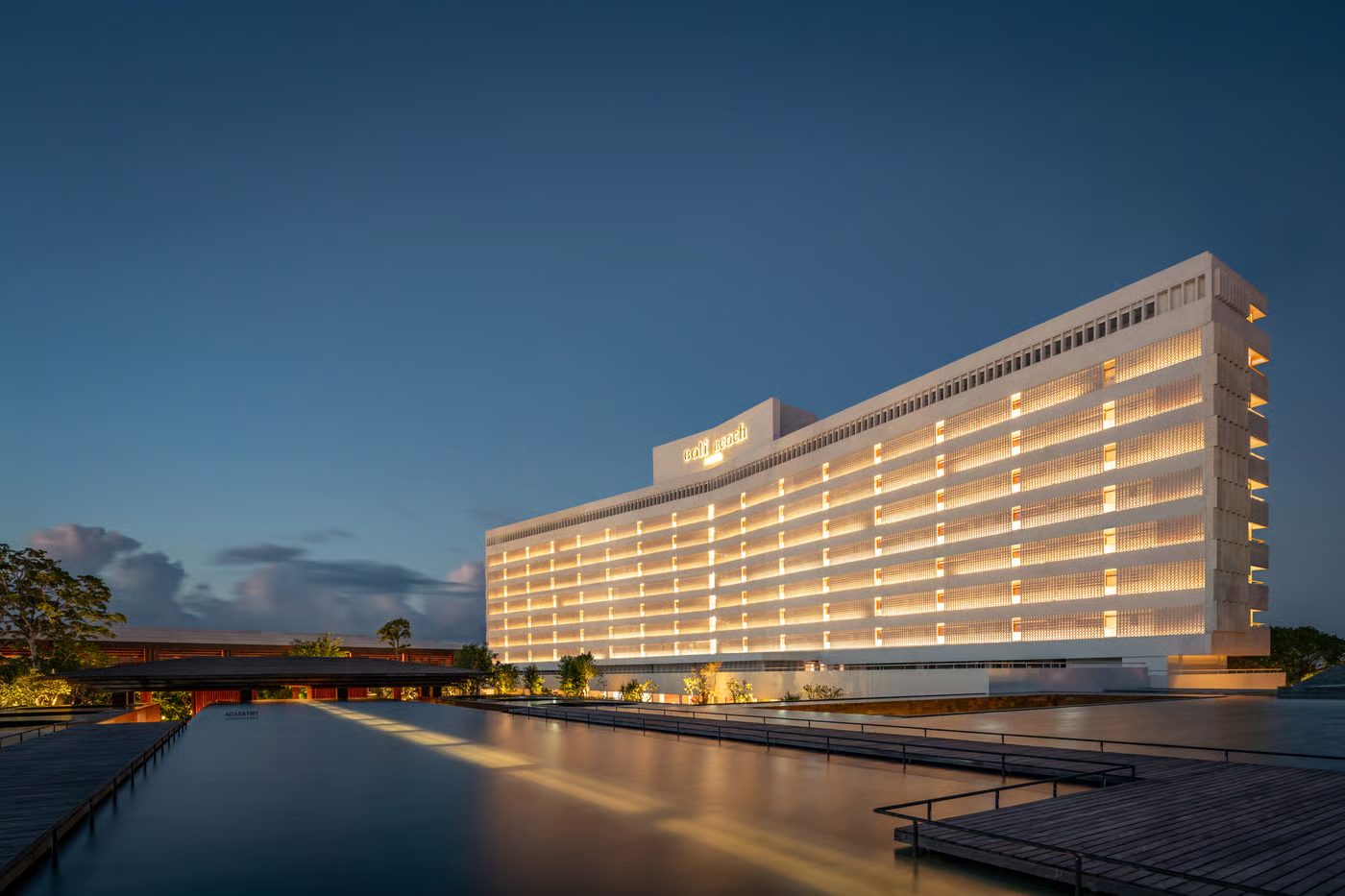
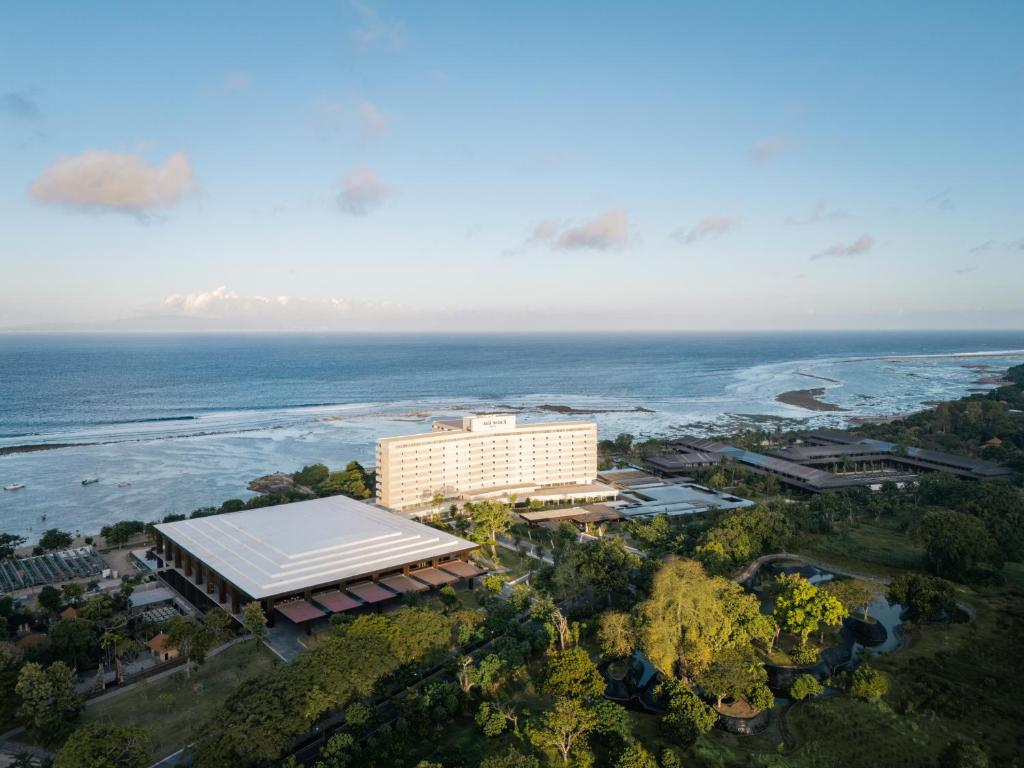
Bali Beach Hotel The Heritage Collection sits directly on Sanur’s beachfront, about five minutes’ walk from the Le Mayeur Museum, the former home and studio of the Belgian painter whose depictions of Balinese daily life first drew President Soekarno’s attention to Sanur as a tourism destination. That history makes the hotel itself part of the island’s cultural story, not just a base near it.
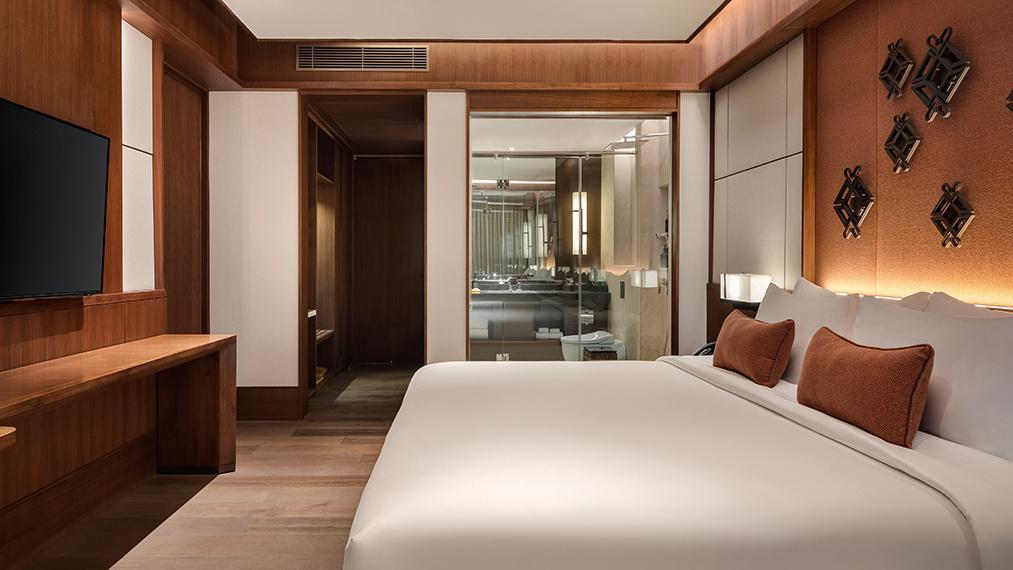
The Deluxe Room suits a couple seeking a straightforward, ocean-view base for evenings spent chasing dance performances around the island. It measures 38 square meters, with a king or twin bed configuration and a private balcony facing the water.
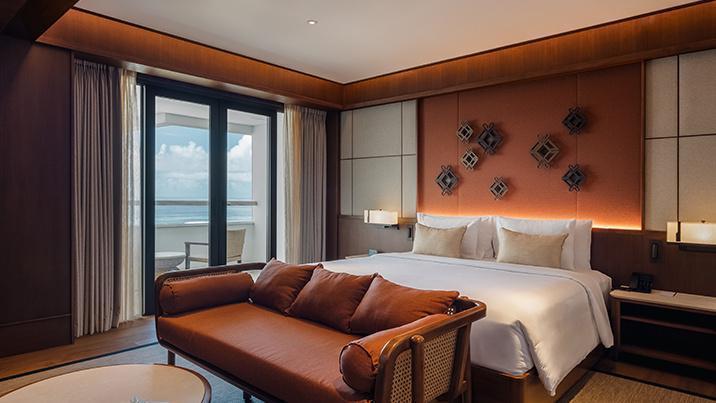
The Executive Room works better for a family or small group, sold as a Family Suite or Family Room depending on layout, 55 square meters with partial ocean view and enough separation between sleeping and living space that a late return from an evening show doesn’t wake the whole room.
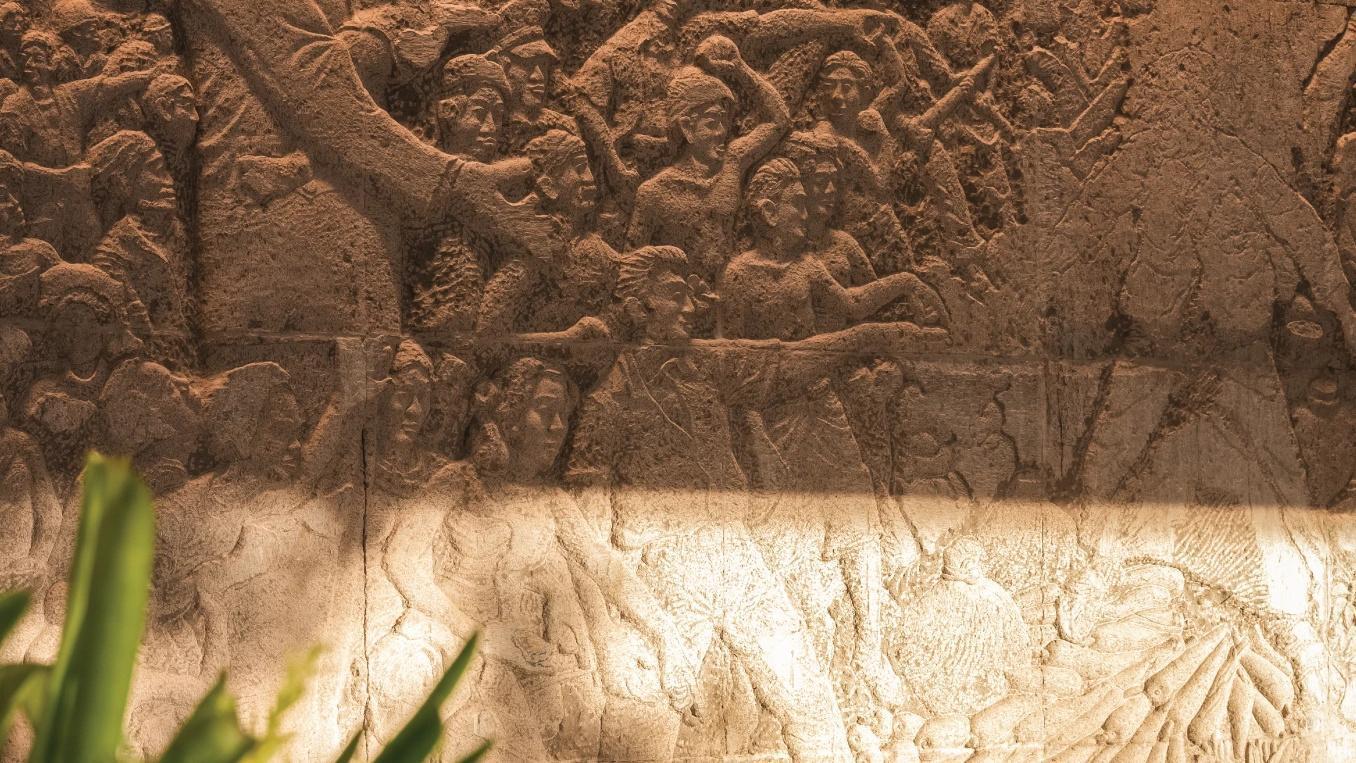
The hotel’s own cultural centerpiece sits inside Soekarno Lounge, home to a large andesite-stone relief carved in 1966 depicting daily Balinese life centered on President Soekarno himself.
The relief was left unfinished after the political upheaval of 1965, when authorities demanded that the President’s image be removed to keep the work funded; sculptor Harijadi refused and completed it at his own expense. It remains one of the most specific, tangible pieces of Balinese-Indonesian cultural history on display anywhere in Sanur, worth a stop even for guests staying elsewhere.
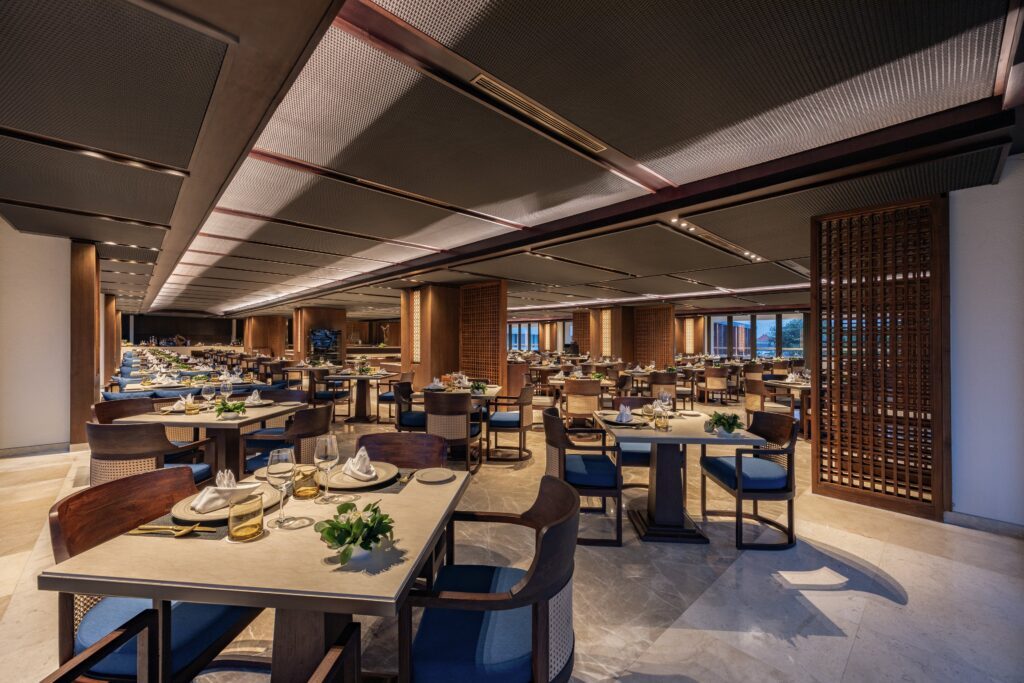
Roso Restaurant carries the cultural theme through to the table. Roso means flavor, or feeling, in Javanese, and the kitchen builds its menu around recipes passed down through generations across the archipelago.
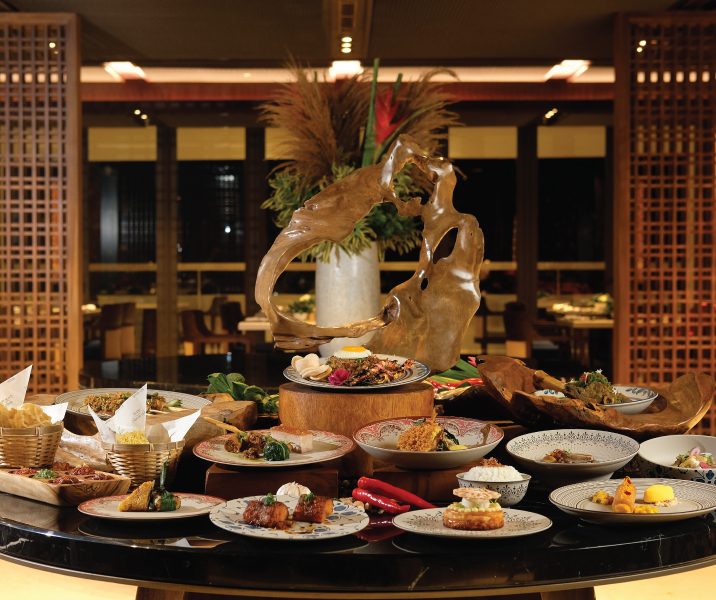
Rahang Tuna Asap, a smoked tuna jaw dish substantial enough to share between four or five people, Sate Klopo Surabaya, Bebek Goreng Bumbu (spiced fried duck), and Soto Ayam Betawi, alongside a Serombotan Klungkung vegetable dish from Bali’s own east coast. Breakfast runs from 6:30 to 10:30, lunch from 12:00 to 15:00, and dinner from 18:00 to 22:30.
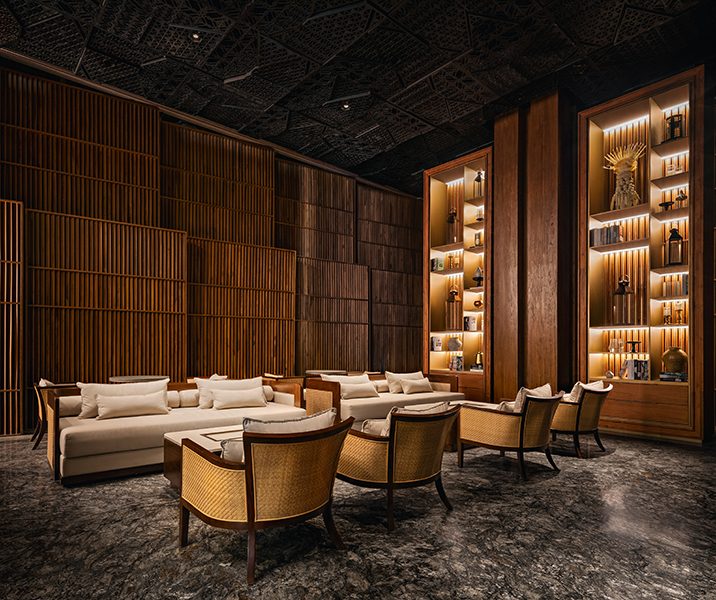
Sutasoma Lounge takes the same heritage angle into cocktails, built around a library-style room of warm wood and traditional Balinese motifs. The Island Negroni swaps gin for Balinese arak, and the Bali Mule uses arak from Karangasem with a house spice mix, lemon, and ginger ale, both a direct nod to Indonesian spirits rather than an imported cocktail list. Open 11:00 to midnight.
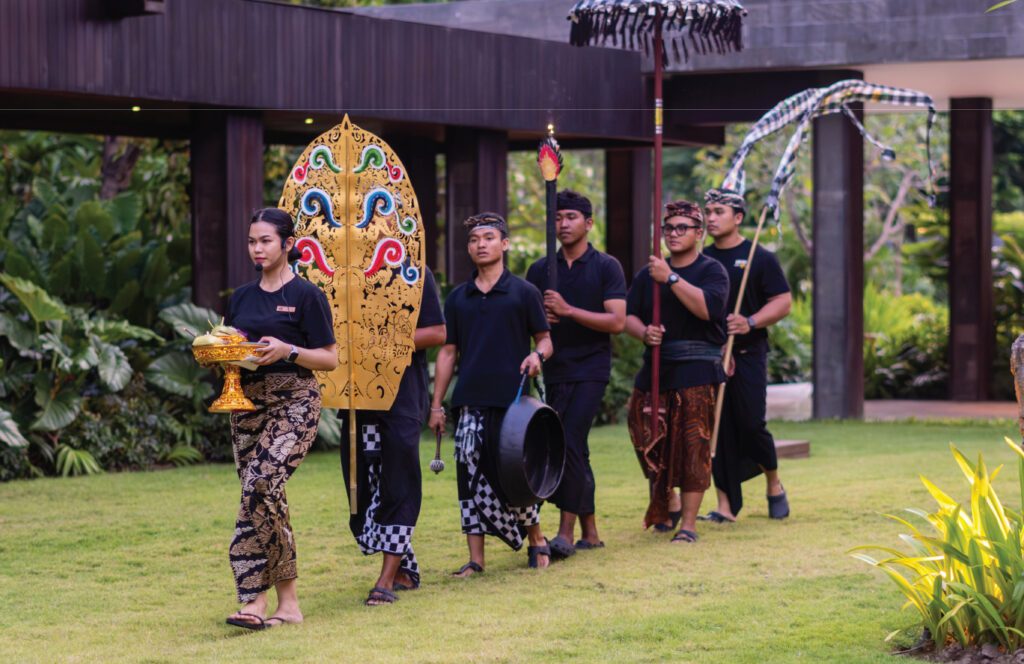
For a shorter cultural moment without leaving the property, the hotel runs its own Sandi Kala Ritual three evenings a week, Tuesday, Thursday, and Friday from 18:00 to 18:20 at the Tirtasada Lobby, a brief Balinese ceremony marking the transition between day and night. It isn’t a dance performance, but it’s a genuine, small-scale piece of the same spiritual tradition that Kecak and Legong draw from, and it costs nothing to attend.
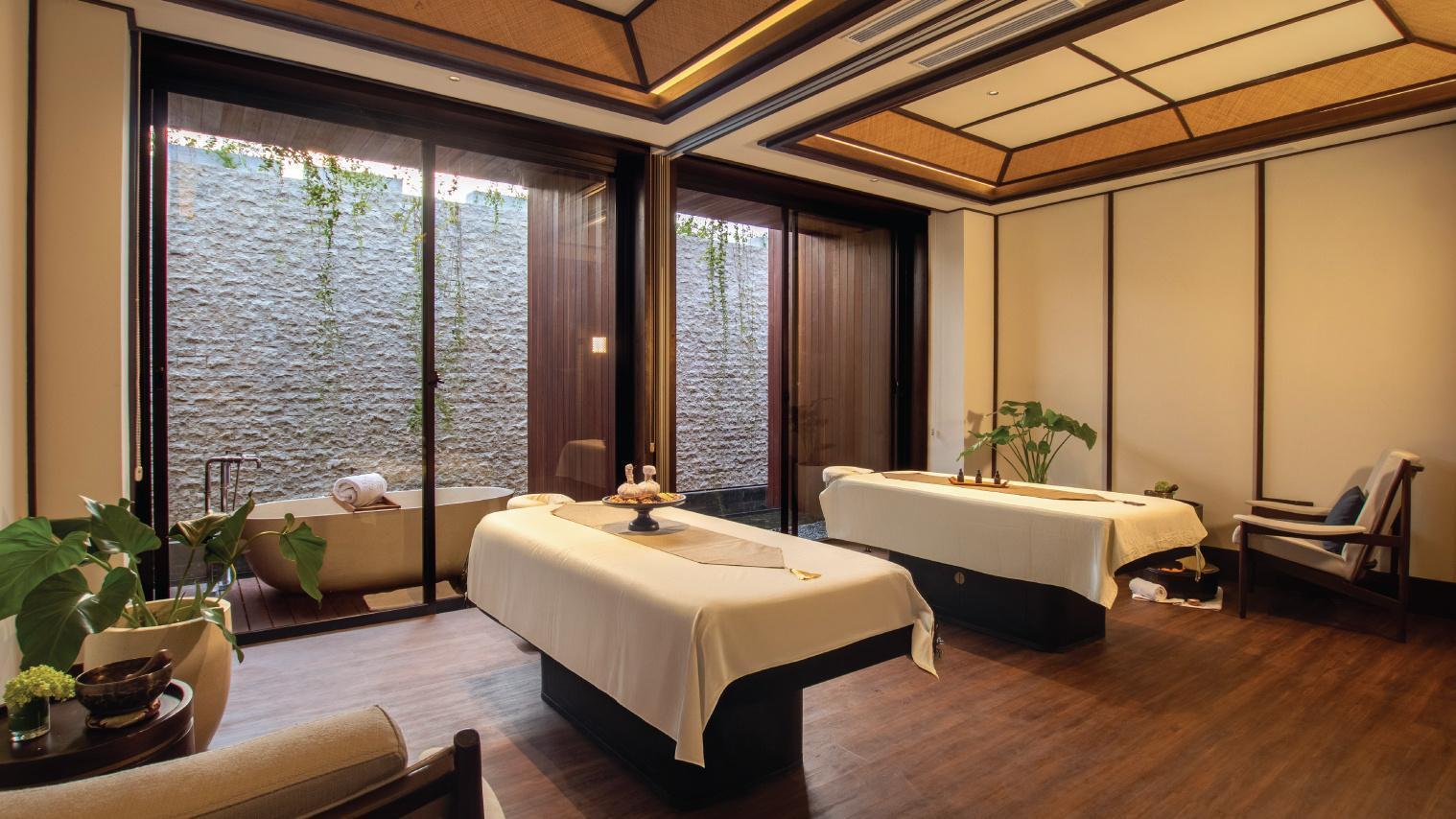
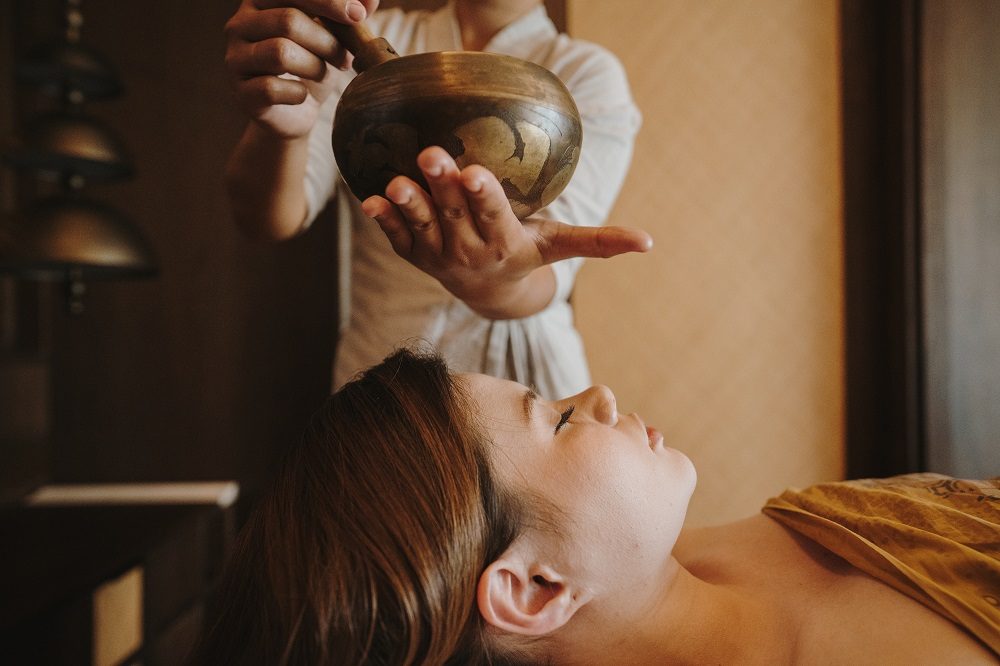
After a night spent watching Kecak’s fire and trance or Barong’s full-length battle, Taru Pramana Spa & Wellness offers a genuinely relevant wind-down: the Balinese Apun Massage draws from the same Lontar Usada healing manuscript that shapes much of the island’s traditional culture, in 60 or 90-minute sessions. Book at least 24 hours ahead, since evening slots fill quickly after a full day of sightseeing.
The concierge desk at the hotel arranges transport and tickets to the island’s bigger cultural sites directly, including Uluwatu, Ubud, and temple visits further afield, which removes most of the logistics from an evening built around a dance performance well outside Sanur.
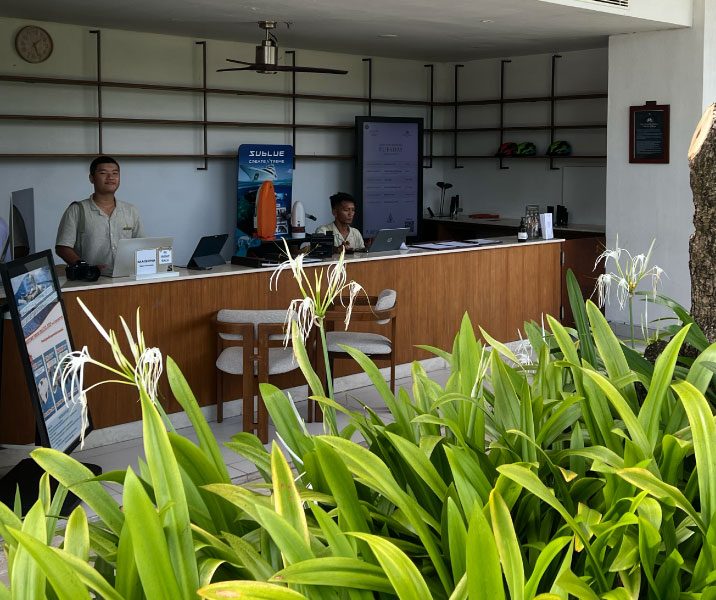
For a trip built specifically around cultural depth rather than beach time, that single point of coordination is worth more than it sounds, since Kecak’s fixed sunset start and Legong’s fixed evening start rarely leave room for a scheduling mistake.
Detailed Information:
- Address: Jalan Hang Tuah, Sanur Kaja, Denpasar Selatan, Kota Denpasar, Bali 80227, Indonesia
- Phone Number: +62 (361) 2012000
- Reference Price: Contact the hotel directly for current room rates, which vary by category and season
Conclusion
Balinese dance rewards a little context before the lights go down: knowing the difference between a genuine temple offering and a staged show, and knowing what Kecak, Legong, and Barong are each actually telling through movement. Sanur puts most of the island’s best performance venues within a short drive, with genuine cultural depth close by too.
Book a stay at Bali Beach Hotel to base an evening of Balinese dance from a beachfront property with its own real, tangible piece of Indonesian cultural history built directly into the grounds.
Frequently Asked Questions
What are the three main types of Balinese dance?
Kecak, Legong, and Barong are the three dances most visitors encounter. Kecak uses only a chanting chorus and no instruments, Legong is danced by one to three performers with intricate finger and eye movements to a gamelan orchestra, and Barong stages a costumed battle between good and evil with genuine acrobatics.
Where can I watch Balinese dance near Sanur?
Kertalangu Cultural Village sits closest to Sanur itself, just off the bypass road, though its performances are tied to events and group bookings rather than a fixed nightly slot. Uluwatu Temple (Kecak at sunset), Ubud Palace (nightly Legong), and Batubulan village (daily Barong) are all within 30 to 60 minutes by car and remain the most reliable, frequently scheduled options for a guaranteed show on a specific night.
Is Kecak dance the same as Barong dance?
No, they are two entirely separate dances with different stories, casts, and music. Kecak is a chant-only performance of the Ramayana with no instruments, usually staged at sunset. Barong is a separate story about the lion spirit Barong battling the witch Rangda, performed with a full gamelan orchestra and elaborate costumes, usually staged in the morning. The two are sometimes confused simply because both are commonly recommended to first-time visitors.
What should I wear to a Balinese dance performance?
Modest, comfortable clothing works for most tourist-facing shows; swimwear or beachwear is out of place. If the venue sits on active temple grounds, a sarong is usually provided or required at the entrance.
How much do Balinese dance tickets cost?
Standard seats at most public performances run roughly IDR 100,000 to IDR 150,000 per person (about $6 to $10 USD), with reserved front-row seating priced higher. Confirm current pricing directly with the venue, since it shifts more often than published schedules suggest.
Is Balinese dance a religious ceremony or a tourist show?
It can be either. Wali dances are sacred temple offerings closed to tourists, bebali dances are semi-sacred and tied to ceremonies, and balih-balihan dances, the genre behind nearly every ticketed evening show, are staged specifically for a public audience while still drawing on the same sacred tradition.
Can I take photos or video during a Balinese dance show?
Generally yes at balih-balihan performances built for visitors, and most venues allow it without a fee. Keep flash to a minimum during trance-heavy sequences, particularly the Kecak chant and any Barong Kris dance segment, and never attempt to photograph inside an active temple ceremony without first asking whether it’s permitted, since wali and bebali rituals are not staged for an audience the way tourist shows are.