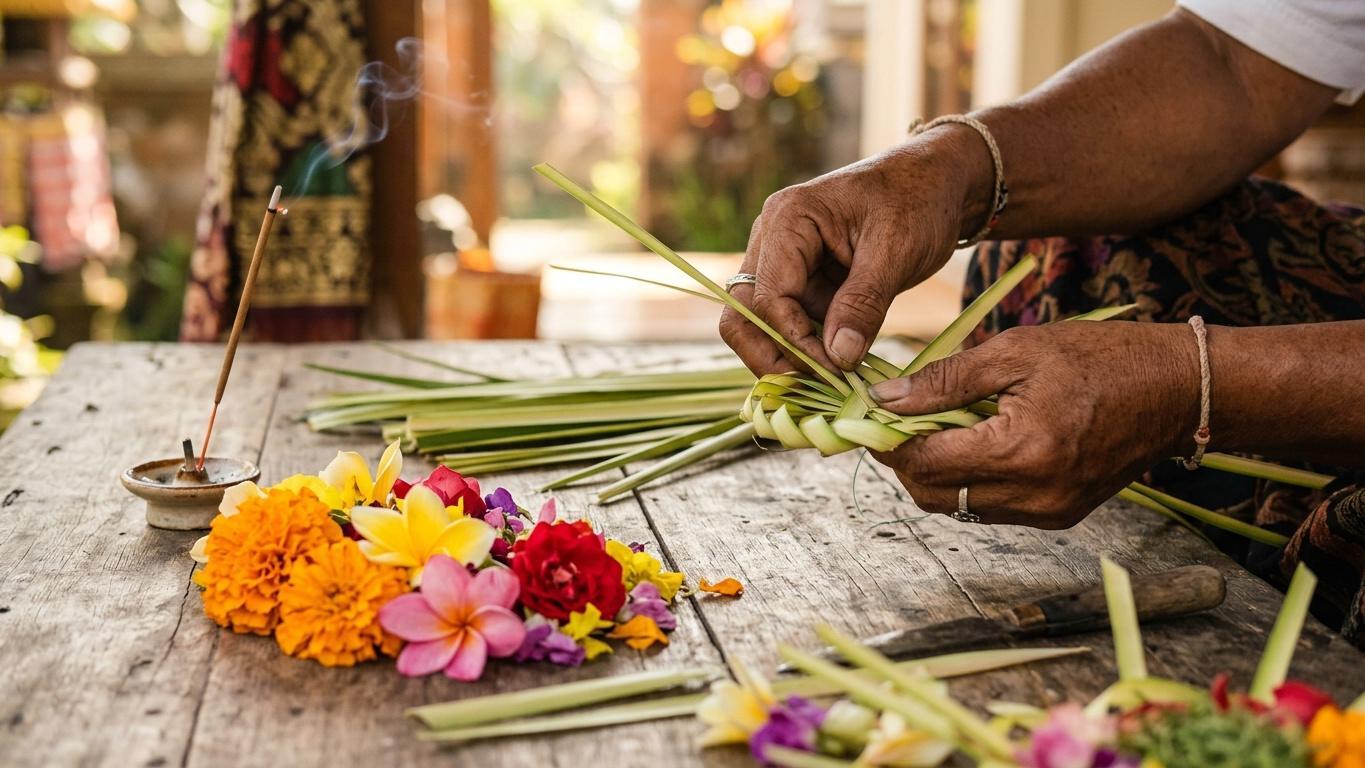
Most visitors assume those small flower baskets scattered across Bali’s sidewalks, doorsteps, and dashboards are decoration. They are not decoration. Each one is canang sari, a fresh prayer laid down by hand that same morning, remade from scratch every single day across the entire island. Once a visitor understands what actually goes into one and tries making canang in Bali themselves, the whole island starts to read differently.
What Is Canang Sari?
Canang sari combines two words: canang, the small palm-leaf tray, and sari, meaning essence. Balinese Hindus present it daily to Sang Hyang Widhi Wasa, the Supreme God, and to the Dewata Nawa Sanga, the nine guardian deities believed to protect each direction of the island. The offering aims to maintain balance between good and bad forces, thanking the gods above while also acknowledging the spirits below so they stay content rather than intruding on daily life.
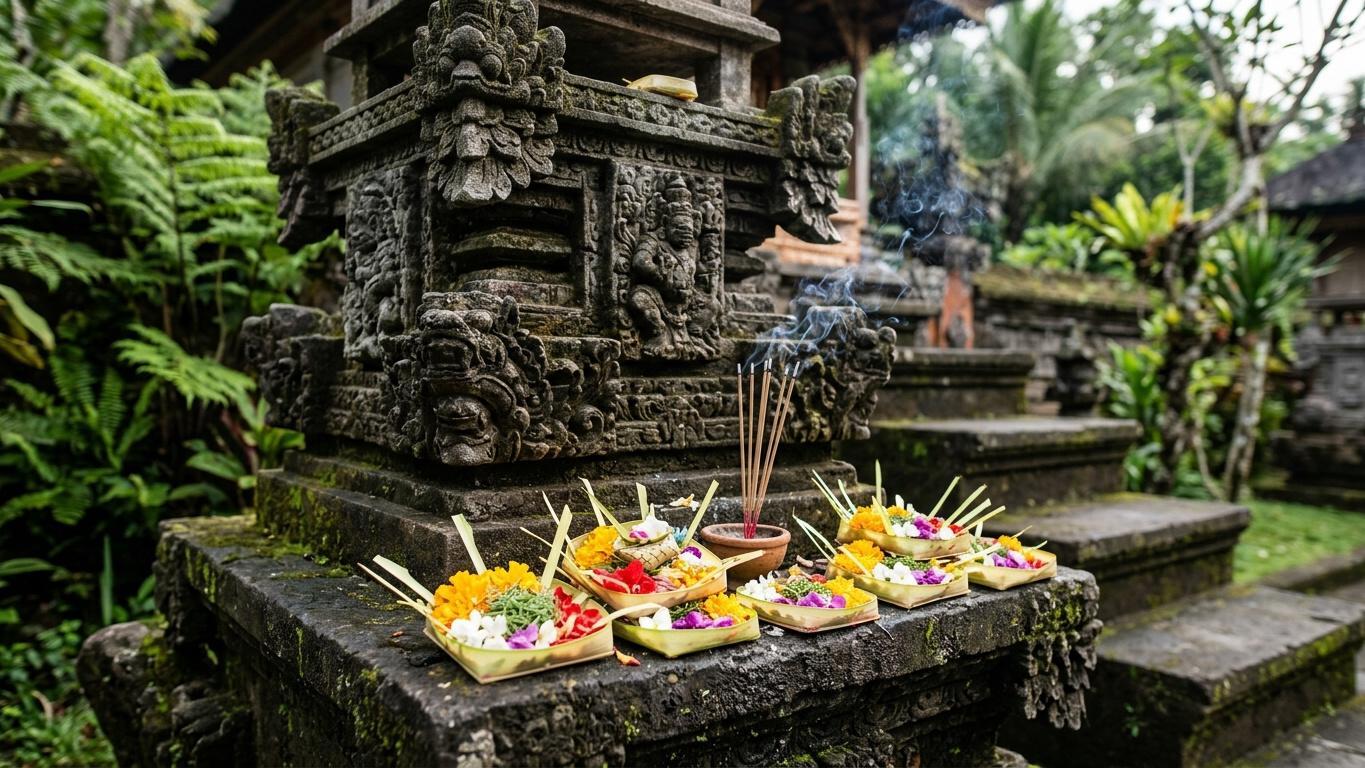
This is not a special-occasion ritual. A Balinese household routinely prepares 50 to 150 canang sari in a single morning, one household member often handling the task before the rest of the day’s routine even starts. They go down at family shrines, business entrances, temple courtyards, and unexpected spots like crossroads and bridges, asking for prosperity, anywhere the family believes a spirit might need acknowledging.
That daily scale is exactly what makes canang making in Bali worth understanding rather than just photographing. A single household’s output over one year runs into the tens of thousands of individual offerings, each one assembled fresh rather than reused or stockpiled, which is part of why the craft gets taught to Balinese children from a young age rather than left to specialists.
What Goes Into a Canang Sari
Every canang sari starts with a ceper, a small square or diamond-shaped tray woven from a fresh coconut or young palm leaf, folded and pinned with a sliver of bamboo rather than glue or thread. Weaving the ceper by hand is a craft in its own right, and it’s usually the first skill taught in any class covering canang making in Bali, well before the actual offering gets assembled on top of it.
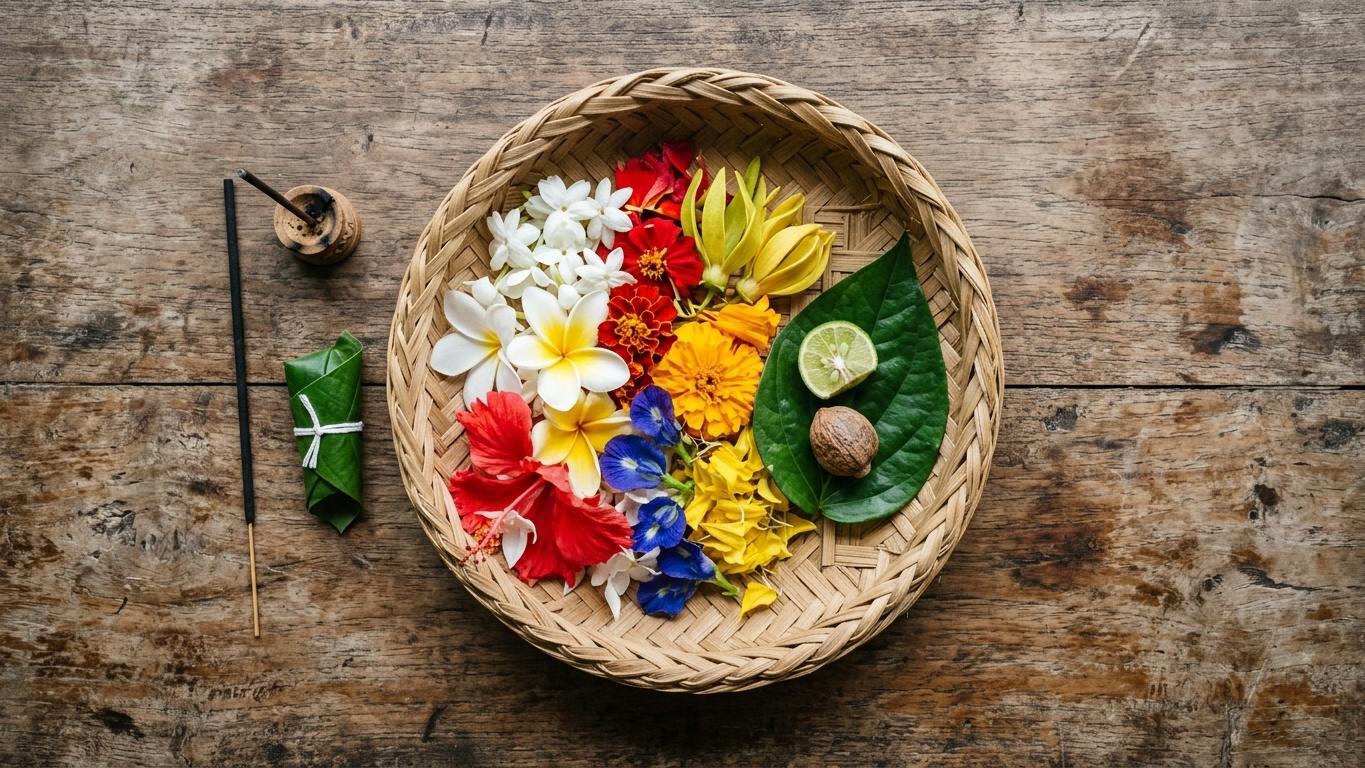
At the center of most canang sari sits a small packet of three ingredients carrying real theological weight: a betel leaf representing Vishnu, a piece of slaked lime representing Shiva, and a gambir nut representing Brahma, together standing in for the Hindu Trimurti. Around that core go fresh flowers, a sliver of banana or sugarcane, sometimes a pinch of rice, and a lit incense stick planted on top to carry the offering’s scent upward.
None of these ingredients are exotic or hard to source, which is part of the point. Canang making in Bali was never designed around rare or expensive materials; it uses whatever a household garden or local market already has on hand, which is exactly why it scales to daily use rather than staying reserved for special occasions.
- Ceper: the woven palm-leaf base, folded and pinned with bamboo
- Betel leaf, lime, and gambir nut: the Trimurti core (Vishnu, Shiva, Brahma)
- Fresh flowers: placed in specific colors and directions, see below
- Banana or sugarcane slice, sometimes rice: a small offering of sustenance
- Incense stick: lit and placed on top, carrying the prayer’s scent skyward
The Meaning Behind the Colors and Directions
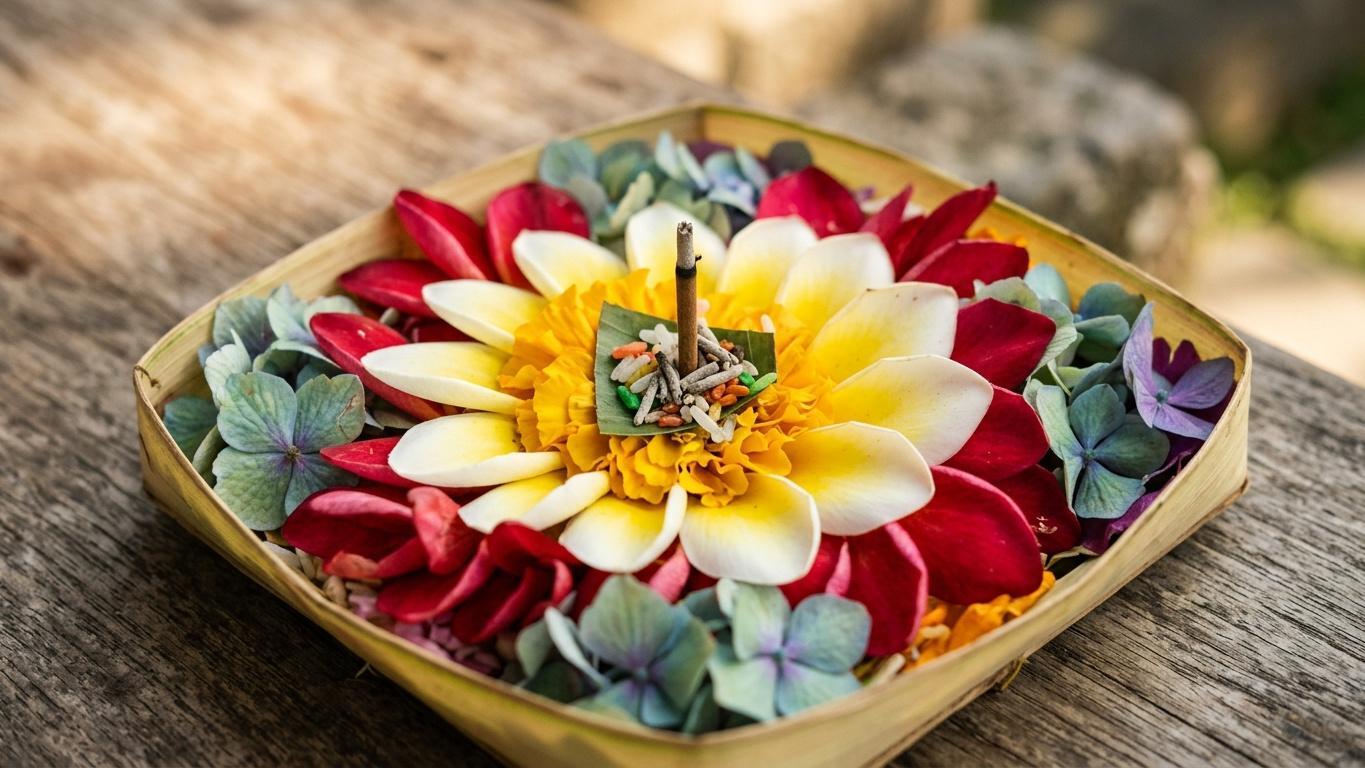
Flower placement inside a canang sari follows a fixed compass, known as Purwa Daksina: starting east and moving clockwise through south, west, and north, each direction carrying its own color and its own petitioned deity.
| Direction | Flower Color | Deity | Prayer For |
|---|---|---|---|
| East (Purwa) | White | Iswara | Spiritual purity |
| South (Daksina) | Red | Brahma | Wisdom and authority |
| West (Pascima) | Yellow | Mahadeva | Intuition |
| North (Utara) | Blue or green | Vishnu | Prosperity and protection |
Getting the direction wrong doesn’t ruin the offering in any punitive sense, but it does change what’s being asked for, which is part of why the craft takes real practice to do quickly and correctly every single morning without pausing to think it through.
A visitor trying canang-making in Bali for the first time usually spends more time on this particular step than on any other, since remembering four colors and four directions under time pressure is genuinely harder than it sounds on paper.
Flowers used most often include frangipani, marigold, and hibiscus, chosen as much for what’s blooming locally that week as for color alone. A household running low on one color sometimes substitutes a close shade rather than skip a direction entirely, a small practical flexibility that experienced offering-makers apply without much thought.
A fifth, central element is sometimes added atop the four-direction arrangement: a single flower, often white, representing Shiva at the very center of the compass, tying the whole arrangement back to a single point rather than leaving it as four separate petitions. Not every household includes this fifth flower daily, but it appears more consistently in offerings made specifically for temple visits.
How to Make a Canang Sari, Step by Step
A basic canang sari comes together in roughly six steps once the ingredients are laid out, though the pace and confidence take years to develop for someone doing it daily. This is the same sequence most beginner classes covering canang making in Bali walk visitors through.
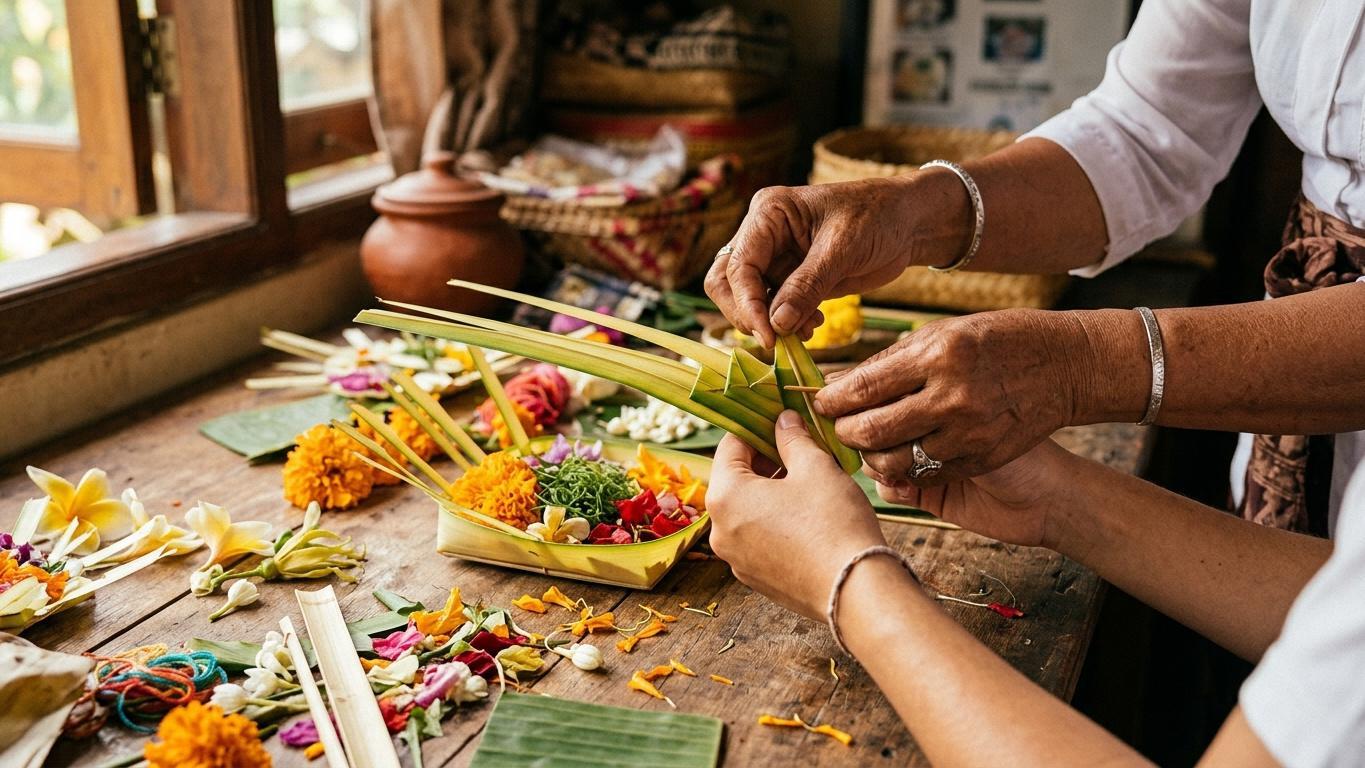
- Weave the ceper base from a fresh coconut or palm leaf, folding the corners into a shallow tray shape and securing them with a small bamboo pin.
- Place the betel leaf, lime, and gambir nut packet at the center as the Trimurti core.
- Add a small piece of banana or sugarcane, and a pinch of rice if the household tradition includes it.
- Arrange the flowers in the Purwa Daksina order, white to the east, red to the south, yellow to the west, blue or green to the north.
- Fill in any remaining space with extra petals or greenery so the offering sits full rather than sparse.
- Set a lit incense stick upright at the center or edge, then present the canang sari with a short prayer and, if available, a sprinkle of holy water.
Most first-timers finish their first canang sari looking noticeably less tidy than the ones lining a temple courtyard, and that’s normal. The finished shape matters less than following each step in the right order, and speed comes only with repetition.
A second or third attempt in the same session usually looks meaningfully better than the first, since the muscle memory for pinning the ceper and spacing the flowers builds fast even within a single two-hour class. Most workshops build in time for at least two full offerings for exactly this reason, rather than stopping after one.
Who Actually Makes These Offerings
Canang making in Bali is overwhelmingly women’s work, passed down mother to daughter from early childhood rather than taught formally. A girl typically starts with simple ceper weaving around age six or seven, well before she’s trusted with flower placement or the Trimurti packet, and builds up to a full, fast, confident practice by her early teens.
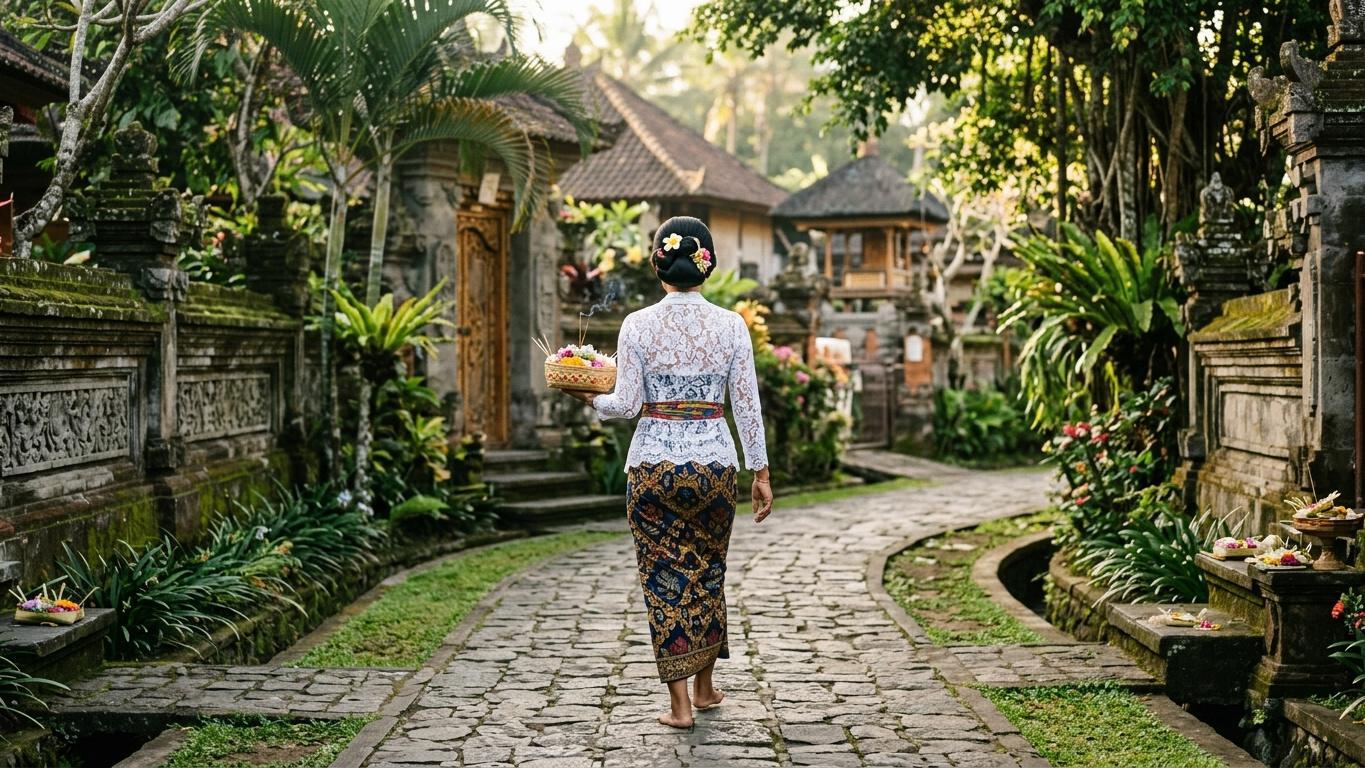
That generational teaching method is part of why the craft has stayed so consistent across the island despite having no written manual most households actually consult. Minor regional variations exist; some villages favor slightly different flower substitutions or a distinct ceper fold, but the core structure, the Trimurti packet and the four-direction color pattern, holds remarkably steady everywhere.
Men participate too, particularly in preparing larger ceremonial offerings or gathering materials, but the daily canang sari routine specifically remains a task most Balinese households still assign to women, which is worth knowing going into a workshop, since many teachers are themselves continuing a skill they learned from their own mother or grandmother rather than running a generic tourist activity.
This is also why a genuinely good class feels noticeably different from a rushed hotel demonstration. A teacher explaining her own family’s specific flower substitutions, or the particular fold her grandmother taught her for the ceper, is passing along a real household tradition rather than a standardized script, and that distinction tends to come through within the first ten minutes of a session.
Where the Materials Come From
Most Balinese households either grow their own coconut palms, banana trees, and a rotating stock of flowers, or buy fresh material each morning at a local market. Denpasar’s traditional markets have dedicated flower and offering-material sections, where a household can buy a day’s worth of banana leaf, betel, lime, gambir, and flowers for a modest sum, rather than sourcing everything from a home garden.
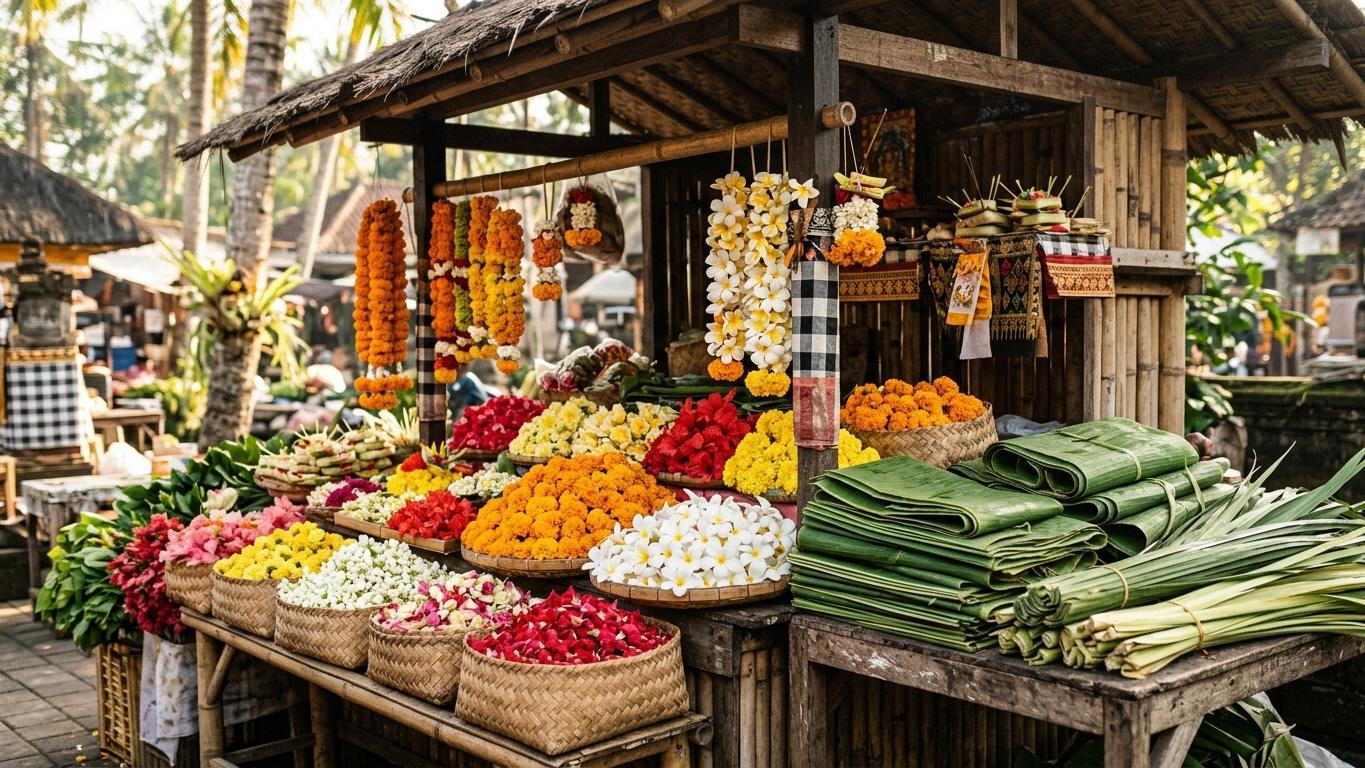
For households short on time, ready-made canang sari are also sold by the dozen at these same markets, assembled by women who make offerings, selling their wares for income rather than as a household chore. Buying a pre-made offering isn’t considered a lesser or less sincere version; it simply reflects how a modern, often working household manages a daily obligation that predates the modern workday.
A visitor interested in the full picture behind canang making in Bali, not just the finished craft, benefits from seeing this market side too: the flower sellers, the pre-made offering stalls, and the daily rhythm of purchase and assembly that surrounds the ritual as much as the ritual itself.
Beyond Canang Sari: Bigger Offerings for Bigger Occasions
Canang sari is the daily baseline, but Balinese offerings scale up considerably for ceremonies and festivals.
Banten: The Broader Category
Banten refers to the broader category of Balinese offerings, and a full banten for a temple festival or life ceremony can include dozens of components built around a base structure similar to the ceper but far larger and more elaborate.
Gebogan: The Towering Fruit-and-Flower Offerings
Gebogan, the towering fruit-and-flower offerings women carry balanced on their heads to temple ceremonies, are probably the most visually striking version, built around a banana-stem core stacked with fruit, rice cakes, and flowers into a structure that can stand a meter or more tall. Making one takes hours rather than minutes and is usually a shared task among several women in a family or banjar rather than a solo effort like a daily canang sari.
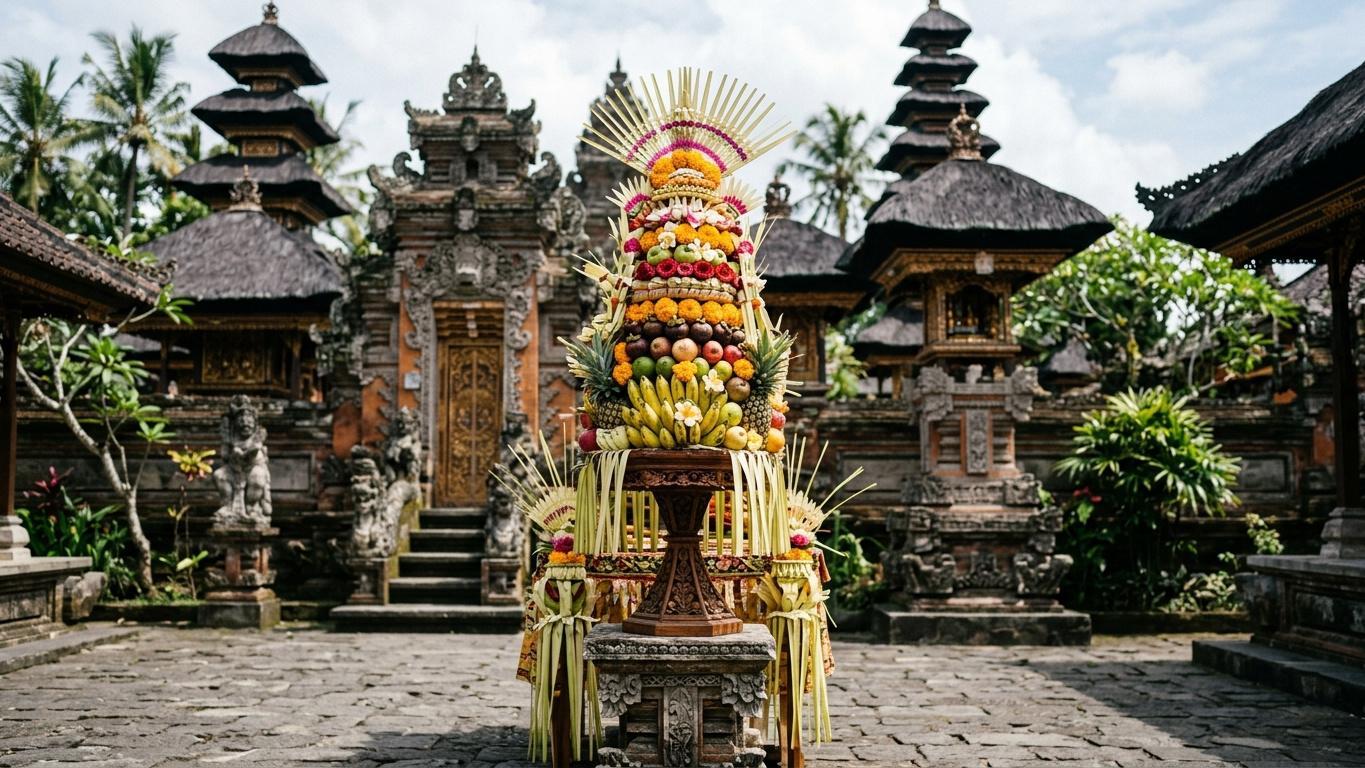
Understanding this range, from a two-minute daily canang sari to an hours-long gebogan, provides useful context for anyone who tries making canang in Bali and wants to understand where that specific skill sits within the island’s much larger tradition of offerings. The daily version is the entry point, not the ceiling.
Where to Learn Canang Making in Bali
Most hands-on classes for canang making in Bali run around two hours and start with the ceper weaving before moving into the full offering, often framed around the Balinese concept of Tri Hita Karana, harmony between people, nature, and the divine. Ubud has the widest concentration of dedicated workshops, many run out of a family compound rather than a formal classroom, with private and small-group sessions both common.
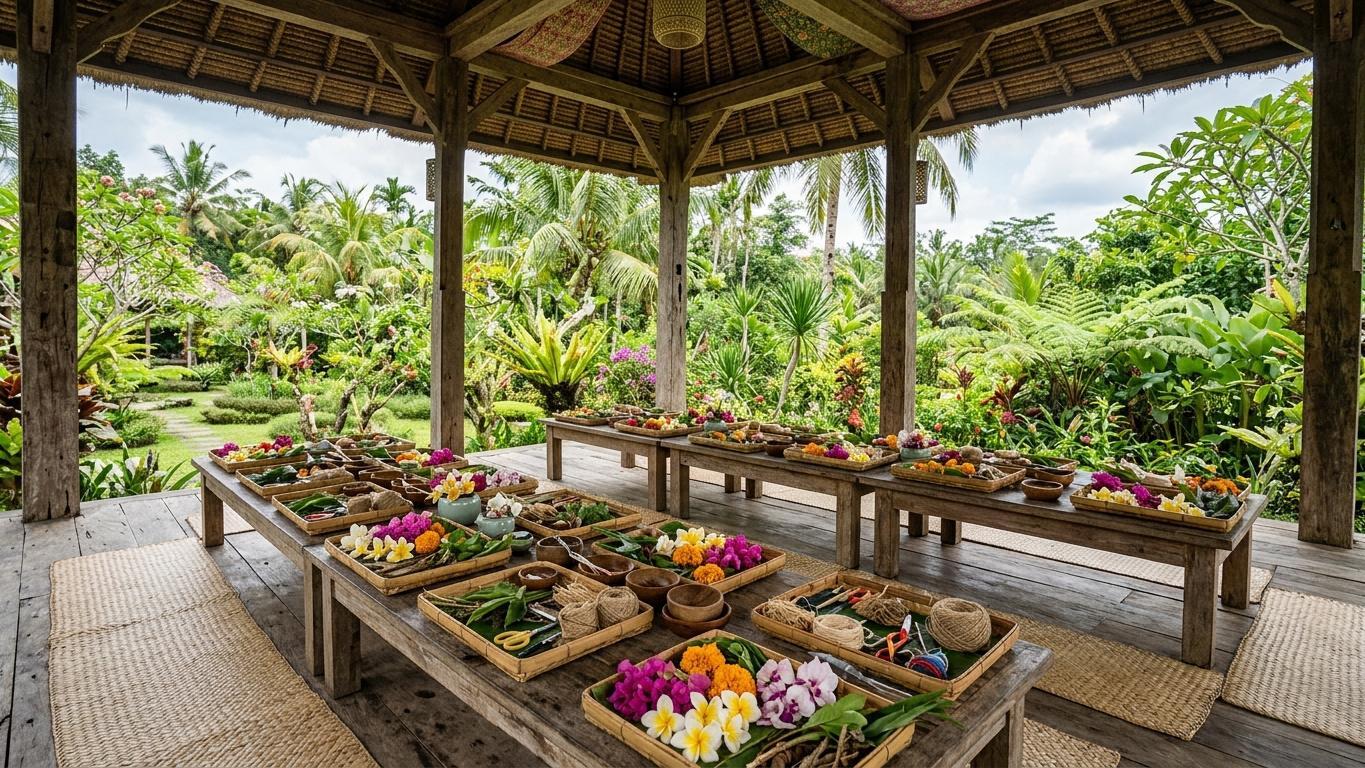
Closer to Sanur, a hotel’s activity desk can often arrange a private local class or a small-group session as part of its curated signature experiences, which removes the need to travel to Ubud specifically for a two-hour activity. Asking a day or two in advance gives the concierge time to confirm a teacher’s availability, and a private in-house session usually costs more than joining an existing group class in Ubud, but it saves the round-trip transfer time.
Family-run classes tend to teach a more personal, less standardized version of canang making in Bali than a larger tour-group setup, since the instructor is usually demonstrating their own household’s exact daily routine rather than a simplified version for visitors. Asking a few questions about the teacher’s own background is a good way to gauge which kind of class a specific listing actually offers before booking.
Where You’ll See Canang Sari Every Day, and How to Walk Around Them
Once a visitor knows to look, canang sari turn up everywhere: outside shop entrances first thing in the morning, on car dashboards, along sidewalk edges, at the base of statues, and inside every temple courtyard. They’re freshest and most visible between roughly 7:00 and 9:00 AM, before the day’s heat and foot traffic disturb them.
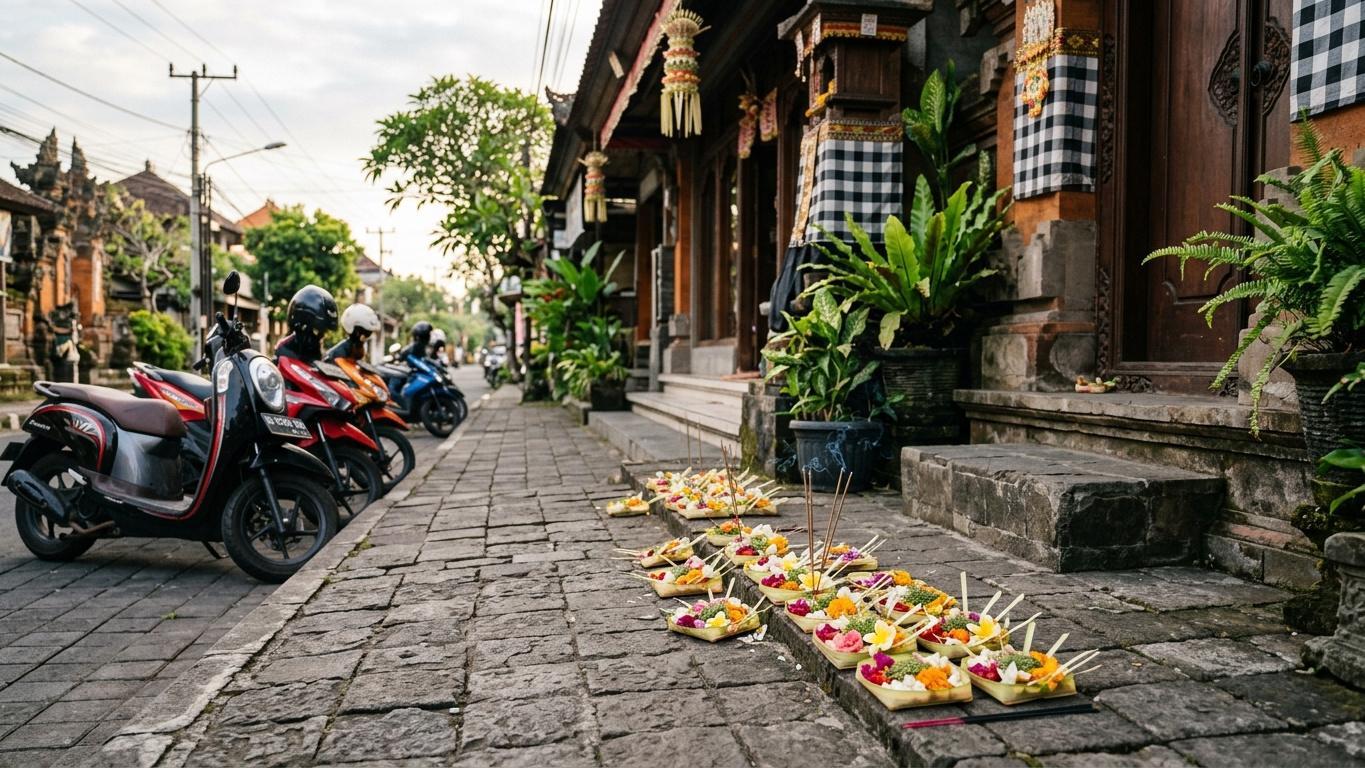
- Never step on or over a canang sari; walk around it even if that means stepping into the street briefly.
- Don’t move, kick, or photograph one up close without permission if it’s on someone’s private property or at a business entrance.
- It’s normal to see canang sari swept away or replaced by afternoon; this isn’t disrespect, it’s simply the next day’s offering cycle starting.
- A canang sari left on a temple step or shrine is not a keepsake or souvenir; leave it exactly where it was placed.
Sidewalks in busier areas like Sanur’s own main strip can have dozens of canang sari down by mid-morning, enough that watching where each footstep lands becomes second nature within a day or two of arriving. Locals rarely comment on a visitor accidentally stepping near one, but stepping directly on one still draws a quiet, noticeable wince.
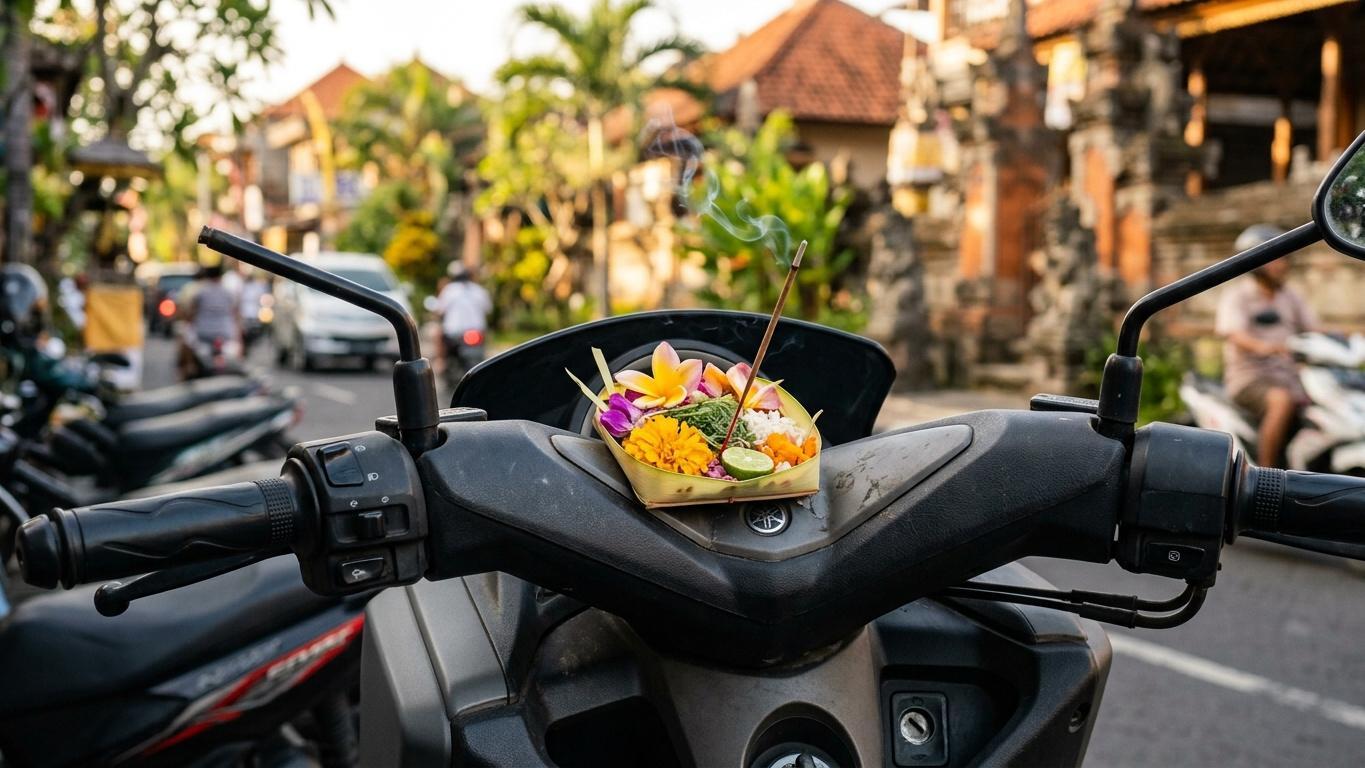
Scooters and cars generally swerve around a canang sari sitting in a road or driveway rather than driving over it, the same courtesy extended pedestrian to pedestrian. Watching local traffic navigate around a cluster of offerings at a busy intersection is, in its own small way, one of the clearest everyday demonstrations of how seriously the practice is still taken across generations.
Best Time to Experience Canang Sari in Bali
Early morning is the best time to actually watch the ritual unfold rather than just see the finished result, since most households and businesses lay their offerings between sunrise and around 9:00 AM. Odalan, a temple’s individual anniversary festival held roughly every 210 days, brings a greater concentration of offerings and a livelier version of the same practice; it’s worth asking a concierge about if the timing lines up with a stay.

Galungan and Kuningan, the twin holidays celebrating the triumph of dharma over adharma, bring the largest spike in offerings anywhere on the island, with larger ceremonial offerings, called banten, appearing alongside the usual daily canang sari. These fall on a 210-day Pawukon calendar cycle rather than a fixed Western date, so confirming the exact dates for a given year is worth doing before planning a trip specifically around them.
Outside those peak dates, any morning works equally well for the daily version, since the routine repeats identically 365 days a year regardless of season or tourist crowds. A quiet Tuesday in the wet season shows the same ritual as a packed Saturday in July, which makes this one of the few Bali cultural experiences that never actually gets more crowded or diluted during peak travel months.
Where to Stay for Bali’s Cultural Traditions
A base in Sanur puts both the practical side of a trip and its cultural texture within easy reach, including a hotel with its own strong pull toward Indonesian craft and heritage.
Bali Beach Hotel
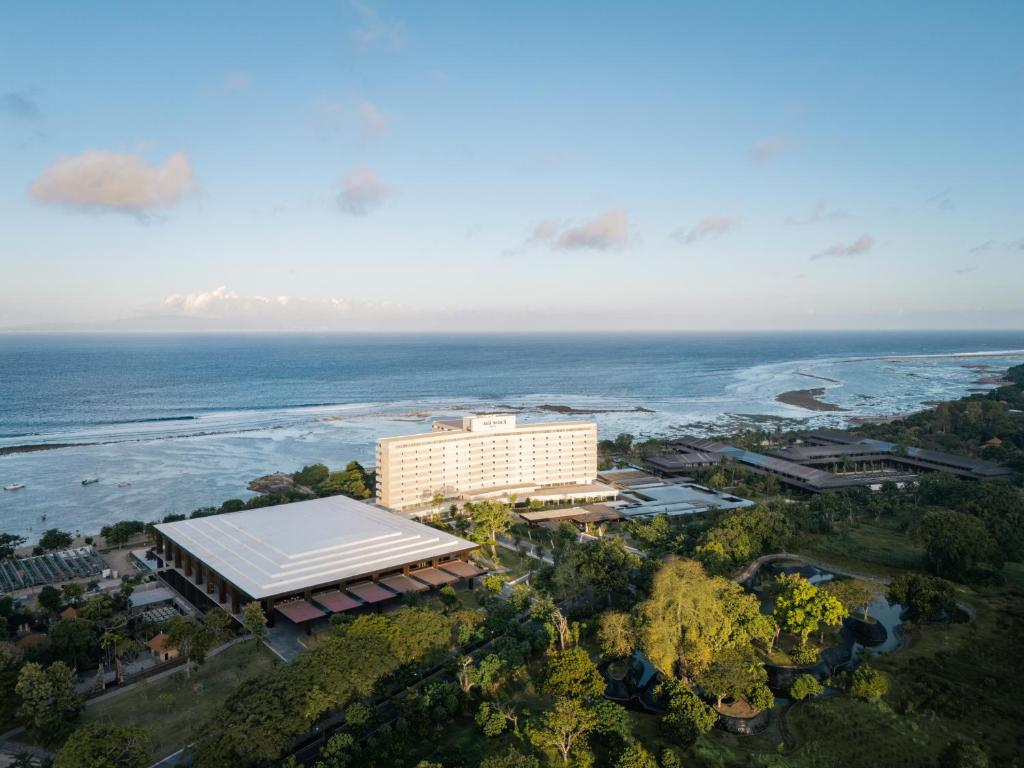
Bali Beach Hotel The Heritage Collection sits on Sanur’s beachfront within the Sanur Special Economic Zone, close enough to everyday Balinese life that canang sari on the walk from the lobby to the beach are a genuine daily sight, not a staged one.

The Executive Suite, sold on-site as the Sagara Suite or Deluxe Suite depending on layout, offers a couple or small family 90 square meters of space, with a curated living room and Indian Ocean views, enough room to lay out any craft materials brought back from a workshop without crowding the space.

The Sanur Suite suits a larger family gathering specifically, 120 square meters with a separate workspace and living and dining areas, useful for a family wanting to try canang making in Bali together in the room rather than only at a scheduled class.
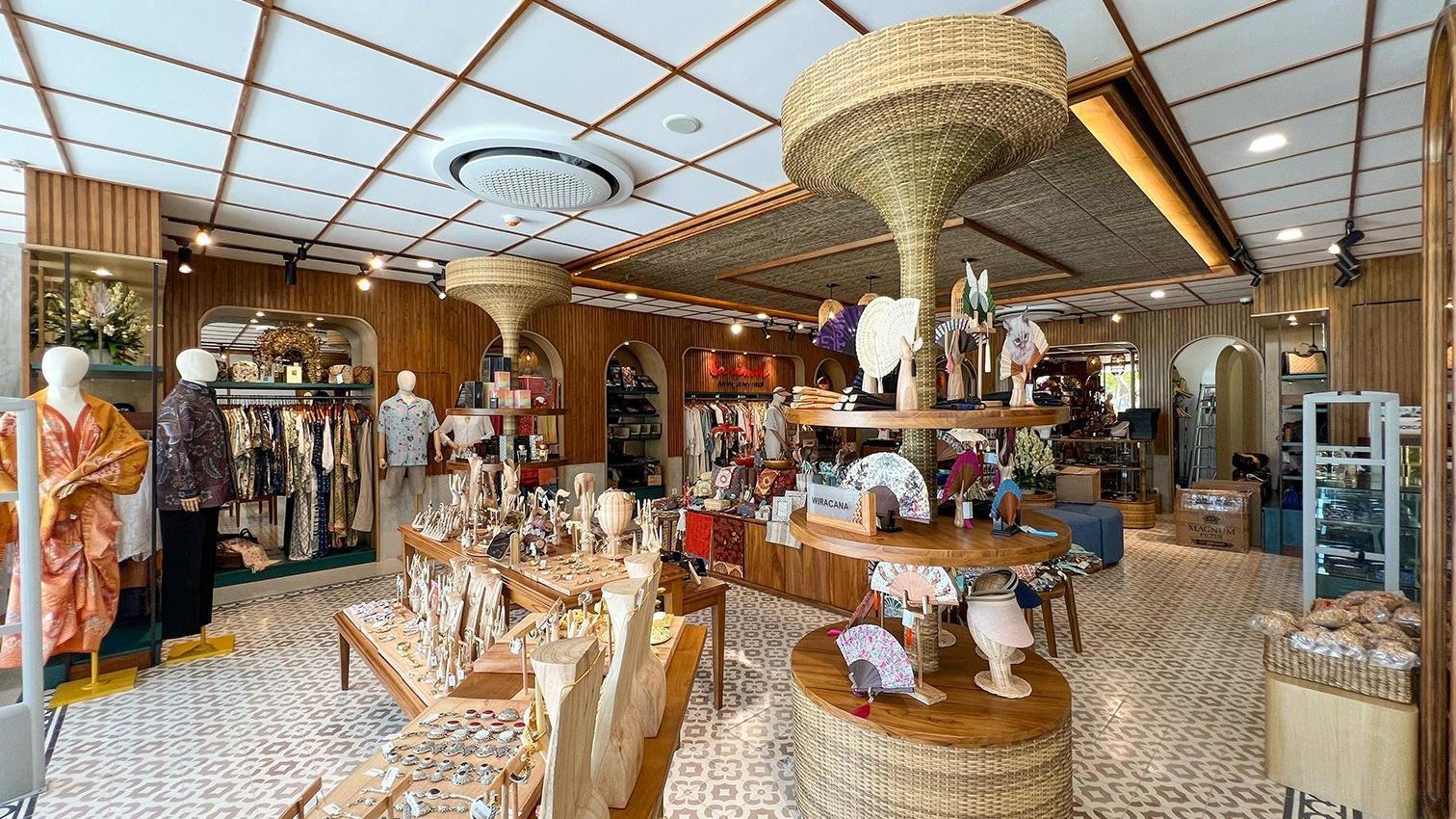
Sarinah, the hotel’s own retail boutique, sells traditional and contemporary Indonesian textiles and craftsmanship, the same broad category of handmade Balinese work that canang sari itself belongs to. It’s a natural stop either before a workshop, to see finished craft examples, or after one, to bring home something with the same handmade spirit.
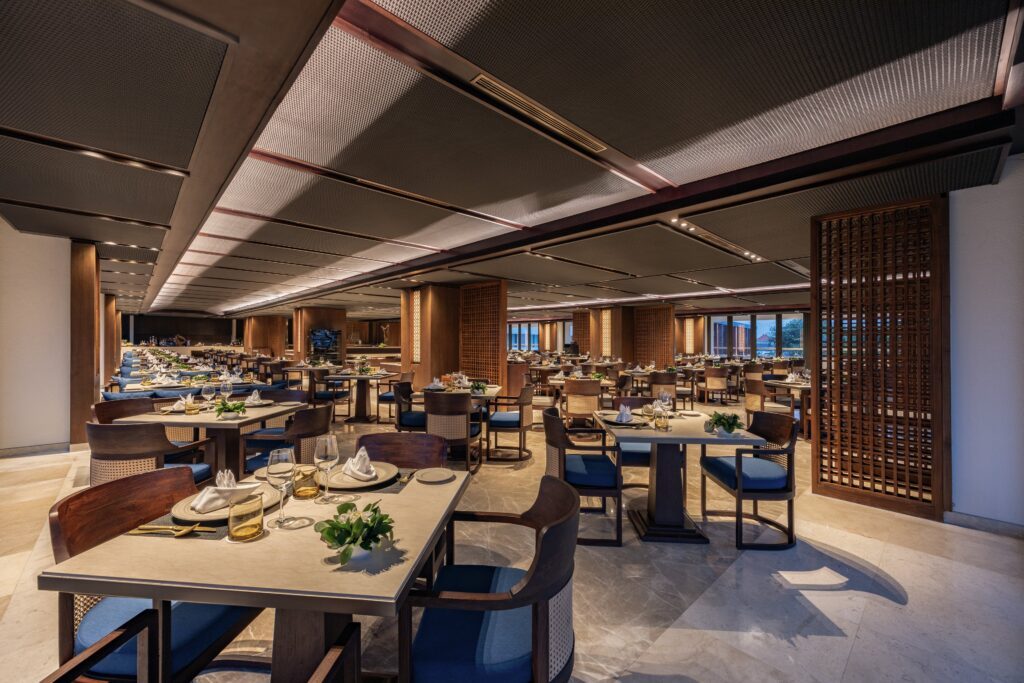
Roso Restaurant offers a practical pairing for a morning spent making canang in Bali: breakfast runs from 6:30 to 10:30, early enough to fit in before a 9:00 or 10:00 workshop start.
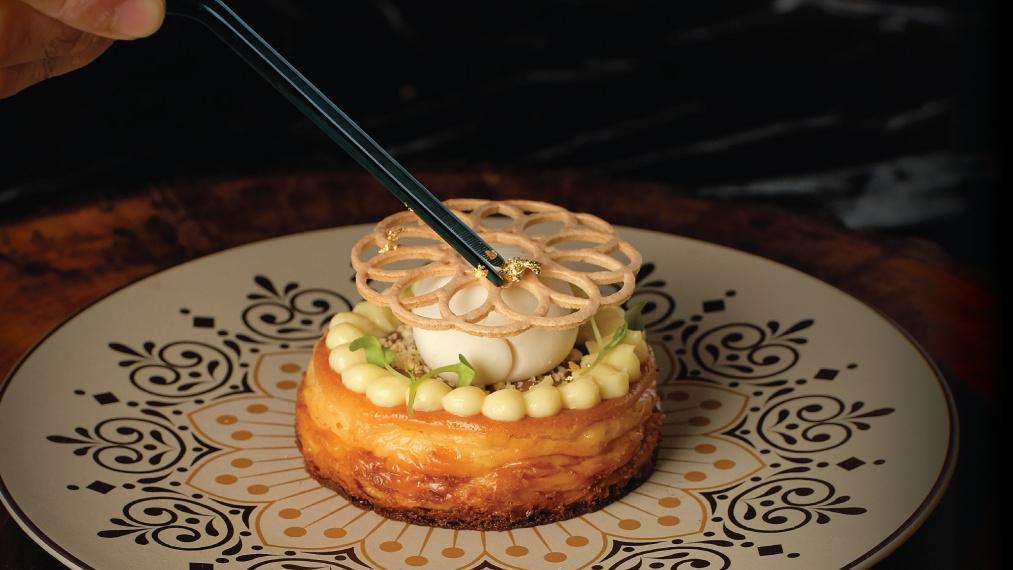
The Brengkes Ikan, a Balinese-style steamed-and-grilled fish parcel, and the Es Podeng dessert are both worth trying on a return visit for lunch or dinner, distinct from the smoked tuna jaw and duck dishes that tend to headline the menu.
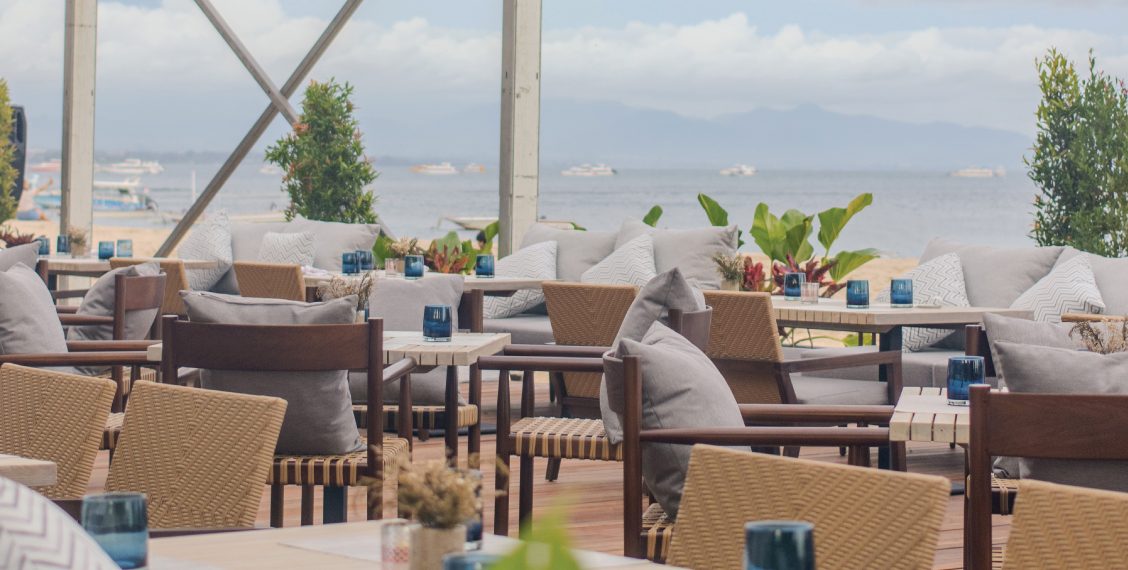
Bali Beach Bar & Grill sits directly on the sand, open from 17:00 to 22:00, and is built around fire-cooked seafood and prime cuts.
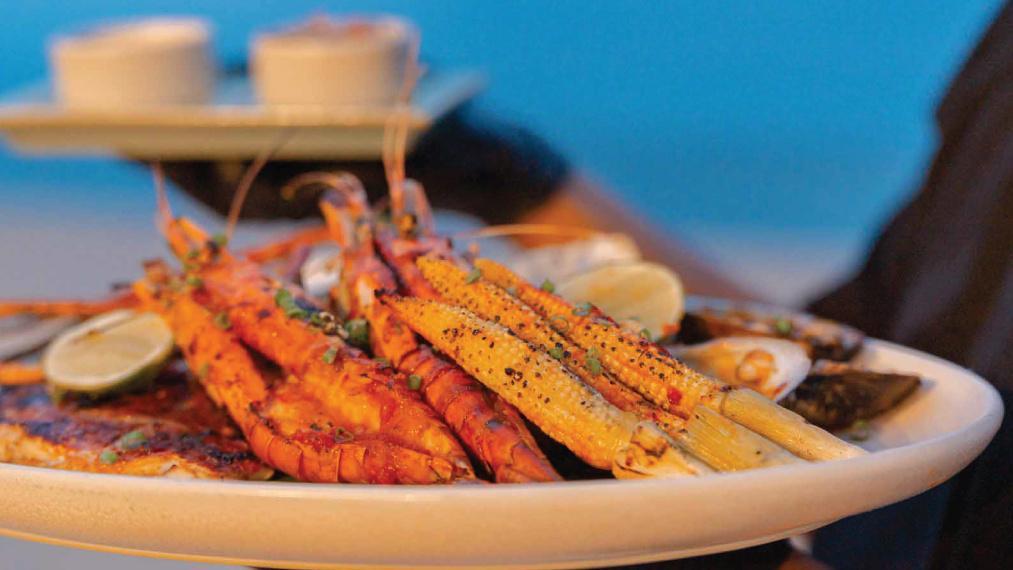
The Seafood Platter Kelod shares red snapper, jumbo prawns, local clams, and oysters between the table with two sambals on the side, and the Munti Rosella cocktail, Arak Bali Dewi Sri mixed with a housemade rosella syrup and tonic water, uses the same local arak spirit that shows up across the hotel’s other bars.
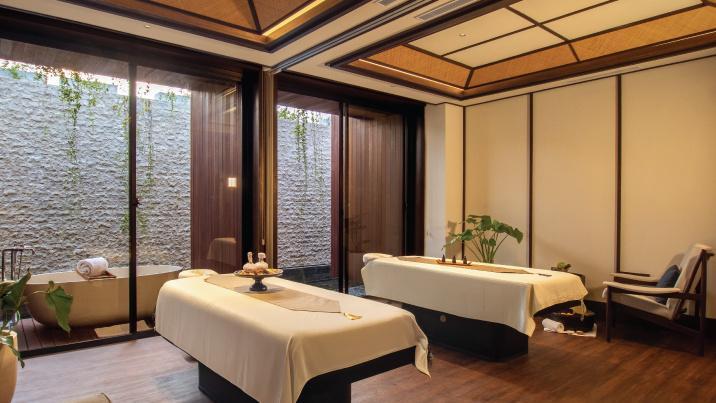
For a slower afternoon after a hands-on morning, Taru Pramana Spa & Wellness draws on the same Lontar Usada manuscript that shapes much of Bali’s traditional daily life, the same underlying worldview that canang sari itself comes from.

A 60-minute Balinese Apun Massage pairs naturally with a morning spent kneeling over flowers and palm leaves, both grounded in the same idea that small, repeated, careful acts add up to something larger.
Detailed Information:
- Address: Jalan Hang Tuah, Sanur Kaja, Denpasar Selatan, Kota Denpasar, Bali 80227, Indonesia
- Phone Number: +62 (361) 2012000
- Reference Price: Contact the hotel directly for current room rates, which vary by category and season
Conclusion
Canang making in Bali turns a sight most visitors walk past a dozen times a day into something legible: a specific compass of colors, a Trimurti of ingredients, and a genuine daily prayer rather than street decoration. Trying it hands-on, even once, changes how the rest of a trip to Bali looks.
Book a stay at Bali Beach Hotel to base a trip built around Bali’s living daily traditions from a beachfront property with its own deep, tangible ties to Indonesian craft and heritage, right down to the on-site retail boutique.
Frequently Asked Questions
What is canang sari made of?
A woven palm-leaf tray called a ceper, a betel leaf, lime, and gambir nut packet symbolizing the Hindu Trimurti, fresh flowers arranged by color and direction, a slice of banana or sugarcane, sometimes rice, and a lit incense stick on top, all sourced from ordinary garden or market ingredients.
Can tourists try canang making in Bali?
Yes, absolutely. Dedicated workshops covering canang making in Bali run across the island, most concentrated in Ubud, typically lasting around two hours and open to visitors of any skill level. Many hotels can also arrange a private local class on request.
Is it disrespectful to step on a canang sari?
Yes, stepping on or over one is considered disrespectful, even if it happens completely by accident. Walk around any offering on the ground, including one that looks old, wilted, or already spent, rather than over it.
Why do Balinese people make so many offerings every day?
Canang sari isn’t reserved for holidays or ceremonies; it’s a daily practice meant to maintain balance between good and bad forces and to keep both the gods and lesser spirits content. A single household can prepare 50 to 150 of them in one morning, spread across a home shrine, a business entrance, and several smaller spots around the property.
What do the different flower colors in a canang sari mean?
White flowers face east for Iswara and spiritual purity, red flowers face south for Brahma and wisdom, yellow flowers face west for Mahadeva and intuition, and blue or green flowers face north for Vishnu and prosperity, completing the full compass.
How long does it take to learn how to make canang in Bali?
A basic offering can be learned in a single two-hour workshop, though moving through the full process quickly and confidently and without looking, the way Balinese households do every single morning, comes only with years of daily repetition.
Are canang sari the same as the bigger fruit offerings I see at temples?
No. Canang sari is the small daily version, assembled in minutes. The tall fruit-and-flower structures called gebogan, often carried on a woman’s head into a temple ceremony, are a separate, much larger category of offering built for specific festivals rather than everyday use, taking hours rather than minutes to complete, though both fall under the broader term banten.