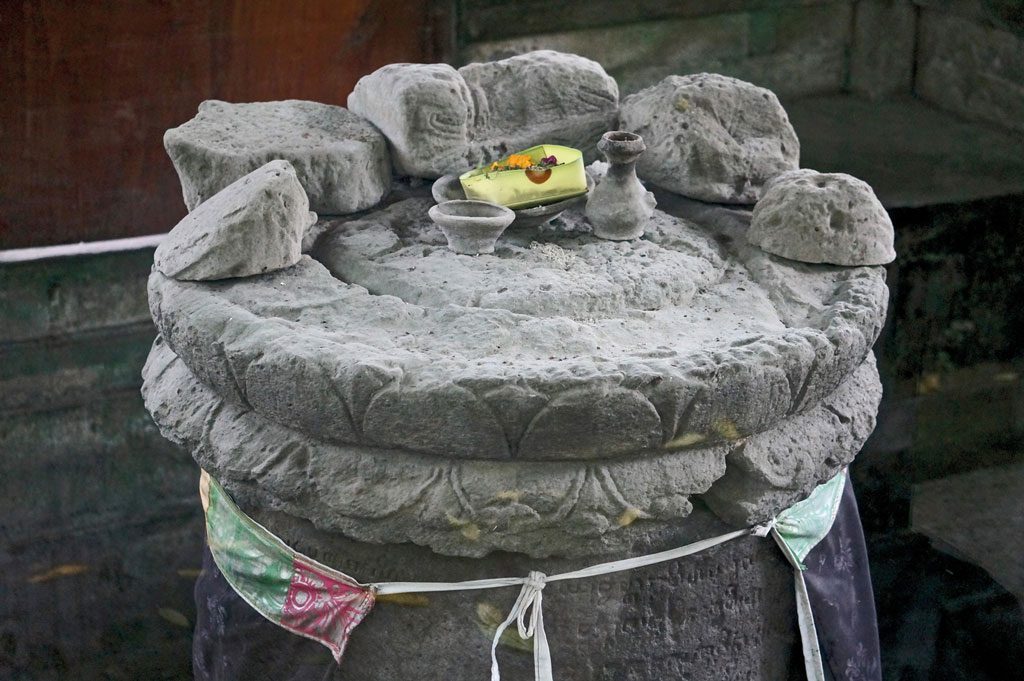
What’s the oldest written record of a named ruler anywhere in Bali? It isn’t in a museum vault or a royal palace. It’s a stone pillar standing inside a small, easy-to-miss temple in southern Sanur, carved in 914 CE and still readable today. Blanjong Temple in Bali holds that pillar, and understanding what it actually says changes how the rest of the island’s history reads.
What Is Blanjong Temple?
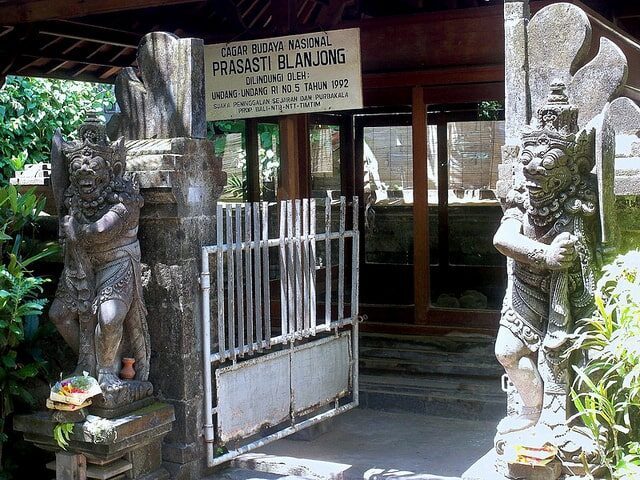
Blanjong Temple, known locally as Pura Blanjong, sits in Blanjong village in southern Sanur, close enough to the beach that a visit fits easily into a morning otherwise spent along the coast. The temple itself is modest by Balinese standards, a small compound rather than a sprawling complex, built specifically to house and protect the site’s real draw: a stone inscription pillar more than 1,100 years old.
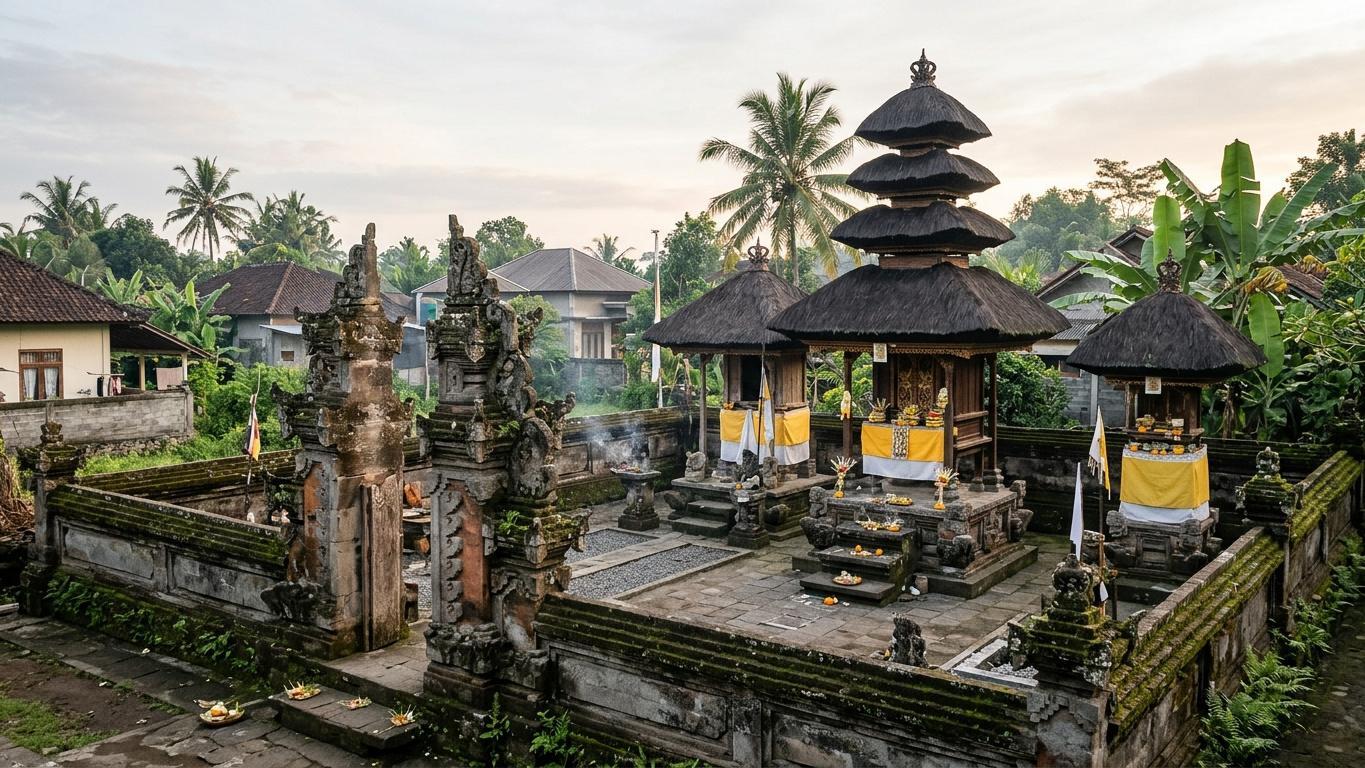
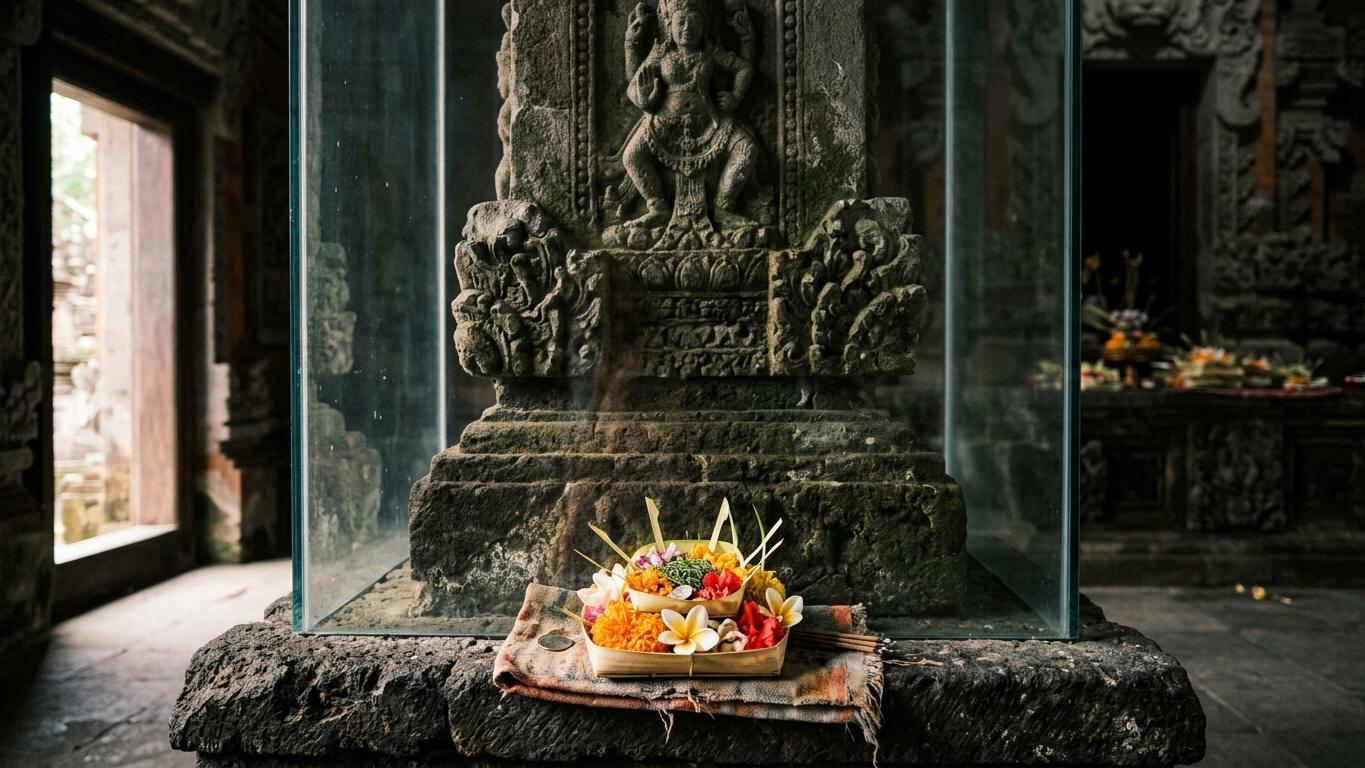
The pillar, known as the Blanjong Inscription or Prasasti Blanjong, was rediscovered in 1932 and now sits inside a protective glass enclosure to shield the carved surface from weather and erosion while keeping it visible to visitors. It remains an active place of worship and a historical site, which shapes how to approach a visit to Blanjong Temple in Bali.
Compared with the island’s larger, better-known temples, Blanjong Temple in Bali is easy to underestimate at first glance. There’s no dramatic staircase, no sweeping sea-cliff setting, nothing that photographs as instantly as Uluwatu or Tanah Lot. What it holds instead is a written historical record older than almost anything else on the island, which rewards a visitor who reads before arriving rather than one just passing through.
The Blanjong Inscription: Bali’s Oldest Written Record
The pillar itself is cylindrical, standing 177 centimeters tall with a 62-centimeter diameter, topped with a carved lotus flower motif. Its surface is inscribed in two scripts and two languages, Sanskrit and Old Balinese, wrapped entirely around the stone rather than confined to one face.
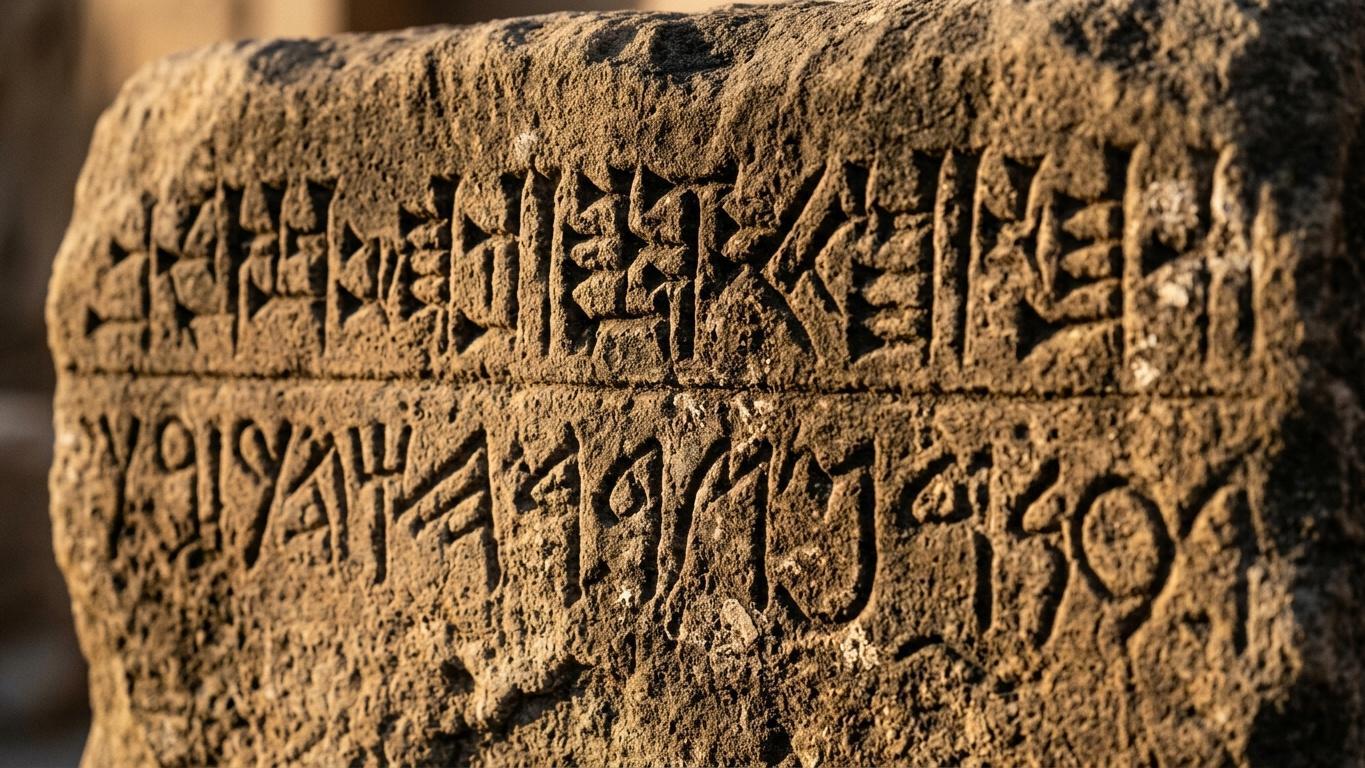
That wraparound format is itself a practical detail worth noticing in person: rather than a flat tablet meant to be read from one angle, the inscription was designed to be walked around, meaning a full reading of the text requires circling the pillar slowly rather than standing in one spot. The glass enclosure today is built wide enough to allow exactly that kind of slow circuit.
The inscription is dated to the Saka year 835, corresponding to 914 CE, and records the achievements of King Sri Kesari Warmadewa, describing a military campaign that defeated rivals and secured his rule. It stands as the earliest known dated inscription naming a specific Balinese ruler anywhere on the island, which is what gives this small temple in Bali its outsized historical weight.
Historians and archaeologists studying the pillar have translated the surviving text as describing a victory over rivals in two named locations, Gurun and Swal, framed in the formal, declarative style typical of South and Southeast Asian royal inscriptions from this period. The bilingual choice, Sanskrit alongside Old Balinese, itself signals a court literate in both a prestige scholarly language and the island’s own vernacular, a detail scholars use to date and place other undated inscriptions found later across Bali.
Why This Inscription Matters to Bali’s History
Sri Kesari Warmadewa is generally understood to be a descendant of the Sailendra dynasty, the Buddhist ruling house better known for building Borobudur in Java, who led an expedition to Bali and established a Mahayana Buddhist government on the island in the late 800s CE. The Blanjong pillar is the earliest of four known inscriptions issued in his name.
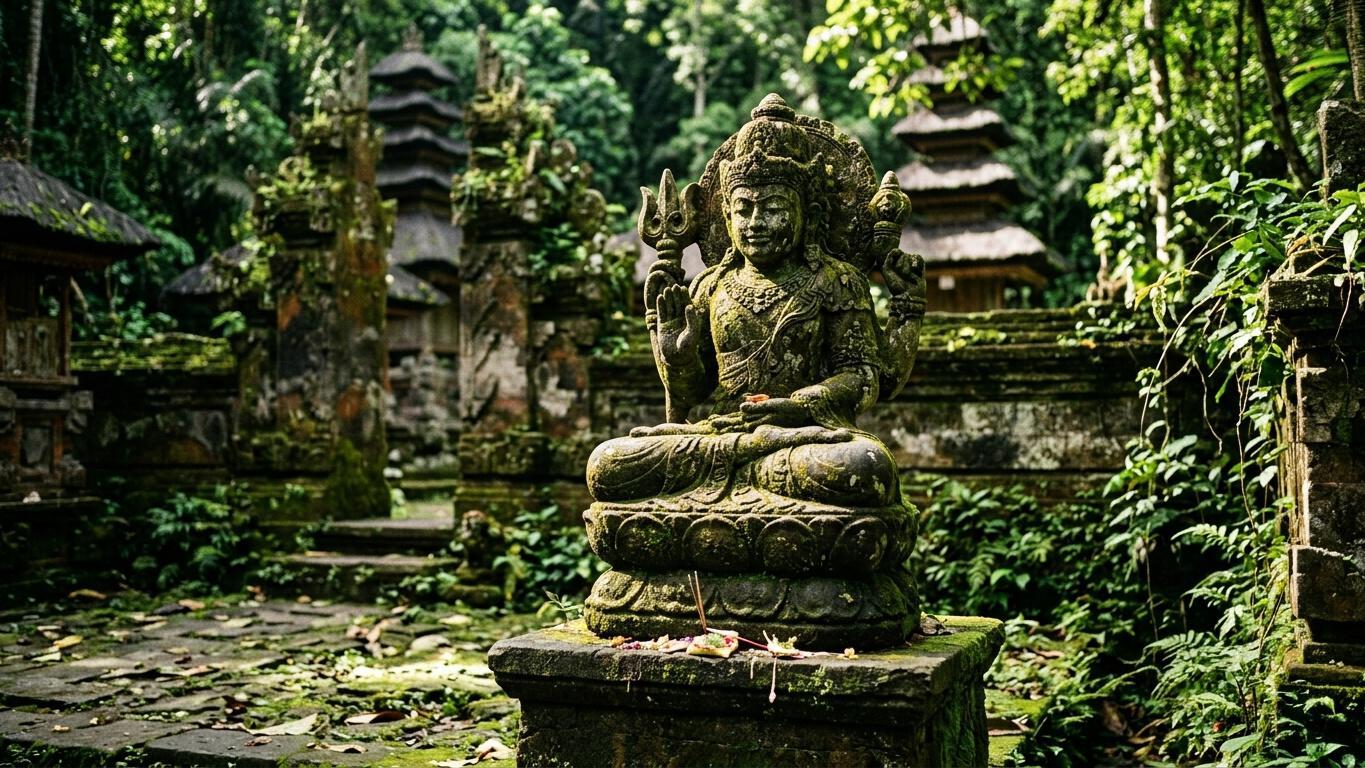
He is also considered the earliest known member of the Warmadewa dynasty, the royal line whose name carried forward through generations of Balinese rulers long after Sri Kesari’s own reign ended. In that sense, the Blanjong Inscription isn’t just a record of one king’s military victory; it’s the first solid written anchor point for centuries of Balinese royal history that followed.
The mix of Buddhist and Hindu elements the inscription hints at is worth sitting with, too. Bali’s religious identity today reads as thoroughly Hindu, but the Blanjong Inscription is a reminder that Mahayana Buddhism once held a genuine political foothold on the island over a thousand years ago, part of a longer, more layered religious history than a single label can capture.
This is exactly why a stop at Blanjong Temple in Bali tends to reframe the rest of an itinerary. A visitor who reads the inscription’s story first, then goes on to see Bali’s later Hindu temples, ends up seeing a genuine timeline rather than a single, unchanging religious backdrop, which is a more accurate and more interesting way to understand the island’s past.
How the Blanjong Inscription Was Rediscovered
The pillar had stood at the site for centuries before it drew formal scholarly attention in 1932, when Dutch colonial-era researchers documented and translated its inscription as part of a broader survey of ancient Balinese and Javanese texts. That survey work placed the Blanjong Inscription within a much larger catalog of Southeast Asian royal inscriptions from the same general period, letting historians cross-reference its language and dating conventions against similar finds elsewhere in the archipelago.
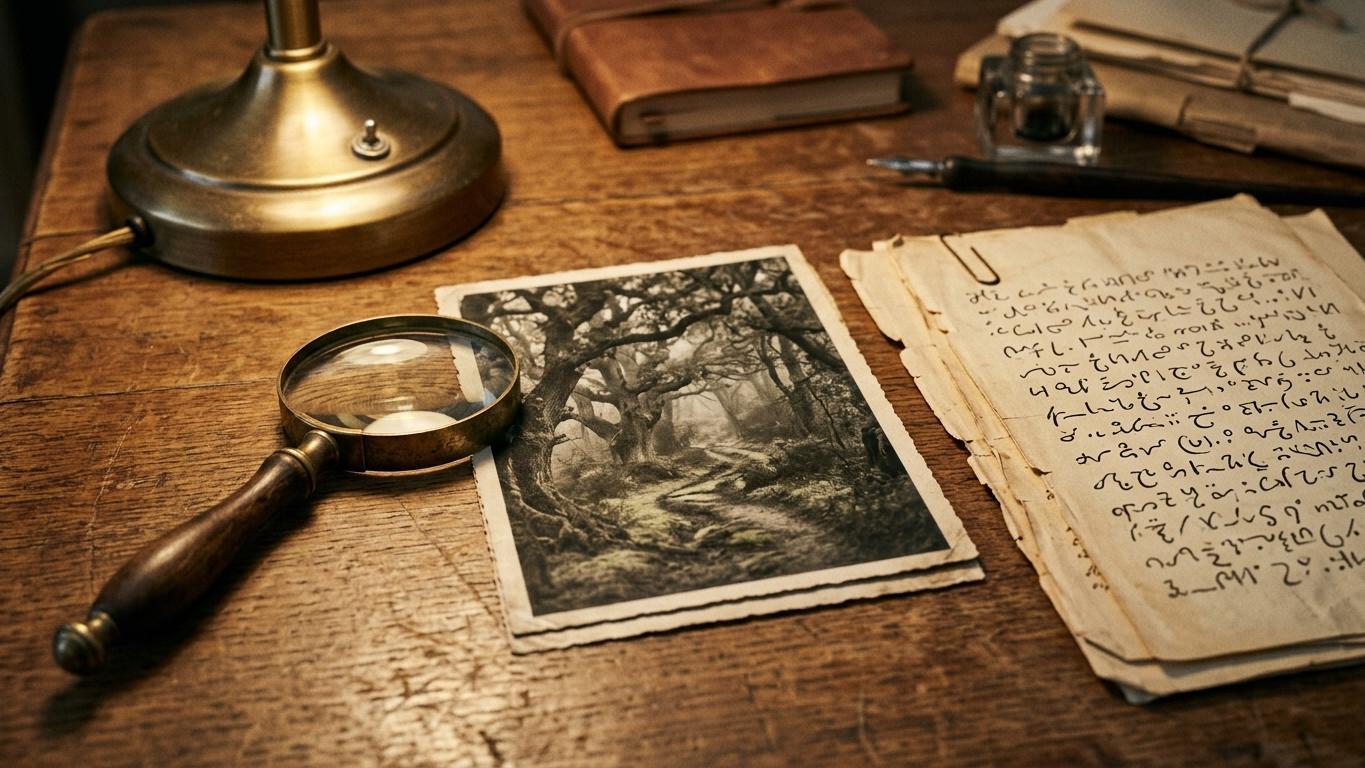
That comparative work is part of why scholars trust the 914 CE dating and the identification of King Sri Kesari Warmadewa with real confidence, rather than treating the inscription as an isolated, hard-to-confirm curiosity. Anyone researching Blanjong Temple in Bali in more depth than a single visit allows will find that academic literature, not just tourism write-ups, still actively references this specific pillar.
How Blanjong Fits Into Sanur’s Wider History
Sanur’s reputation today leans heavily on its role in 20th-century tourism history, the arrival of Belgian painter Adrien-Jean Le Mayeur in the 1930s, and later President Soekarno’s own vision for the area as Bali’s gateway to international visitors. Blanjong Temple in Bali quietly predates all of that by roughly a thousand years, anchoring Sanur’s history to the 10th century rather than only the 20th.
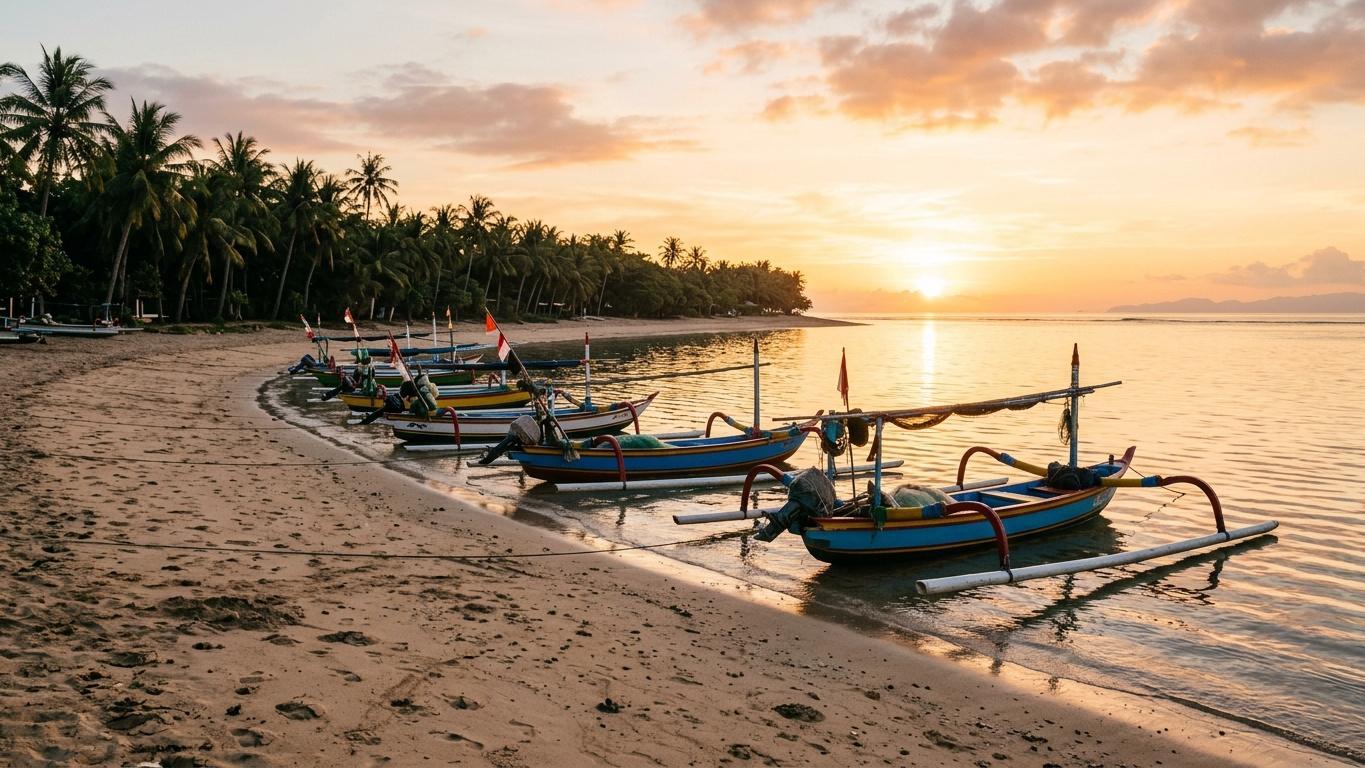
That longer timeline matters for how the town gets described. Sanur isn’t simply a quieter, more low-key alternative to Kuta or Seminyak; it’s a stretch of coastline with a documented royal history dating back over a millennium, something few other beach towns on the island can claim with this level of specific, dated evidence, rather than local legend alone.
Local historians and cultural researchers continue to study the Blanjong Inscription alongside Bali’s other early stone and copperplate inscriptions, using it as a fixed reference point for dating the island’s transition from early Buddhist-influenced rule toward the Hindu kingdoms that would dominate Balinese history for the following centuries. For a visitor, that academic weight translates into a simple practical fact: this is one of the very few places on the island where a single object connects directly to a specific year, a specific king, and a specific event, rather than to a general sense of antiquity with no fixed date attached.
What to See at Blanjong Temple Today
A visit here centers on a handful of specific things within the small compound, from the inscription itself to the everyday religious life still happening around it.
The Inscription Pillar
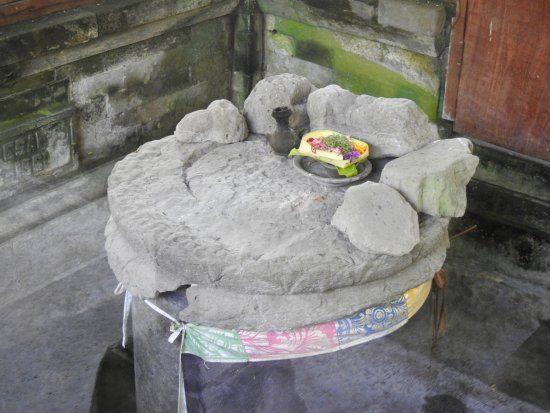
The inscription pillar inside its glass case is the clear centerpiece, and most visits center entirely around it. The surrounding temple grounds are small and quiet, with modest shrine structures typical of a working neighborhood temple rather than a major pilgrimage site, which is part of the appeal for anyone who prefers a genuinely local stop over a crowded landmark.
On-Site Signage
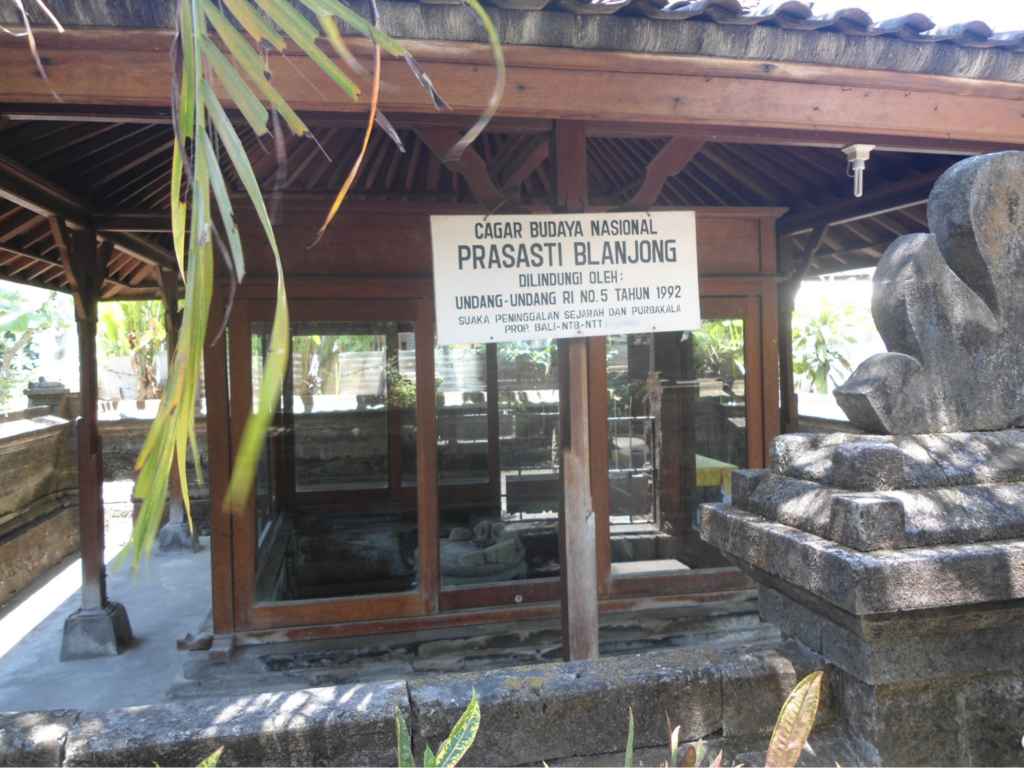
Signage on site gives a brief English summary of the inscription’s significance, enough to orient a first-time visitor, though it doesn’t attempt the full academic translation. Reading a fuller account beforehand, as this guide covers above, makes the short time actually spent standing in front of the pillar considerably more rewarding.
Daily Offerings Still in Progress
Because the temple remains active, expect to see fresh canang sari offerings placed around the grounds on any given day, alongside the historical pillar itself. The contrast, a 1,100-year-old inscription sharing space with a flower offering laid down that same morning, is a fairly direct illustration of how continuously Balinese religious practice has run on this same patch of ground.
No Museum Building, So a Guide Helps
Unlike some of the island’s more elaborate temple complexes, Blanjong Temple in Bali has no separate museum building or interpretive center attached, so most of the context has to come from reading ahead or hiring a local guide familiar with the site’s history. A guide adds real value here, specifically, since the on-site plaque signage tends to be brief.
How to Get to Blanjong Temple from Sanur
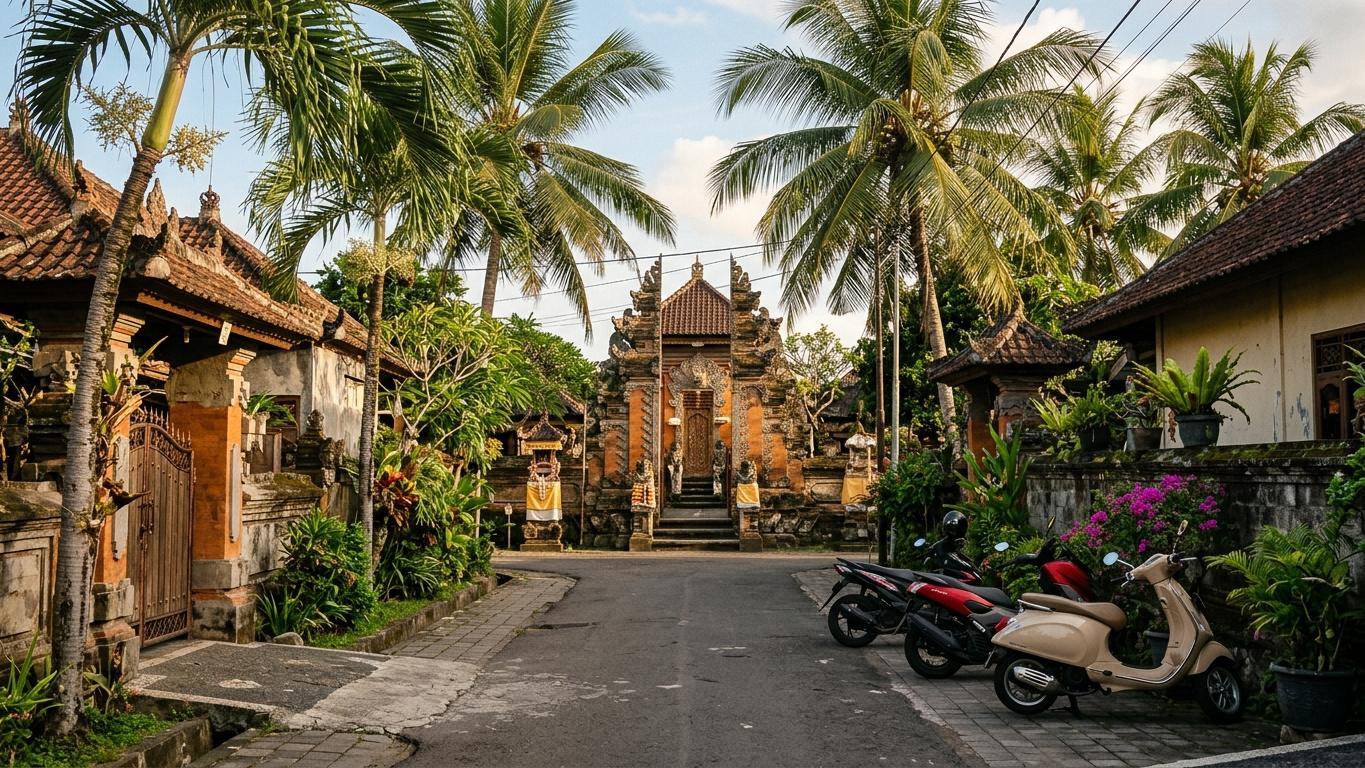
Blanjong Temple sits in southern Sanur, reachable by car, taxi, or scooter in minutes from most hotels along the beach, and it’s a genuinely walkable distance for anyone staying toward the northern end of Sanur Beach. Small parking areas near the entrance handle both scooters and cars.
Entrance is free, though a small donation in the box near the entrance is customary and supports the maintenance of both the temple grounds and the inscription’s protective housing. No fixed visiting hours are posted, but arriving in the morning gives the clearest light for reading the pillar’s carved surface and avoids the day’s peak heat.
Because the site sits slightly off the main tourist strip, a ride-hailing app or a hotel-arranged taxi is generally more reliable than flagging down transport on the spot afterward. Pairing the visit with a broader Sanur morning, an early breakfast, the temple, then a relaxed walk along the beach path, keeps the transport simple and the whole morning unhurried.
Visiting Etiquette at Blanjong Temple
The etiquette expected at Blanjong Temple in Bali follows the same general rules as any other active Balinese temple, with a few practical notes specific to a site built around a fragile historical artifact rather than a large open-air shrine.
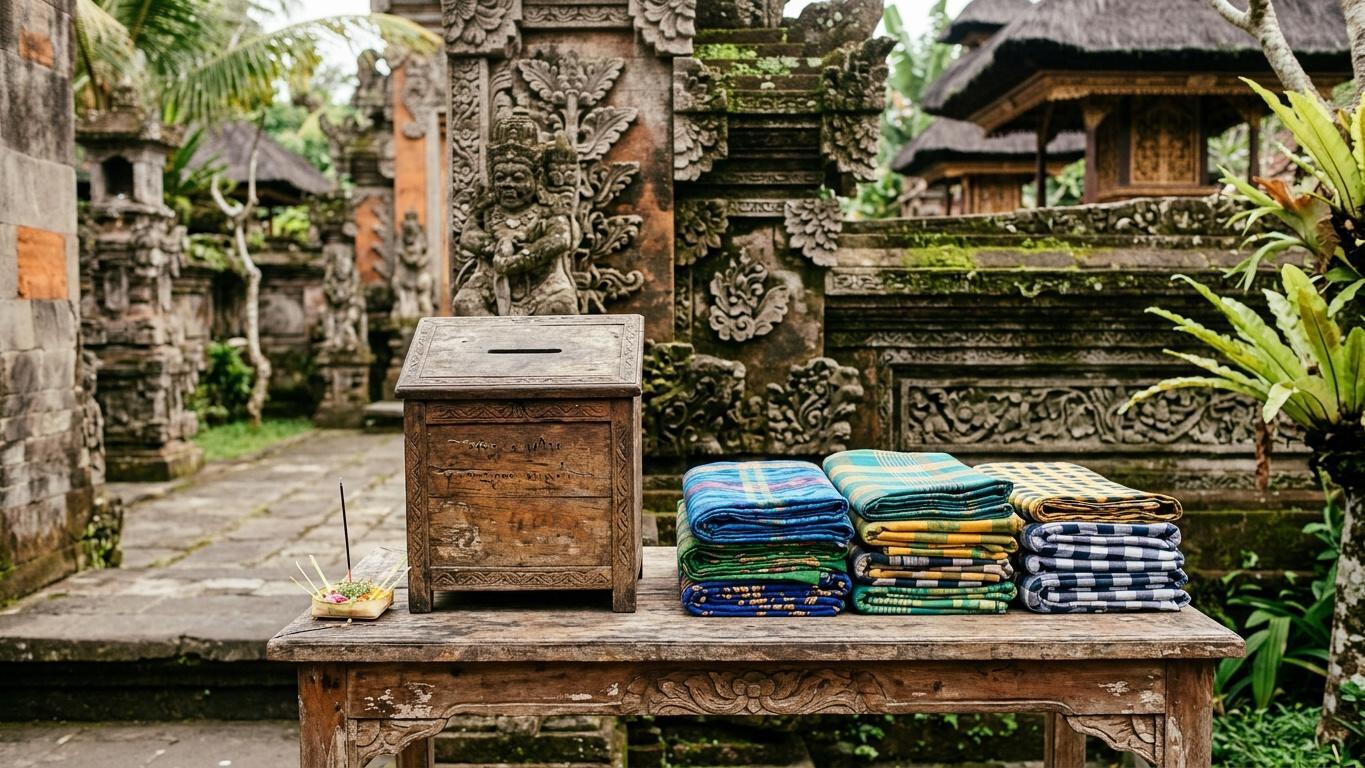
None of these expectations are unusual or difficult to meet, and staff or other visitors on site are generally happy to point out where to find a sarong or where the donation box sits if either isn’t immediately obvious on arrival.
- Wear a sarong if entering the inner temple grounds; one is often available to borrow near the entrance.
- Leave a small donation at the entrance box, even though entry itself is free.
- Keep voices low and movement respectful, since this remains an active place of worship, not only a historical exhibit.
- Photograph the inscription through its glass casing rather than attempting to touch or lean on the enclosure.
- Avoid visiting during an active ceremony unless invited to observe; check with a local guide or hotel concierge if timing is uncertain.
Other Historical Sites Near Blanjong Temple
Sanur carries more ancient and colonial-era history within a short radius than its beach-town reputation suggests, and a few other stops pair naturally with a visit to Blanjong Temple in Bali.
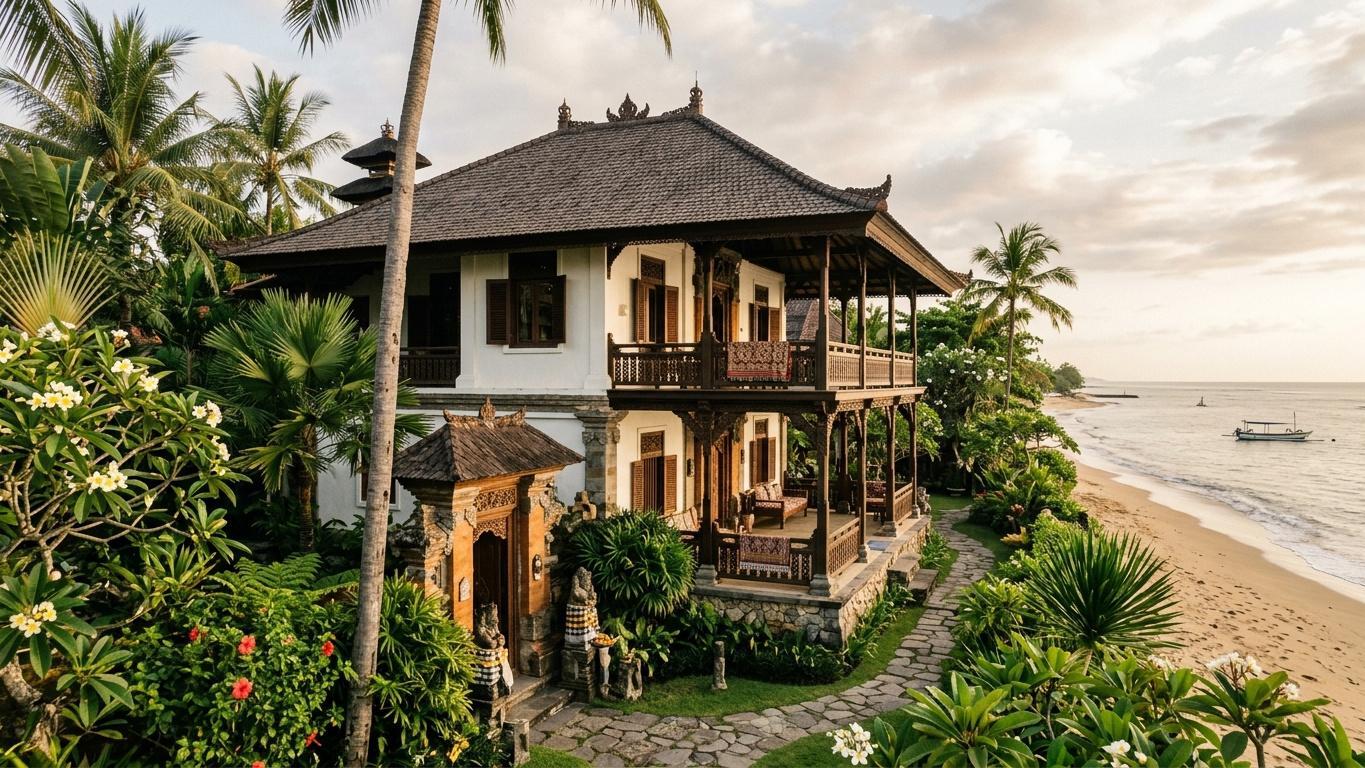
Building a half-day loop around two or three of these sites, rather than treating Blanjong Temple as an isolated five-minute stop, gives a much fuller sense of Sanur’s layered history: ancient royal inscription, colonial-era art and love story, and a working modern harbor, all within a few kilometers of each other.
A logical order for that loop starts with Blanjong Temple in the cooler morning hours, moves to Le Mayeur Museum once the sun is fully up, the museum’s indoor galleries offer a break from the heat, and finishes at Sindhu Night Market or Sanur Harbour in the late afternoon or early evening, when both come alive with local activity rather than sitting quiet.
| Site | What It Is | Distance from Blanjong Temple |
|---|---|---|
| Le Mayeur Museum | Belgian painter’s former home and studio on Sanur Beach | About 10-15 minutes by car |
| Sindhu Night Market | Evening street-food market on Sanur’s beachfront | About 10 minutes by car |
| Sanur Harbour | Departure point for Nusa Penida and Nusa Lembongan ferries | About 10 minutes by car |
Best Time to Visit Blanjong Temple
Early morning, roughly 7:00 to 9:00 AM, gives the coolest temperatures and the best light for photographing the inscription’s carved detail without harsh midday glare bouncing off the glass enclosure. Since the site is small and rarely crowded even during peak tourist months, timing matters more for comfort and lighting than for avoiding other visitors.
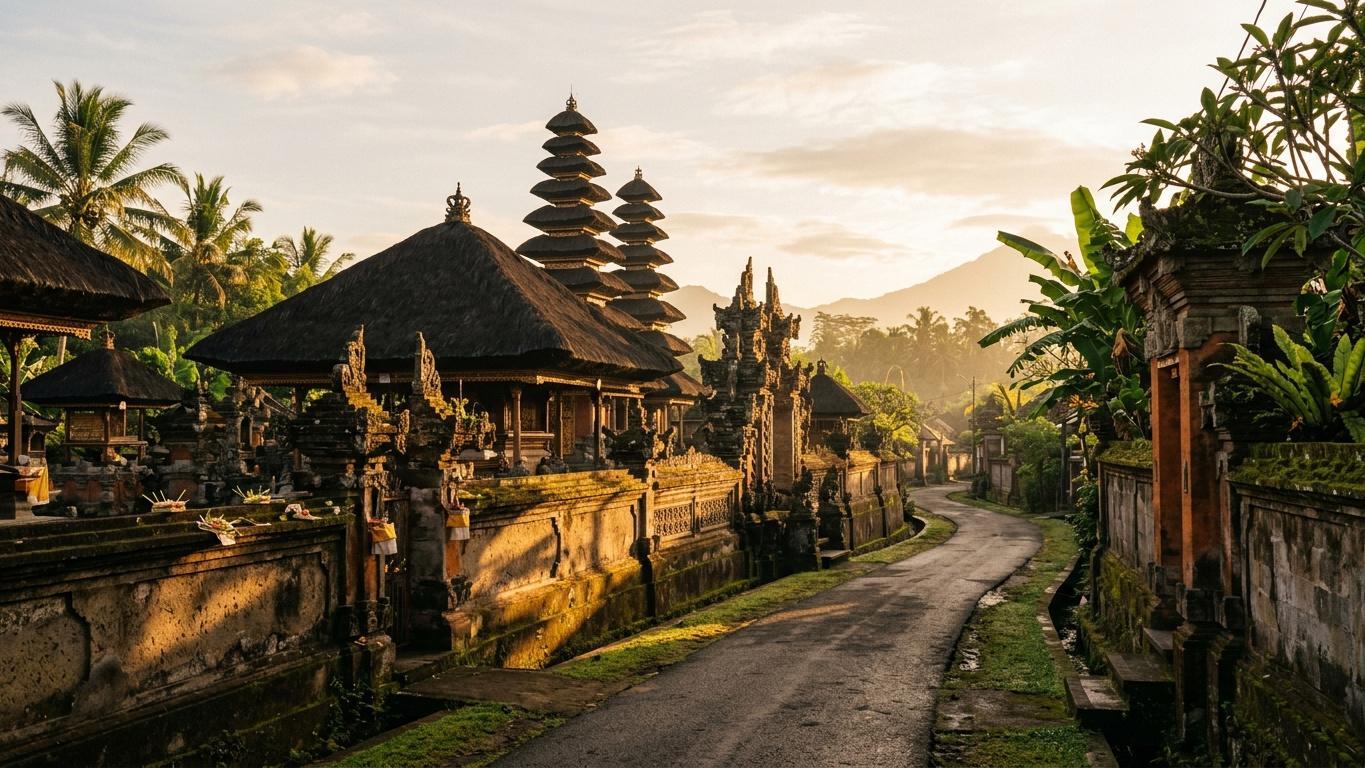
Midday visits are still perfectly workable given how brief a stop here tends to be, and the temple’s small covered sections offer at least some shade even during the hottest stretch of the afternoon. Late afternoon works reasonably well too, though the light for photography gets flatter as the sun drops behind surrounding trees and buildings.
The dry season from April to October keeps the surrounding grounds easiest to walk, though the temple’s small covered structures mean a brief wet-season shower rarely cuts a visit short and rarely lasts long enough to derail the rest of a planned day. Because Blanjong Temple in Bali isn’t tied to a fixed festival calendar the way larger temples are, there’s no single best month to prioritize, only a best time of day.
Where to Stay Near Blanjong Temple
Basing a stay in Sanur puts Blanjong Temple, and the layers of history around it, within a short drive or walk, alongside a hotel with its own well-documented past.
Bali Beach Hotel
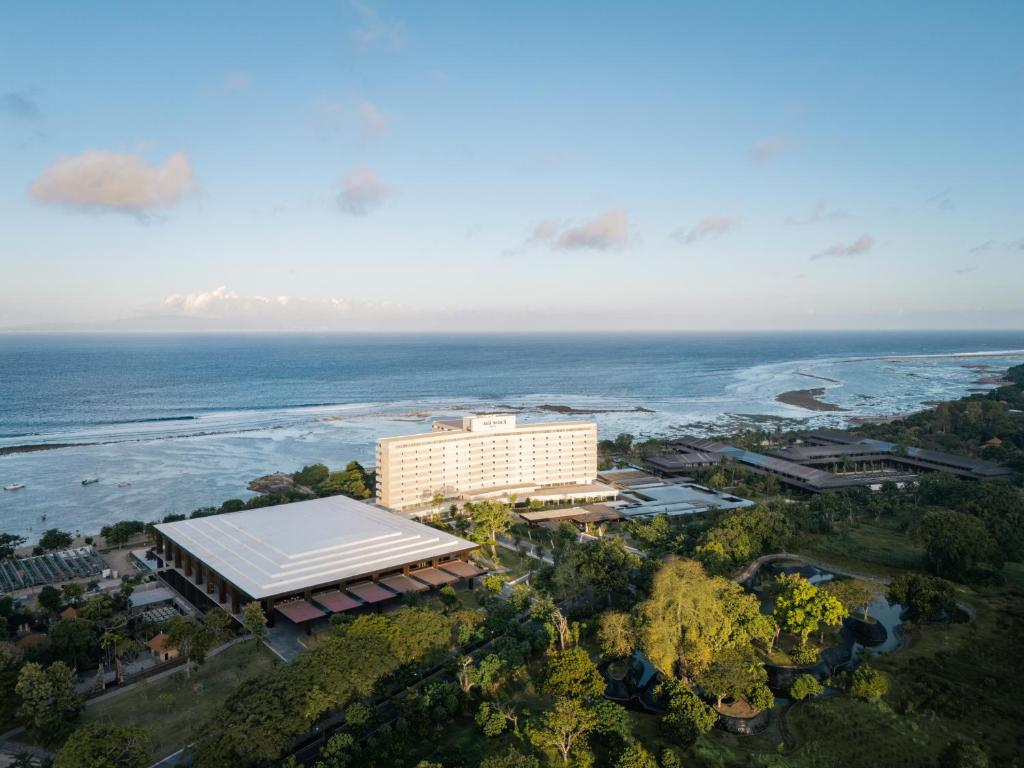
Bali Beach Hotel The Heritage Collection sits on Sanur’s beachfront, a short drive from Blanjong Temple, itself a genuine piece of Indonesian history dating to 1966 rather than a modern build styled to look historic.
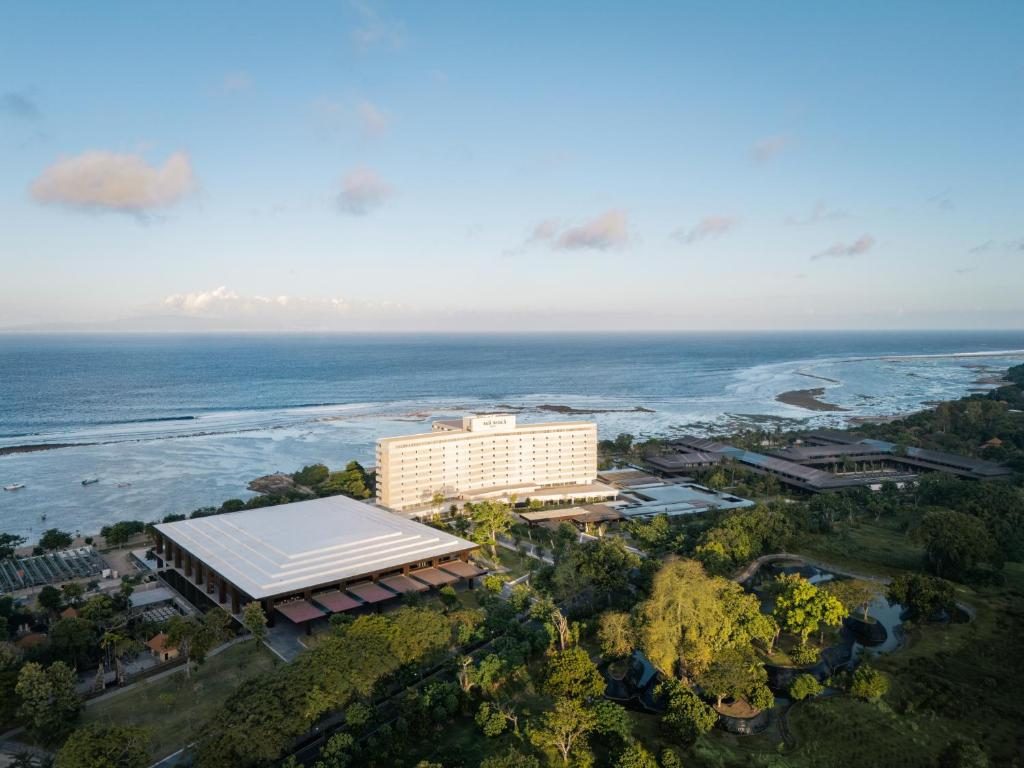
The two sites, a thousand-year-old royal inscription and a mid-20th-century national landmark, bookend Sanur’s history from opposite ends of the timeline.
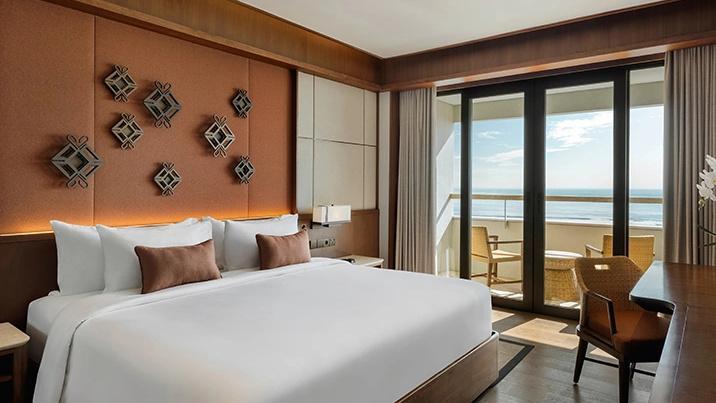
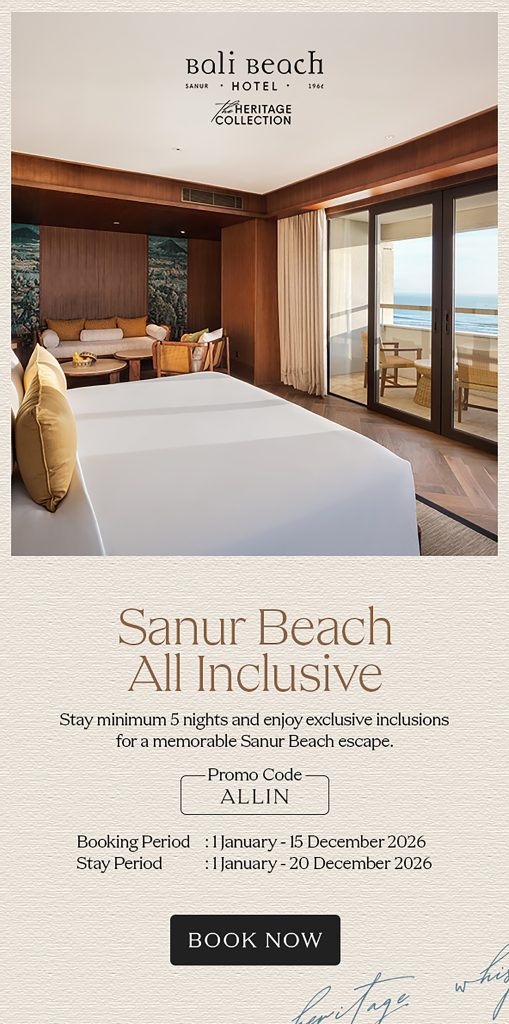
The Royal Suite, sold on site as the Royal Family Suite or Royal Suite depending on layout, occupies the 10th floor with 135 square meters of panoramic ocean view and what the hotel calls palatial comfort, suiting a couple or family wanting an upper-floor vantage point over the same coastline Sri Kesari Warmadewa’s fleet would have sailed past over a thousand years ago.
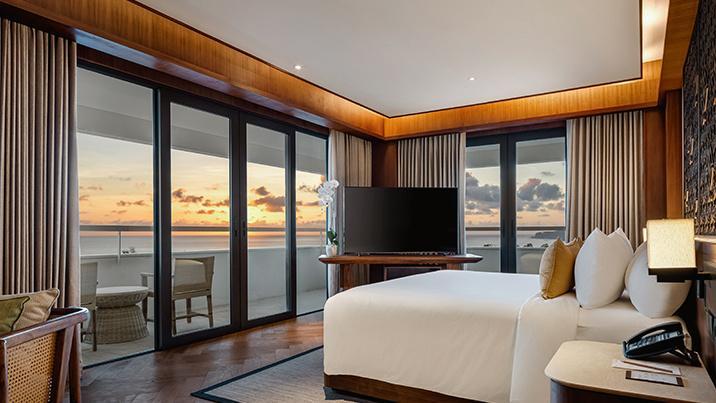
The Bali Beach Suite sits on the 7th floor, 175 square meters, with a separate living and dining area and sunrise views, suited to a couple wanting genuine space without stepping up to the hotel’s top-tier Presidential category.
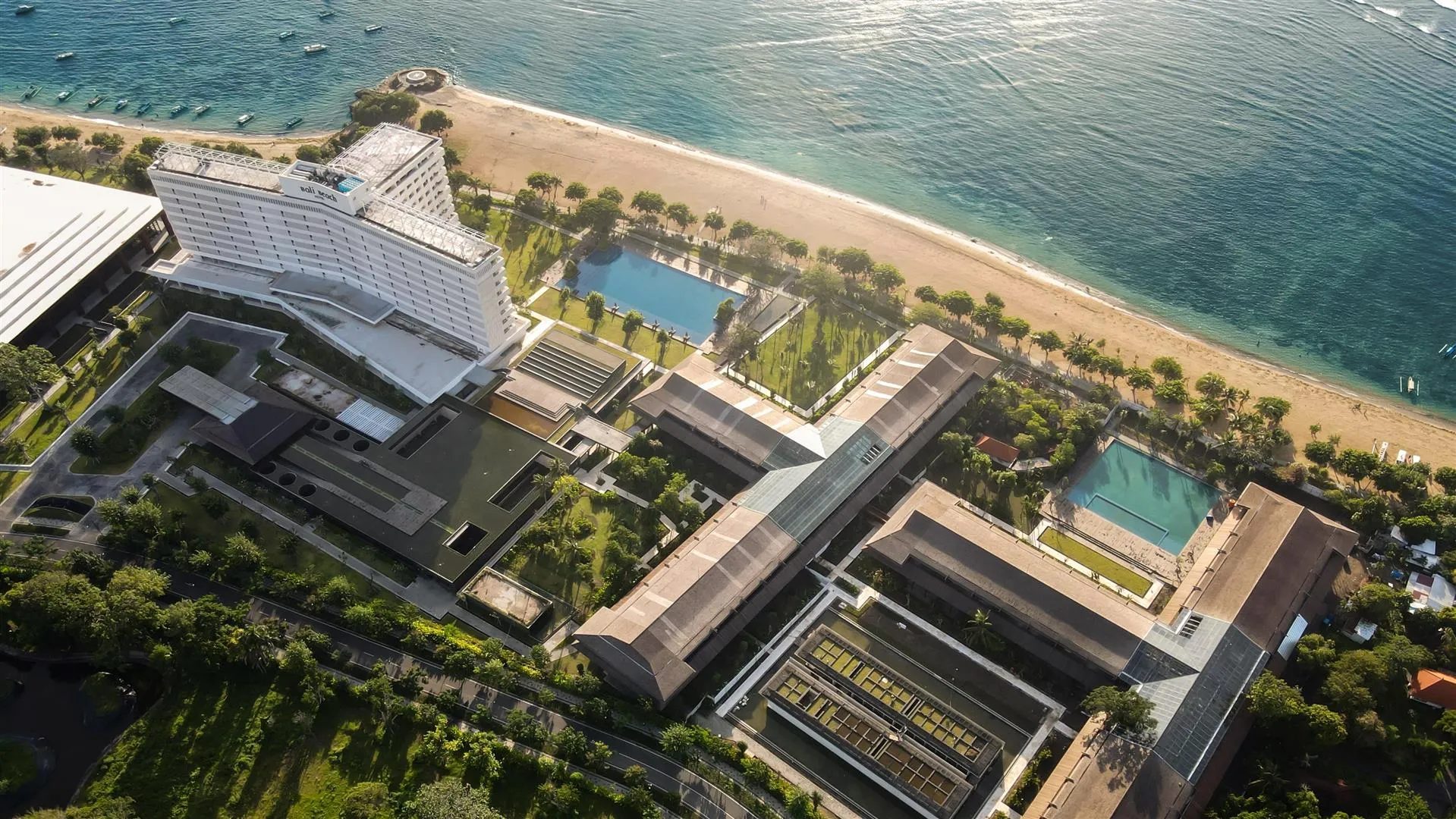
Both suite categories put guests within a short drive of nearly every historical stop mentioned in this guide, Blanjong Temple, Le Mayeur Museum, and Sanur Harbor, without the longer transfer times a stay further north or in Kuta would add to each outing.
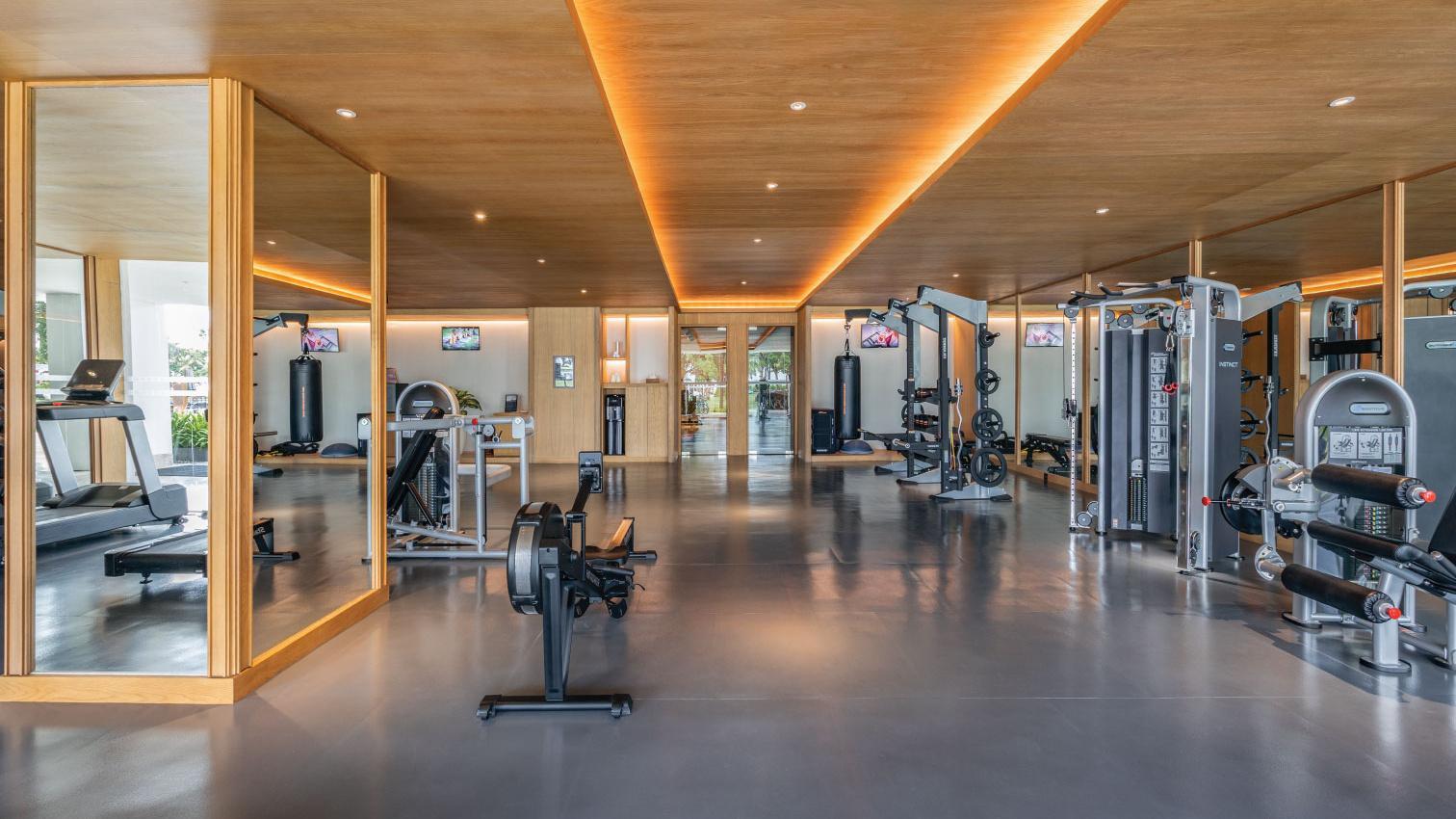
The Fitness Center runs from 6:00 to 21:00, with staff present throughout the day, making it a practical stop either before or after a morning temple visit for anyone keeping to a workout routine while traveling. It’s a straightforward amenity rather than a themed experience, which is exactly the point for guests who just want reliable equipment on a travel day.
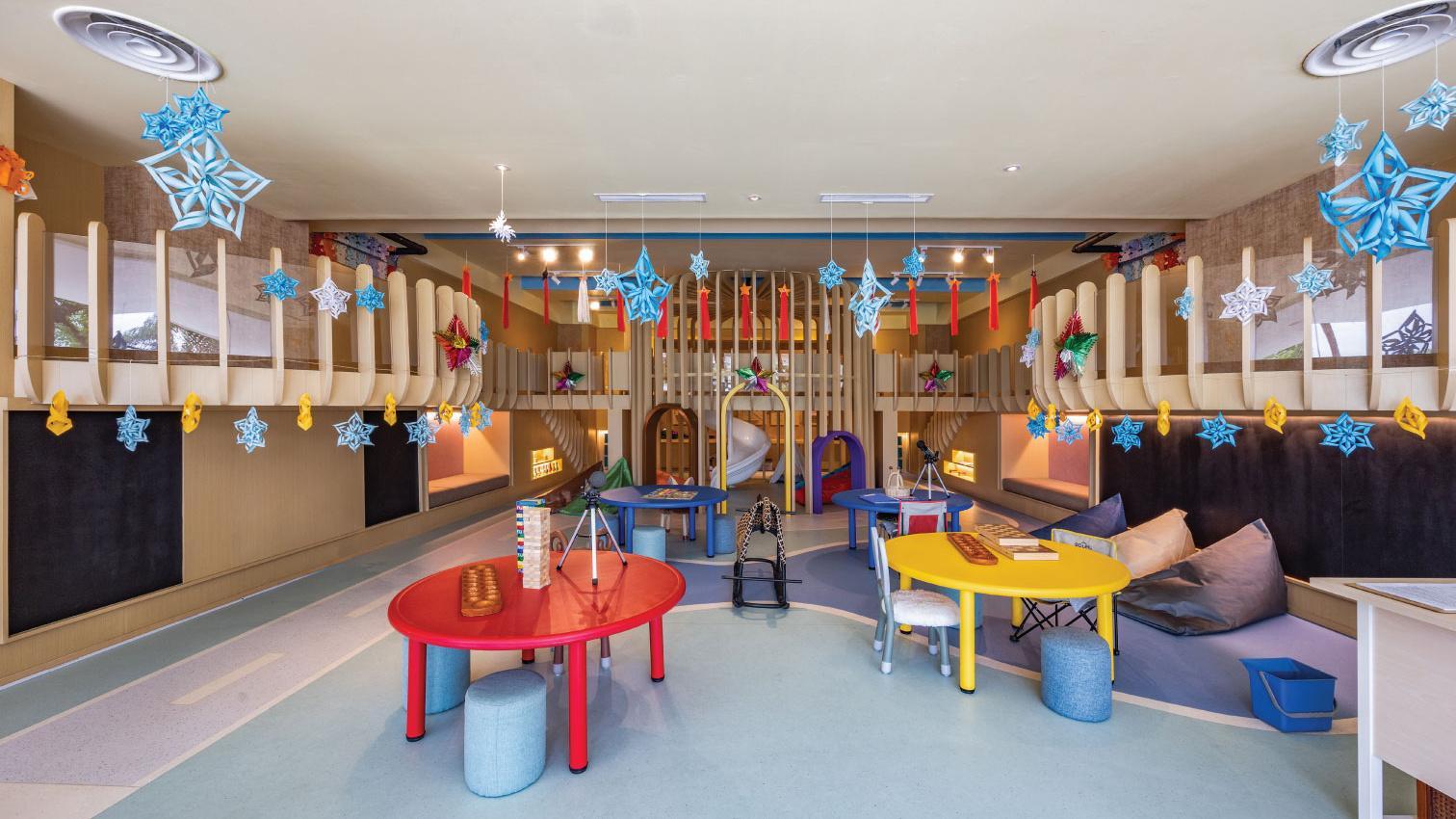
Niskala Kids Club, open 9:00 to 19:00, gives a family splitting a day between historical sightseeing and downtime somewhere for kids to stay engaged while adults take a slower pass through a site like Blanjong Temple that rewards reading and lingering more than younger children usually want to.

A short, well-explained visit works fine for older kids and teenagers, especially if framed around the idea of a real ancient inscription rather than a generic temple stop, but a toddler or very young child is unlikely to hold interest for even the 20 to 30 minutes a typical visit takes.
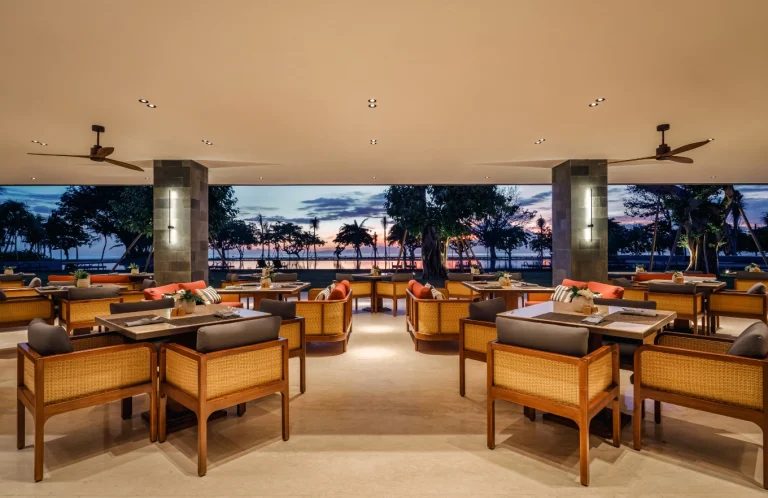
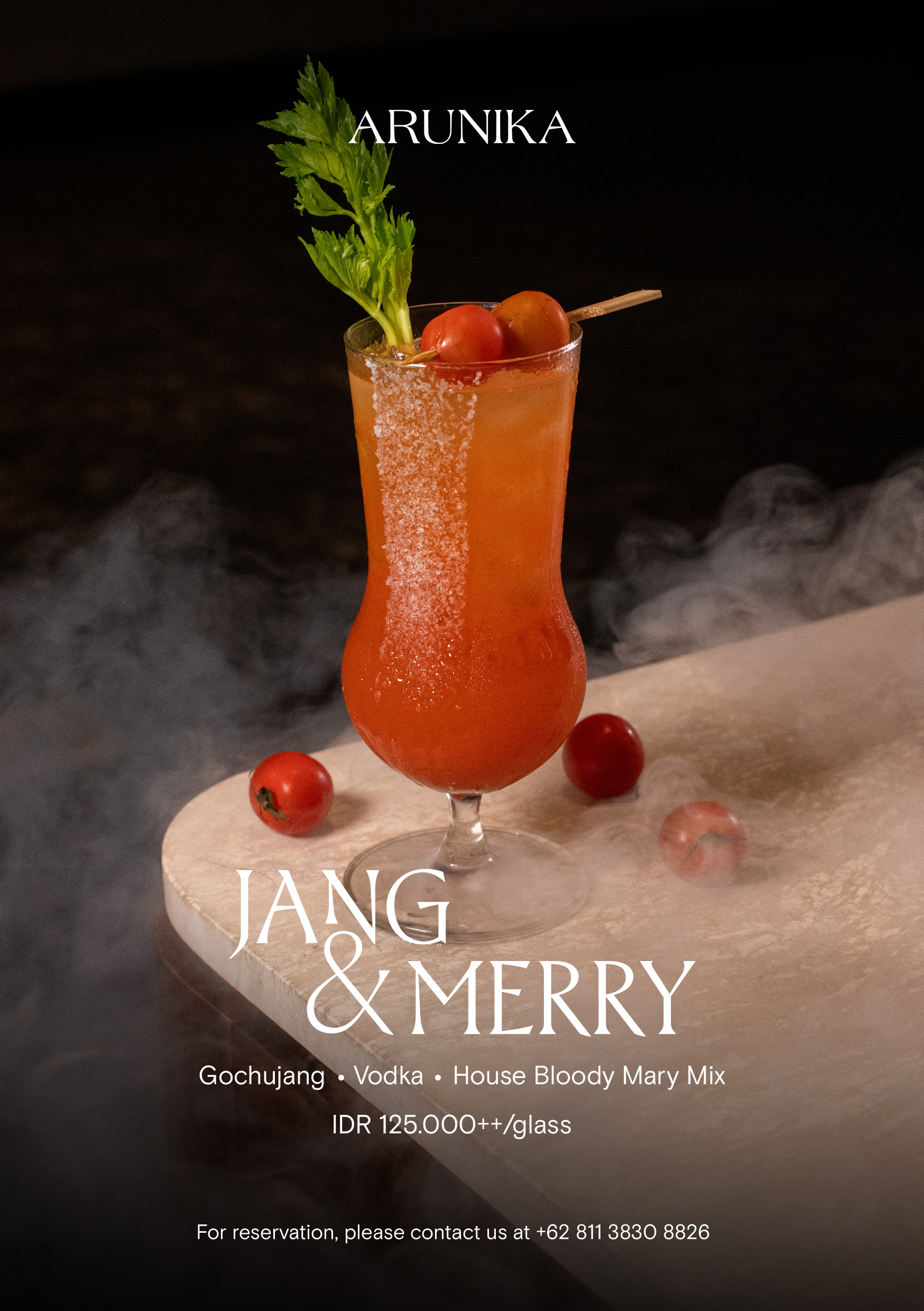
Arunika Restaurant makes a good stop either before or after a morning of temple-hopping, open 6:30 to 22:30 with live cooking stations. The Nasi Goreng Buntut, an oxtail fried rice served with green sambal and emping crackers, is one of the more distinctly Indonesian options on a menu that otherwise leans toward international comfort food, such as wagyu sirloin and slow-cooked lamb shank.

Sunday specifically brings a dedicated brunch service at Arunika, 12:30 to 15:30, with live cooking stations expanded across a larger spread than the regular all-day menu, worth timing a temple-and-museum morning around if the visit happens to land on a weekend rather than a weekday.
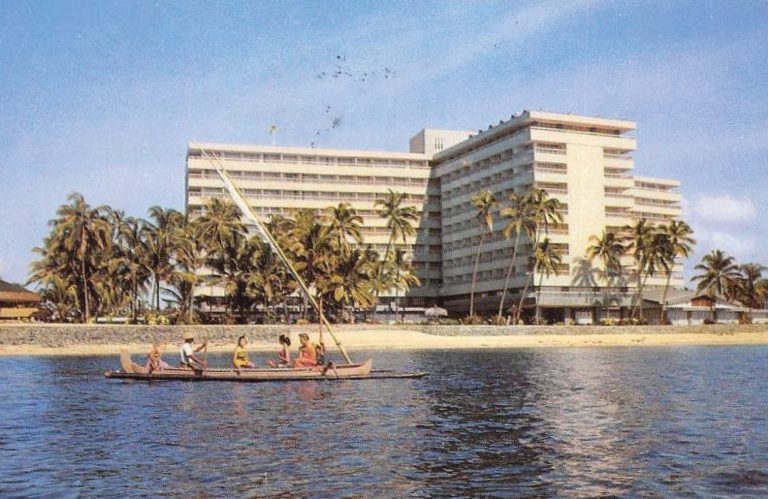
The hotel’s own Historical Journey exhibit traces a very different but similarly documented story: President Soekarno’s vision for Indonesia’s first international-standard hotel in 1962, its 1966 opening, and the decades of name changes and renovation that followed.
Pairing a morning at Blanjong Temple in Bali with an afternoon walking through that exhibit gives a genuinely rare double dose of real, sourced Indonesian history in a single Sanur day, one over a thousand years old, one from the 20th century.
Detailed Information:
- Address: Jalan Hang Tuah, Sanur Kaja, Denpasar Selatan, Kota Denpasar, Bali 80227, Indonesia
- Phone Number: +62 (361) 2012000
- Reference Price: Contact the hotel directly for current room rates, which vary by category and season
Conclusion
Blanjong Temple packs over a thousand years of Balinese history into a small, quiet compound most visitors drive right past without a second glance. Reading the story behind that inscription pillar, a king, a military campaign, and the earliest written proof of Bali’s own royal history, turns a five-minute stop into one of the more genuinely significant historical sites on the island, small footprint and all.
Book a stay at Bali Beach Hotel to base a Sanur trip that pairs the island’s ancient history at Blanjong Temple with a beachfront property that carries its own real, documented, twentieth-century history, just a short drive away.
Frequently Asked Questions
What is Blanjong Temple famous for?
Blanjong Temple houses the Blanjong Inscription, a stone pillar dated to 914 CE that carries the earliest known written record of a named Balinese ruler, King Sri Kesari Warmadewa, making it one of the most historically significant, if physically modest, sites anywhere in Bali.
How old is the Blanjong Inscription?
The inscription dates to the Saka year 835, equivalent to 914 CE, making the pillar more than 1,100 years old and one of the oldest dated artifacts found anywhere on the island. It was rediscovered in 1932 and now sits inside a protective glass enclosure.
Is there an entrance fee for Blanjong Temple?
Entry is free, though visitors are expected to leave a small, voluntary donation at the box near the entrance to help maintain the temple grounds and the pillar’s protective glass housing.
How do I get to Blanjong Temple from Sanur Beach?
The temple sits in southern Sanur, reachable within just a few minutes by car, taxi, or scooter from most Sanur hotels, and it’s within comfortable walking distance for guests staying toward the northern end of the beach.
What language is the Blanjong Inscription written in?
The pillar is inscribed in both Sanskrit and Old Balinese script, wrapped around the full circumference of the cylindrical stone rather than confined to a single flat face.
Do I need to wear a sarong to visit Blanjong Temple?
Yes, a sarong is required to enter the inner temple grounds, and one is often available to borrow near the entrance if a visitor doesn’t bring their own.
How long does a visit to Blanjong Temple take?
Most visits to Blanjong Temple in Bali run 20 to 30 minutes total, enough time to view the inscription closely, read the on-site signage, and walk the small surrounding grounds without feeling rushed. Pairing it with a nearby stop like Le Mayeur Museum or Sanur Harbour turns it into a fuller half-day itinerary.
Is Blanjong Temple worth visiting compared to Bali’s bigger temples?
It’s a different kind of stop, not a competing one. Bali’s larger temples deliver scale and a dramatic setting, while Blanjong Temple offers a genuinely rare direct link to a specific, named, dated moment in the island’s earliest recorded history, worth the short detour for anyone interested in that angle rather than looking for another dramatic photo backdrop.
Can I combine a visit with Le Mayeur Museum or Sanur Harbour?
Yes, and it’s the most efficient way to see all three in a single outing. Blanjong Temple, Le Mayeur Museum, and Sanur Harbour all sit within a few kilometers of each other in southern Sanur, making a single half-day loop by car or scooter an easy, unhurried way to cover ancient history, colonial-era art, and a working modern harbor without backtracking across town more than once.