Beneath Bali’s beaches and rice terraces runs a current older than any temple: the belief that water can cleanse the spirit. Balinese purification rituals are among the island’s most profound traditions, woven into daily life, holy days, and the great turning points of the year. This guide explains what they mean, where to experience them, and how to take part with the respect they deserve, so you can move beyond the postcard version of Bali and touch something genuinely sacred.
What Are Balinese Purification Rituals?
Balinese Hinduism is so closely bound to water that it was once known as Agama Tirta, the religion of holy water. Tirta, or blessed water, is central to almost every ceremony, sprinkled by a priest to bless people, offerings, and sacred objects. Purification is the act of restoring balance, clearing away negative energy so that body, mind, and spirit are realigned. Water is seen as a carrier of spiritual energy, which is why springs, rivers, and the sea all hold sacred significance across the island.
This sits within the wider Balinese worldview of sekala and niskala, the seen and the unseen. Rituals are not performed for show but to maintain harmony between people, nature, and the spiritual realm, a philosophy reflected in the principle of Tri Hita Karana, the three causes of wellbeing. Cleansing ceremonies are often held before weddings, after illness or misfortune, on temple anniversaries, and around major holy days, marking the transitions of life with a return to balance.
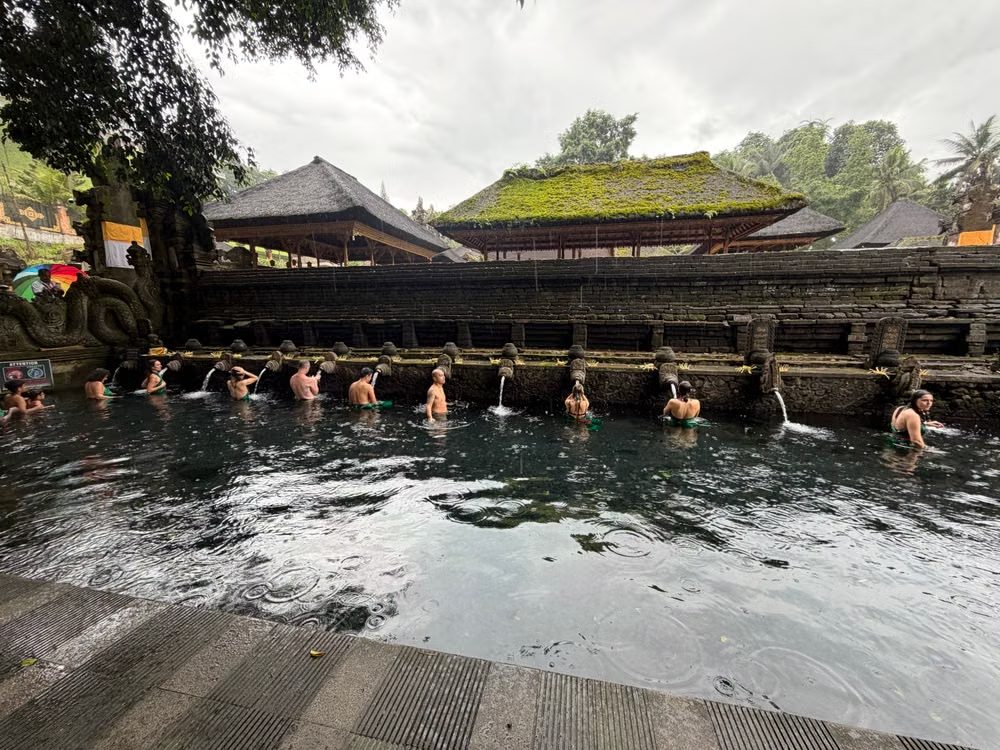
For visitors, understanding this context changes everything. These are living practices, not tourist performances, and approaching them with humility is the surest way to experience their depth. With that mindset, Balinese purification rituals offer one of the most meaningful windows into the island’s soul, far richer than any beach or viewpoint alone can provide.
A Brief History of Bali’s Holy Springs
The roots of these traditions reach back more than a thousand years. Many of Bali’s purification temples are built around natural springs that local communities have considered sacred since long before written record, and several form part of the island’s ancient subak system of water management, recognized by UNESCO as a Cultural Landscape. This deep history is part of what makes a visit so resonant: you are stepping into a practice that has continued, almost unbroken, for a millennium.
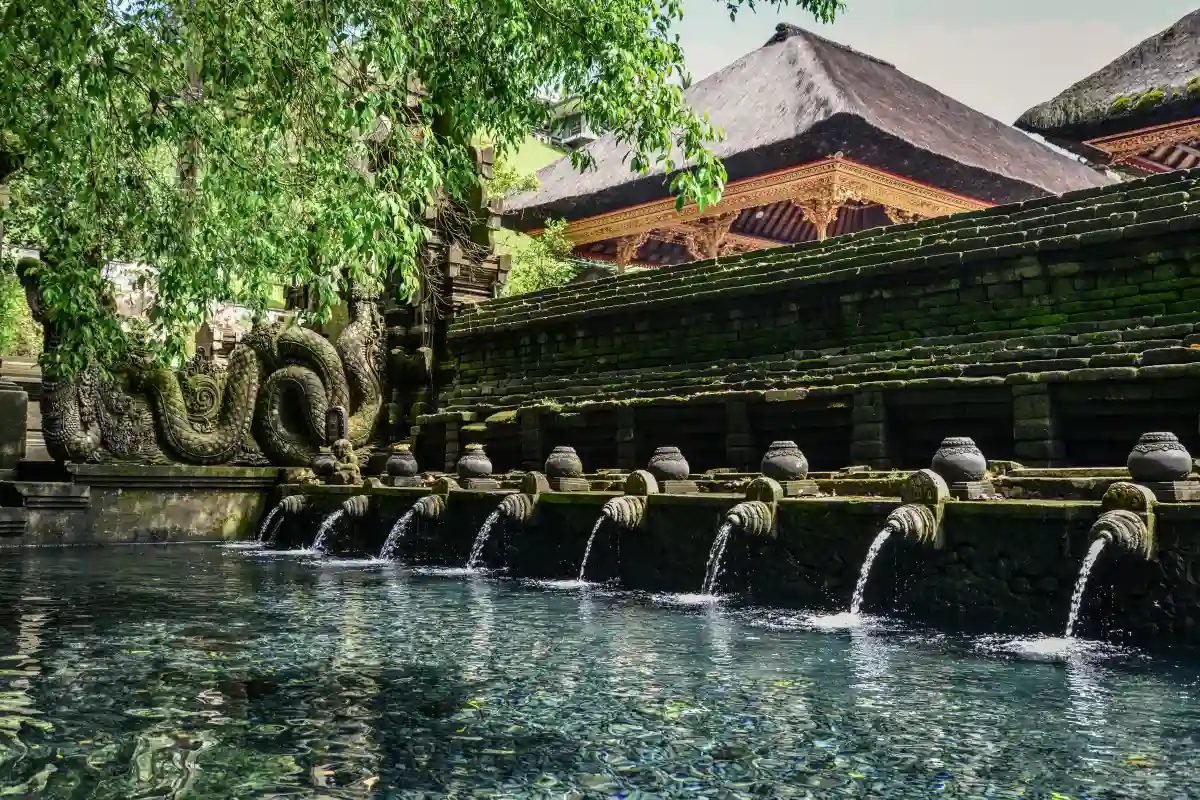
The most famous origin story belongs to Tirta Empul. Balinese legend tells that the god Indra pierced the earth to create a holy spring that revived his poisoned warriors during a battle against the tyrant king Mayadenawa. That spring became Tirta Empul, the Holy Spring, and pilgrims have come to bathe in its waters for over a thousand years.
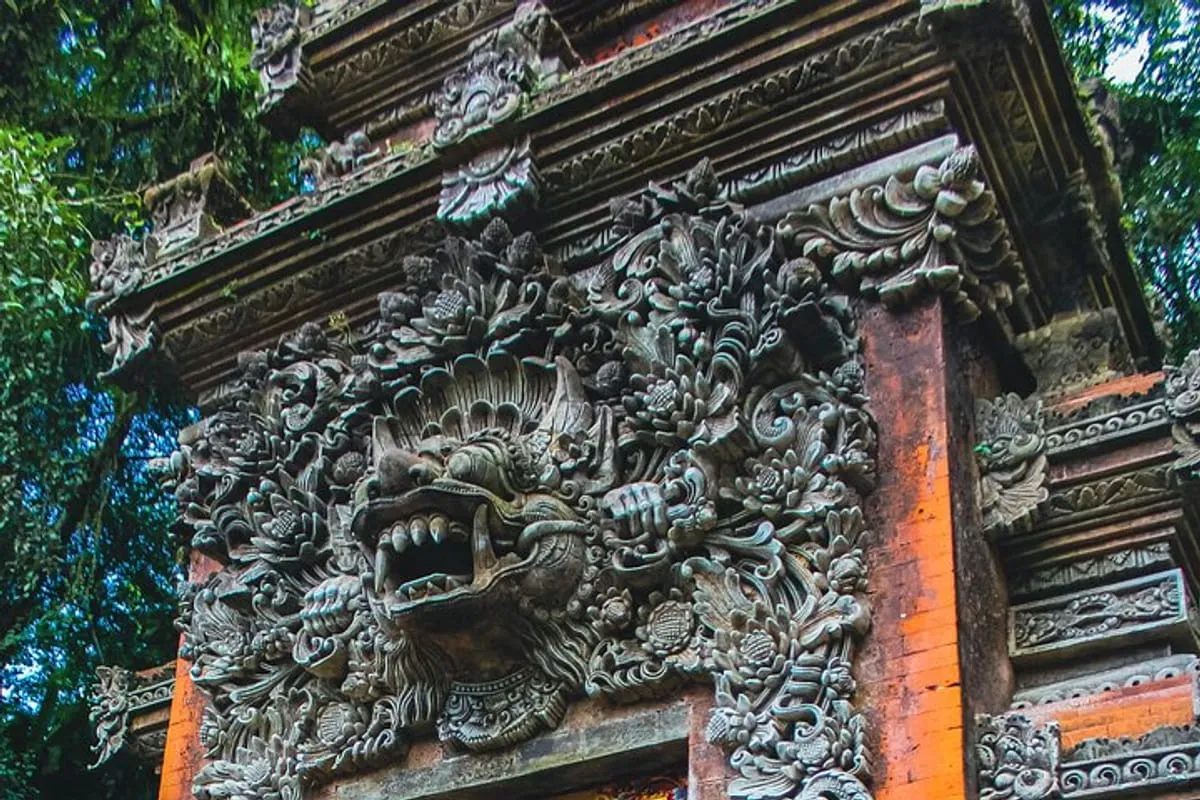
Stories like this give Balinese purification rituals their enduring power: they are not abstract beliefs but living connections to the island’s deep past. Today the same springs that healed Indra’s army continue to draw a steady stream of worshippers, who visit on full moons and important holy days throughout the year.
The Main Balinese Purification Rituals
Purification takes several forms across the Balinese calendar, from intimate personal cleansing to vast communal processions. The rituals below are the ones travelers are most likely to encounter or take part in, and together they show how central the idea of cleansing is to Balinese life.
Melukat: Water Purification
Melukat is the best known of all Balinese purification rituals. The name comes from the word lukat, meaning to purify, and the ceremony uses holy spring water to cleanse the body, mind, and spirit of negative energy and misfortune.
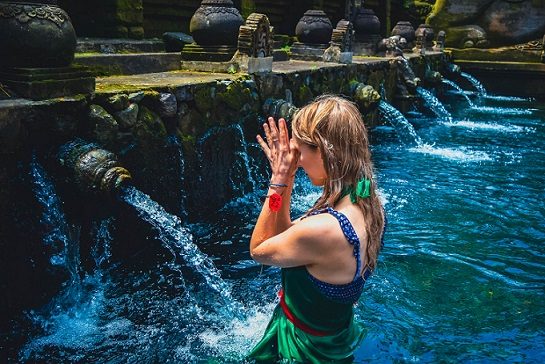
It is deeply personal, often undertaken before an important life event, after a difficult period, or simply to restore inner balance. For the Balinese, it is also a regular practice rather than a one-off occasion, with many families returning to their favored spring at least once or twice a year.
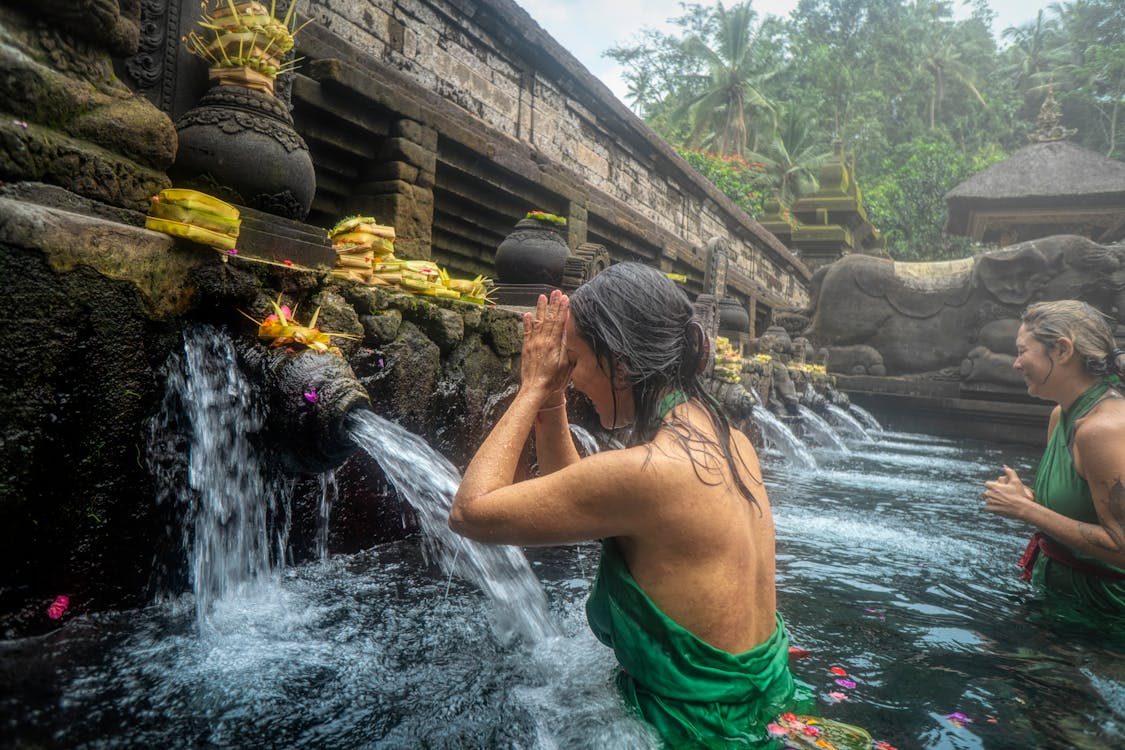
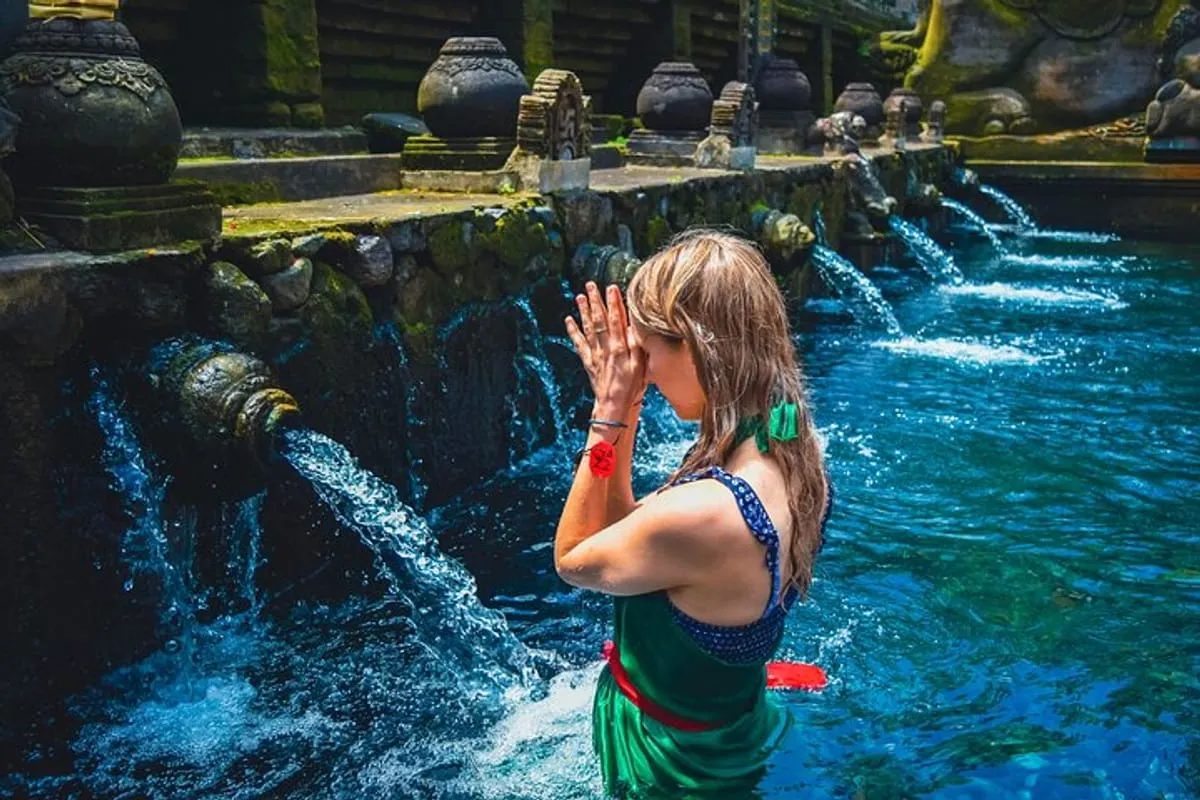
A melukat is usually guided by a temple priest, known as a pemangku, who leads the prayers and offerings that frame the bathing itself. Participants move through a sequence of carved water spouts, pausing beneath each one in turn.
The ritual is welcoming: non-Hindus are encouraged to take part as long as they follow the etiquette and approach the water with sincerity. Many describe the experience as surprisingly emotional, with the cool spring water and focused intention combining to leave participants feeling lighter and clearer.
Melasti: Sea Purification Before Nyepi
In the days before Nyepi, the Balinese New Year, villages across the island stage Melasti, a grand communal purification. Sacred temple objects, including the pratima effigies, are carried in long processions to the sea or to holy springs to be ritually cleansed, drawing the purifying power of the ocean back to the temple. The ceremony purifies not only the objects but the whole community, symbolically washing away the impurities of the past year before the silence of Nyepi.
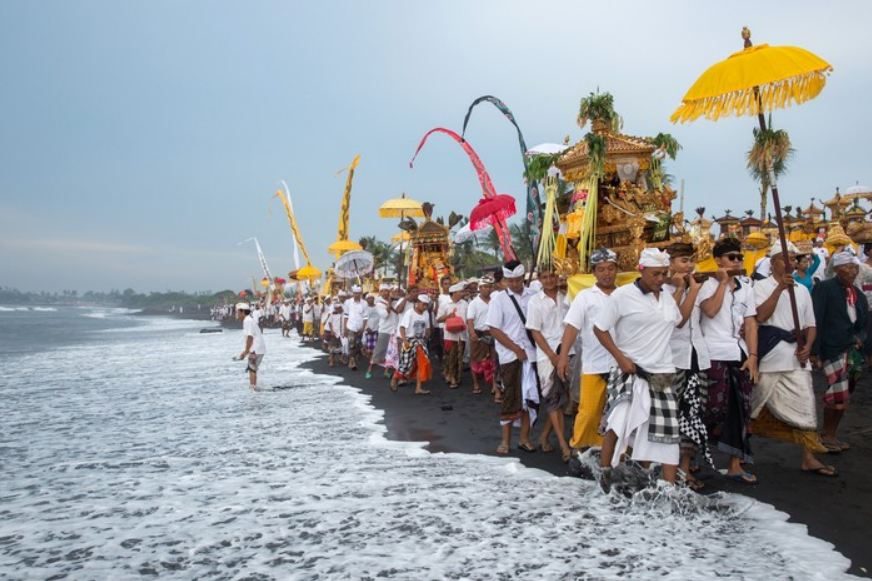
It is a breathtaking sight: thousands of devotees dressed in white moving toward the water, accompanied by gamelan, parasols, and offerings. Sanur’s own beaches are among the gathering points for these processions, making the east coast one of the most accessible places to witness Melasti respectfully from a distance. The ceremony takes place a few days before Nyepi, which in 2026 falls on 19 March, so the Melasti processions cluster in the preceding week.
Banyu Pinaruh: Cleansing After Saraswati
The day after Saraswati, the celebration of knowledge and learning, comes Banyu Pinaruh. At dawn, the Balinese bathe in the sea, rivers, or springs to purify themselves before drinking holy water and sharing a blessed meal, symbolically cleansing the body to receive wisdom with a clear mind.
Like Melasti, Banyu Pinaruh unfolds at the water’s edge, and Sanur’s gentle, sunrise-facing shoreline is a natural setting for it. Early risers staying on the coast may see locals wading into the calm morning sea as part of this quiet, joyful tradition.
The name itself blends banyu, meaning water, with pinaruh, suggesting knowledge gained, capturing the idea of washing the body clean so the mind can absorb wisdom. It is one of the gentler Balinese purification rituals, and among the easiest for visitors to glimpse on the eastern beaches.
Holy Water, Offerings, and Mecaru
Beyond these set-piece ceremonies, purification threads through everyday Balinese life. Daily canang sari offerings, the small woven trays of flowers you see everywhere, are acts of gratitude and balance, while a mecaru is a cleansing offering made to neutralize negative forces, performed at thresholds of time and place such as before Nyepi.
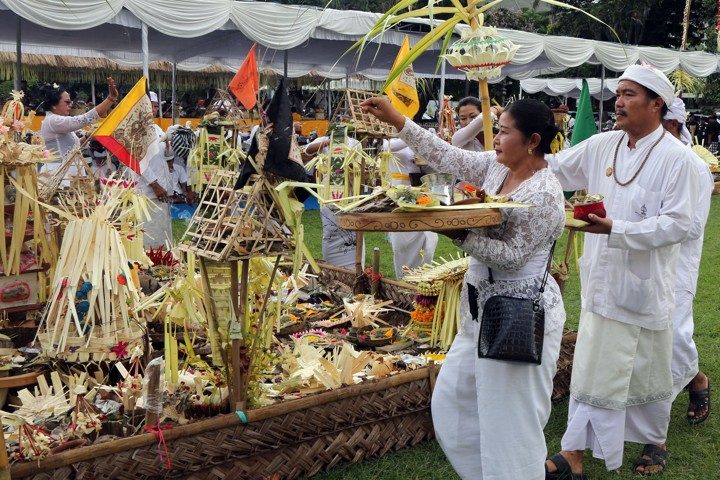
Larger versions, known as Tawur Kesanga, purify entire communities on the eve of the new year. Together they show that purification is less an event than a continuous way of living in harmony, a thread that runs through nearly every Balinese ceremony from birth to cremation.
Where to Experience Melukat in Bali
Several sacred sites welcome respectful visitors for a melukat, each with its own character. The options below range from the island’s most famous temple to quieter, lesser-known springs. Most lie in the Gianyar regency around Ubud, within a comfortable day trip of the southern coast, so it is easy to combine a ceremony with a wider exploration of central Bali.
Tirta Empul: The Iconic Holy Spring
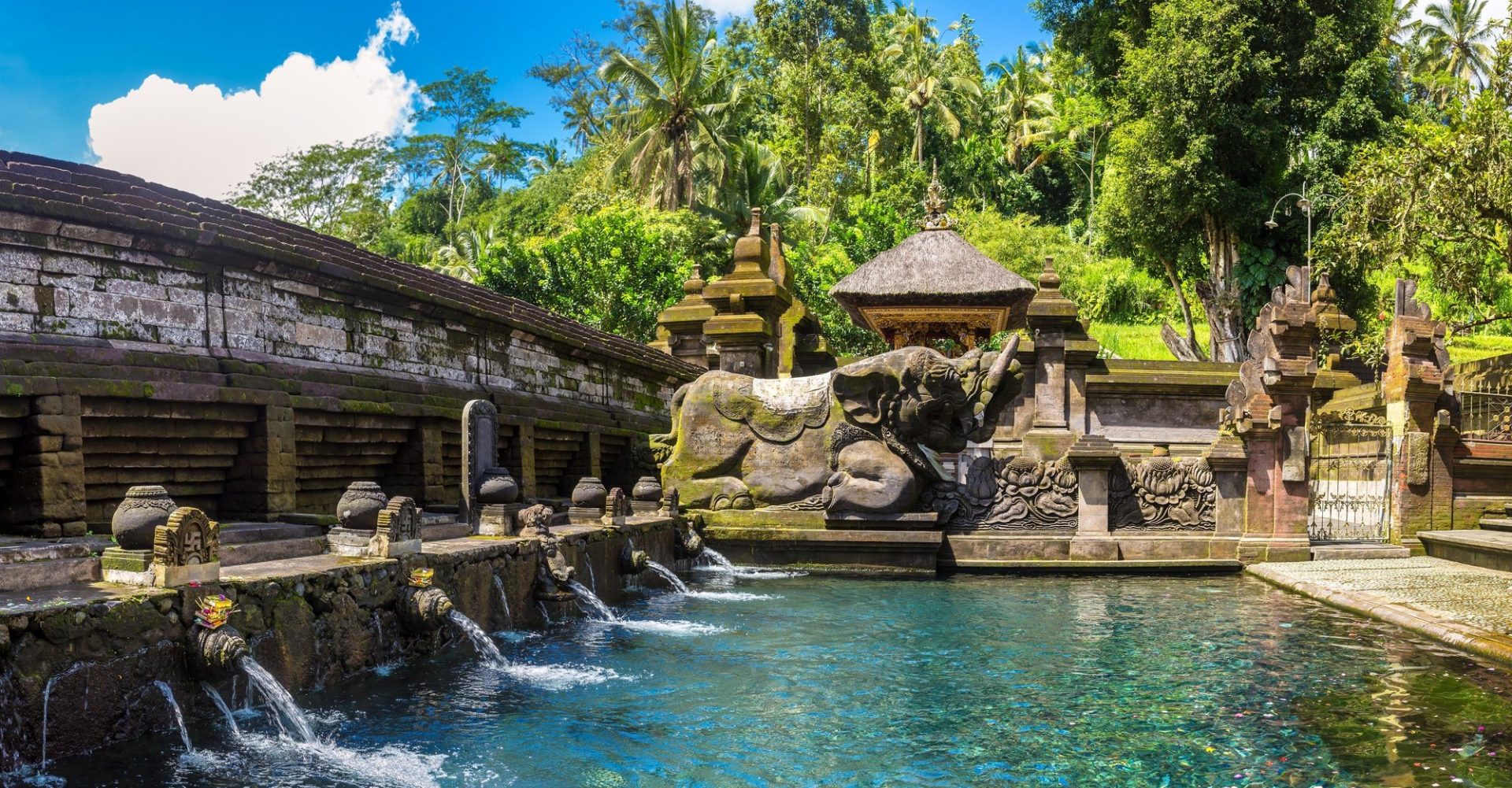
Dating to around the 10th century, Tirta Empul in Tampaksiring, Gianyar, is Bali’s most celebrated water temple and forms part of the UNESCO-listed Cultural Landscape of Bali. Legend holds that the god Indra struck the earth to create its holy spring, and devotees have bathed in its waters ever since.
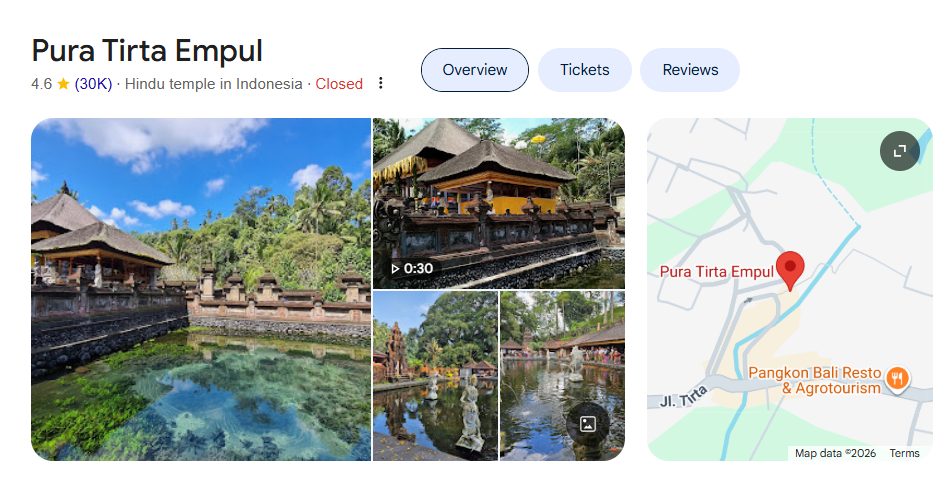
The temple follows a classic tri-mandala layout, divided into an outer, middle, and inner courtyard, with the central section housing the purification pools and their long row of carved stone spouts. Pilgrims move along the spouts in sequence, with a few near the shrines reserved for funerary rites and respectfully skipped.
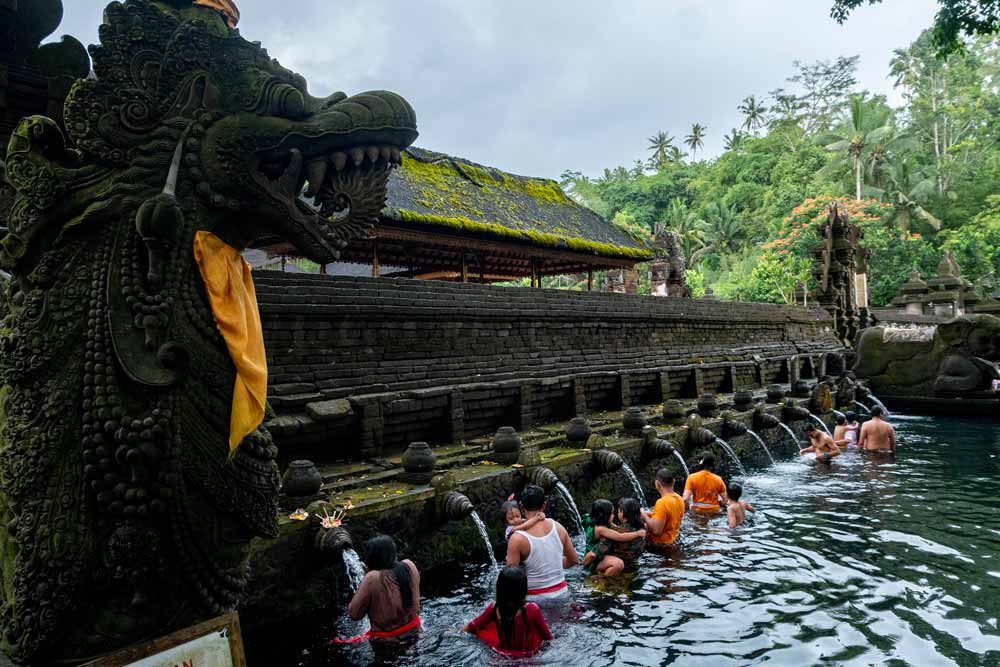
The standard entrance fee is around IDR 75,000 for adults and IDR 50,000 for children (about 5 and 3 US dollars), with a sarong included for temple entry; a dedicated bathing sarong for the ritual rents for roughly IDR 10,000 to 15,000 (under 1 US dollar). The temple opens around 8:00 am, and many sites offer both a morning and a late-afternoon session, each with its own atmosphere.
Quieter Alternatives to Tirta Empul
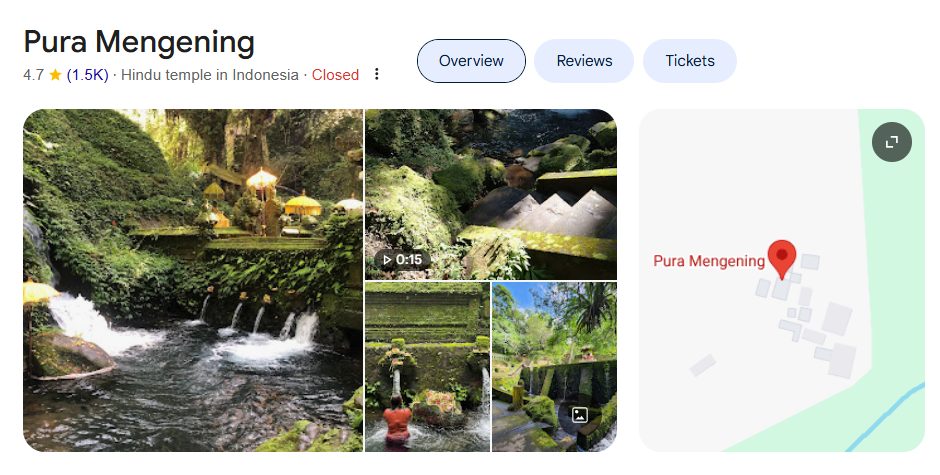
Tirta Empul can be busy by mid-morning, so many seek calmer sites for a more contemplative experience. Nearby Pura Mengening offers spring-fed pools in a jungle-like setting with far fewer visitors, while Pura Gunung Kawi Sebatu, the Water Garden Temple, is known for its koi ponds and tropical gardens. These quieter temples often allow a slower, more personal ceremony, with space to linger and reflect that the busier sites cannot always provide.
Closer to the central and southern areas, Taman Beji Griya Waterfall near Punggul is popular for guided, emotionally powerful waterfall ceremonies, and the riverside Tirta Sudamala temple offers a quieter, powerful flow. Pura Dalem Pingit Sebatu, meanwhile, is regarded as one of the more spiritually intense sites, often sought by those who want a deeper, more guided experience. The table below compares a few options at a glance.
| Site | Area | Character |
|---|---|---|
| Tirta Empul | Tampaksiring, Gianyar | Iconic, sacred, busiest |
| Pura Mengening | Tampaksiring, Gianyar | Quiet, jungle springs |
| Gunung Kawi Sebatu | Sebatu, Gianyar | Water garden, serene |
| Taman Beji Griya | Punggul, Badung | Dramatic waterfall ritual |
| Tirta Sudamala | Bangli | Riverside, calmer flow |
| Dalem Pingit Sebatu | Sebatu, Gianyar | Intense, deeply spiritual |
What to Expect and Temple Etiquette
Taking part respectfully matters more than anything else at these living sacred sites. Walking through the sequence below will help you arrive prepared and considerate.
The Melukat Sequence
A typical melukat begins with changing into a bathing sarong and presenting a small offering with a short prayer, often guided by a priest or local attendant. You then enter the pool and move from spout to spout, placing the crown of your head beneath the flowing water and pausing to breathe or pray at each one. Many people set a quiet intention before they begin, focusing on something they wish to release or a clarity they hope to find.
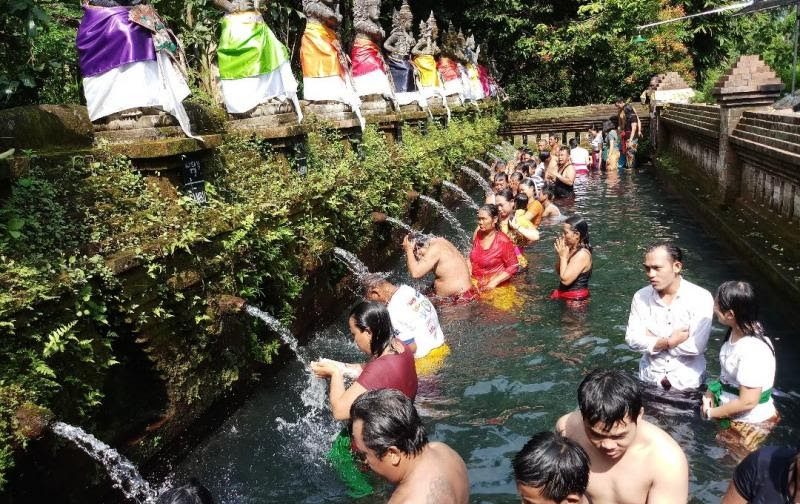
An important rule of respect is never to touch the water before it reaches your head, and to follow the order the attendants indicate. From start to finish the ritual usually takes between one and two hours, including time to change and reflect afterward. If you feel unsure at any point, simply watch those ahead of you and follow their lead, as locals are generally warm and happy to help newcomers find their way.
Dress Code and Etiquette
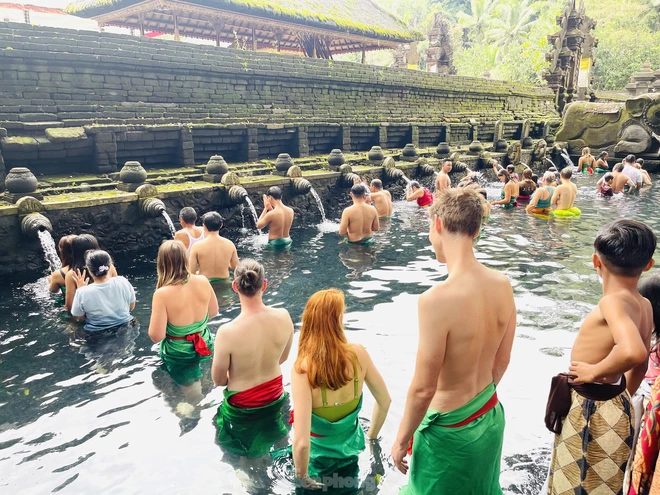
Modest dress and quiet behavior are essential, since these are active places of worship rather than attractions. Keep these points in mind at any sacred site:
- Wear a sarong and sash to enter the temple grounds; these are usually provided or rented at the gate.
- For the ritual, change into a dedicated bathing sarong rather than the standard temple-entry one, and bring a towel and a change of clothes.
- Never step over or disturb offerings, and keep your voice low and your phone discreet around those praying.
- Do not enter the innermost sanctum reserved for worshippers, and follow any guidance from the priest or attendants.
- Out of tradition, women who are menstruating typically refrain from entering the purification pools.
- Ask before photographing people mid-ritual, and avoid using flash or blocking the path of those praying or processing.
Practical Tips
Arrive early, ideally soon after the temples open in the morning, to enjoy calmer pools and softer light before the tour groups arrive. Bring small cash for sarong rental, lockers, and offerings, and consider going with a knowledgeable local guide who can explain the meaning of each step and ensure you observe the customs correctly.
A respectful, unhurried approach turns a simple visit into a genuinely moving experience. It is also worth setting aside a quiet moment afterward, rather than rushing to the next stop, so the experience has space to settle.
Sanur and Bali Beach Hotel: A Heritage Gateway
To truly experience Bali’s traditions, you need the right base. Located on Sanur’s culturally rich coast, this historic hotel offers the local knowledge and access that independent travelers often miss. Choosing a heritage property like this ensures a deeper connection to the island the moment you arrive.
A Cultural Landmark on a Sacred Coast
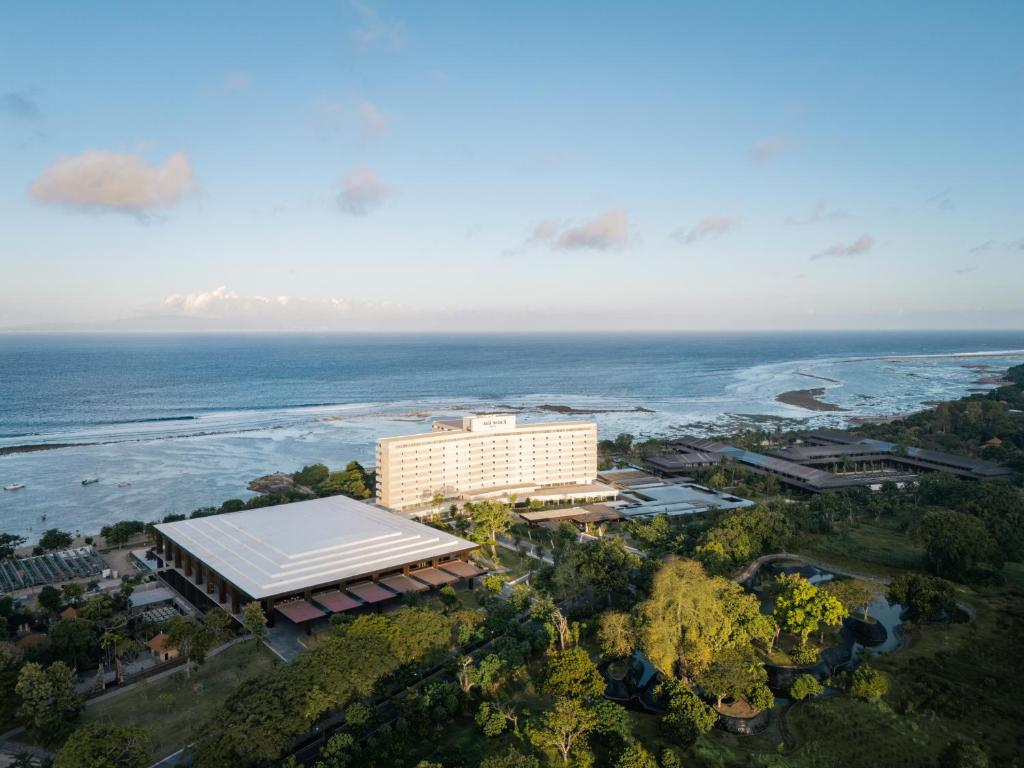
Bali Beach Hotel, The Heritage Collection is woven into the story of modern Indonesia. Opened in 1966 and envisioned by founding president Soekarno, it was the first international hotel in Bali and remains the tallest hotel building on the island, a true cultural landmark. Staying here connects you to the island’s heritage rather than holding it at arm’s length.

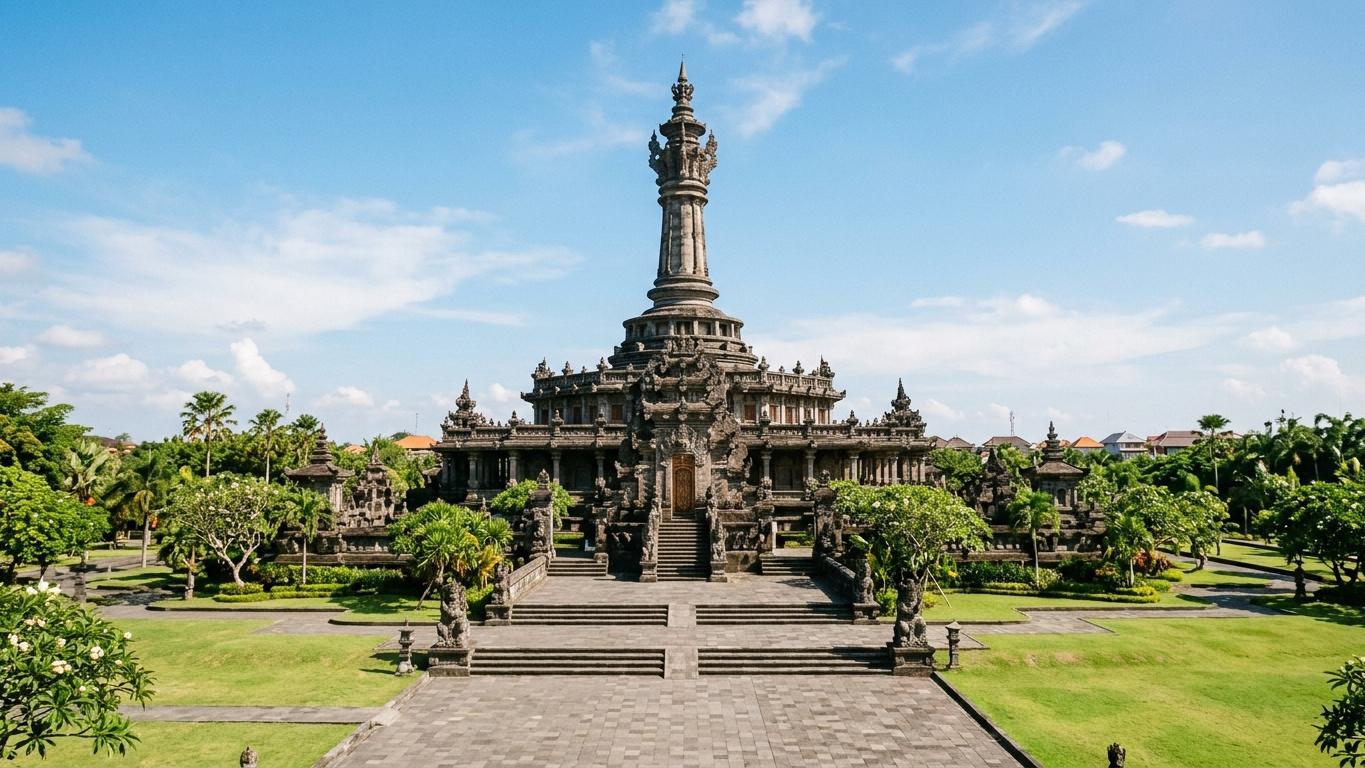
Its setting deepens that connection. Sanur is one of Bali’s most spiritually layered areas, home to ancient temples and the famed Blanjong pillar, one of the oldest dated artifacts on the island.
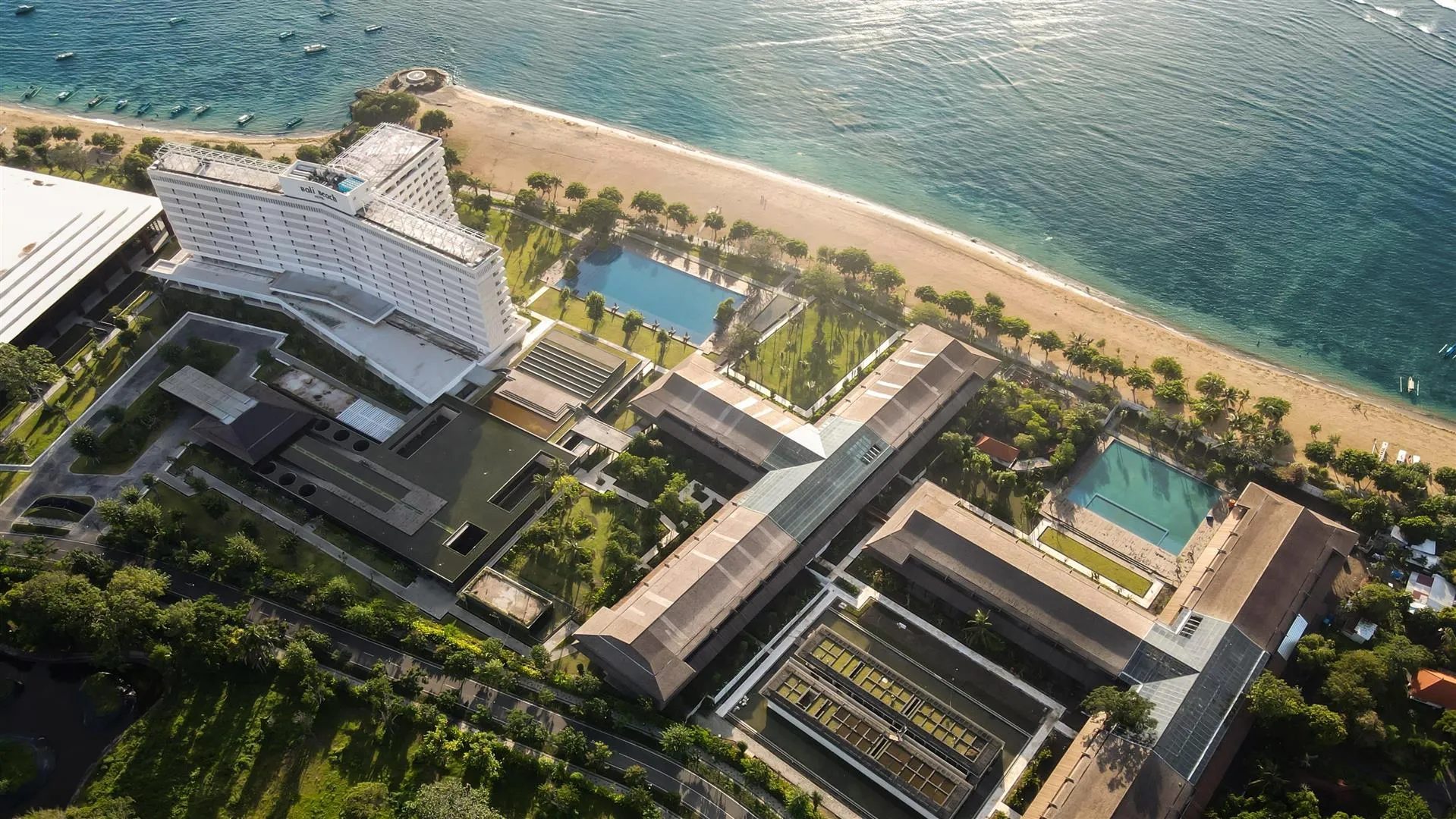
The same calm, sunrise-facing beaches that front the hotel are gathering points for communal purification processions such as Melasti and Banyu Pinaruh, so the sacred rhythm of the coast unfolds on your doorstep. Few bases place you closer to the living heartbeat of Balinese purification rituals than a heritage address on this stretch of shore.
The Sandi Kala Ritual and On-Site Heritage
You can encounter the island’s spiritual side without leaving the grounds. The hotel’s Sandi Kala ritual honors the sacred golden hour believed to bridge the seen and unseen worlds, performed at the Tirtasada Lobby on Tuesday, Thursday, and Friday evenings.
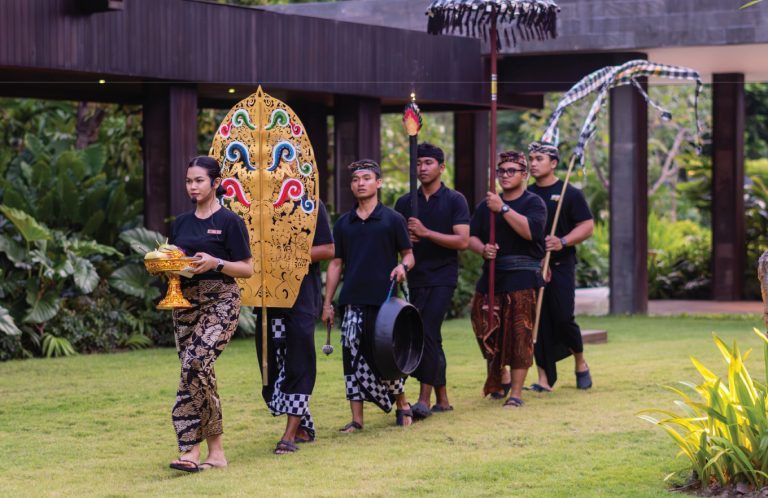
It is a respectful, on-site introduction to the sekala-niskala philosophy that underpins every purification ceremony across Bali, and a gentle way to attune to the island’s rhythm before venturing out to the temples themselves.
Let the Cultural Concierge Arrange Your Journey
The greatest advantage of a heritage base is access. The hotel’s cultural concierge desk can help arrange authentic local experiences and guided visits to sacred sites, from a melukat at Tirta Empul, roughly 90 minutes inland, to quieter springs better suited to reflection.
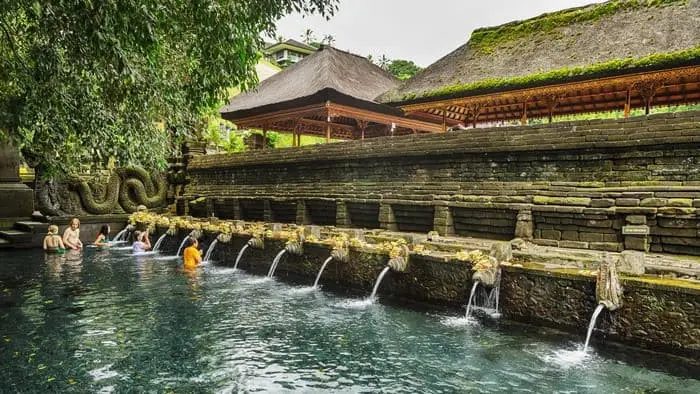
A knowledgeable guide ensures you understand the customs and take part with confidence and respect. The team can also advise on timing around the Balinese calendar, so you can align your visit with a particular ceremony or simply choose the calmest moment to go.

For travelers seeking a serene retreat between cultural excursions, the Royal Suite offers a tranquil 135-square-meter sanctuary on the 10th floor, with sweeping ocean views and a private balcony, an ideal place to rest and reflect after a day among the temples.
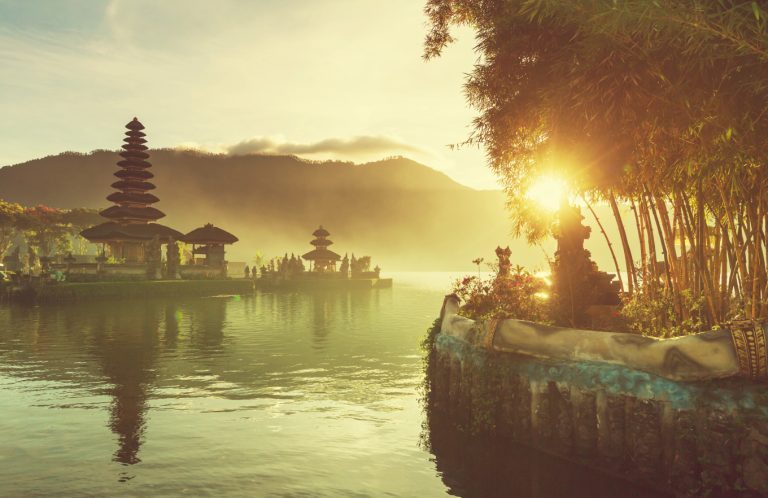
Watching the sunrise over the sea from such a height is its own quiet ritual, a fitting bookend to a journey into Bali’s sacred traditions. When you are ready to explore the island’s spiritual heart, this is a meaningful place to begin.
Conclusion
From the holy spouts of Tirta Empul to the white-clad processions of Melasti on Sanur’s shore, Balinese purification rituals reveal a culture where the sacred and the everyday are inseparable. Approached with humility, they offer travelers a rare and lasting connection to the island, the kind of experience that stays with you long after the tan has faded. They are, quite simply, among the most rewarding things you can do in Bali.
Begin your journey from a place steeped in heritage. Book a beachfront stay at Bali Beach Hotel, The Heritage Collection, and let its cultural concierge guide you to Bali’s most sacred experiences.
Frequently Asked Questions
What is the Balinese purification ritual called?
The best-known one is called melukat, a water purification ceremony that uses holy spring water to cleanse the body, mind, and spirit. Other communal purification rituals include Melasti, held before Nyepi, and Banyu Pinaruh, held after Saraswati.
Can tourists and non-Hindus take part in melukat?
Yes. Non-Hindus are welcome to participate in melukat at temples such as Tirta Empul, provided they dress correctly, follow the etiquette, and approach the ritual with sincerity and respect. Going with a local guide is the best way to ensure you understand each step and honor the customs of this living sacred site.
How much does Tirta Empul cost to visit?
The entrance fee is around IDR 75,000 for adults and IDR 50,000 for children (about 5 and 3 US dollars), with a sarong included for temple entry. A bathing sarong for the ritual rents for roughly IDR 10,000 to 15,000, under 1 US dollar.
What should I wear for a purification ritual?
Wear a sarong and sash to enter the temple, and change into a dedicated bathing sarong for the ritual itself. Bring swimwear to wear underneath, a towel, and a full change of dry clothes. Avoid revealing outfits, and remember that the dress code applies even if you only intend to walk the grounds rather than enter the pools.
When is the best time to experience Balinese purification rituals?
Early morning, soon after the temples open, is best for calmer pools and a more contemplative atmosphere. Melasti and Banyu Pinaruh, by contrast, follow the Balinese calendar and take place at specific times around Nyepi and Saraswati, so check the local calendar if you hope to witness one of these communal ceremonies. A local guide or the concierge at your hotel can confirm the exact dates for your travel window.